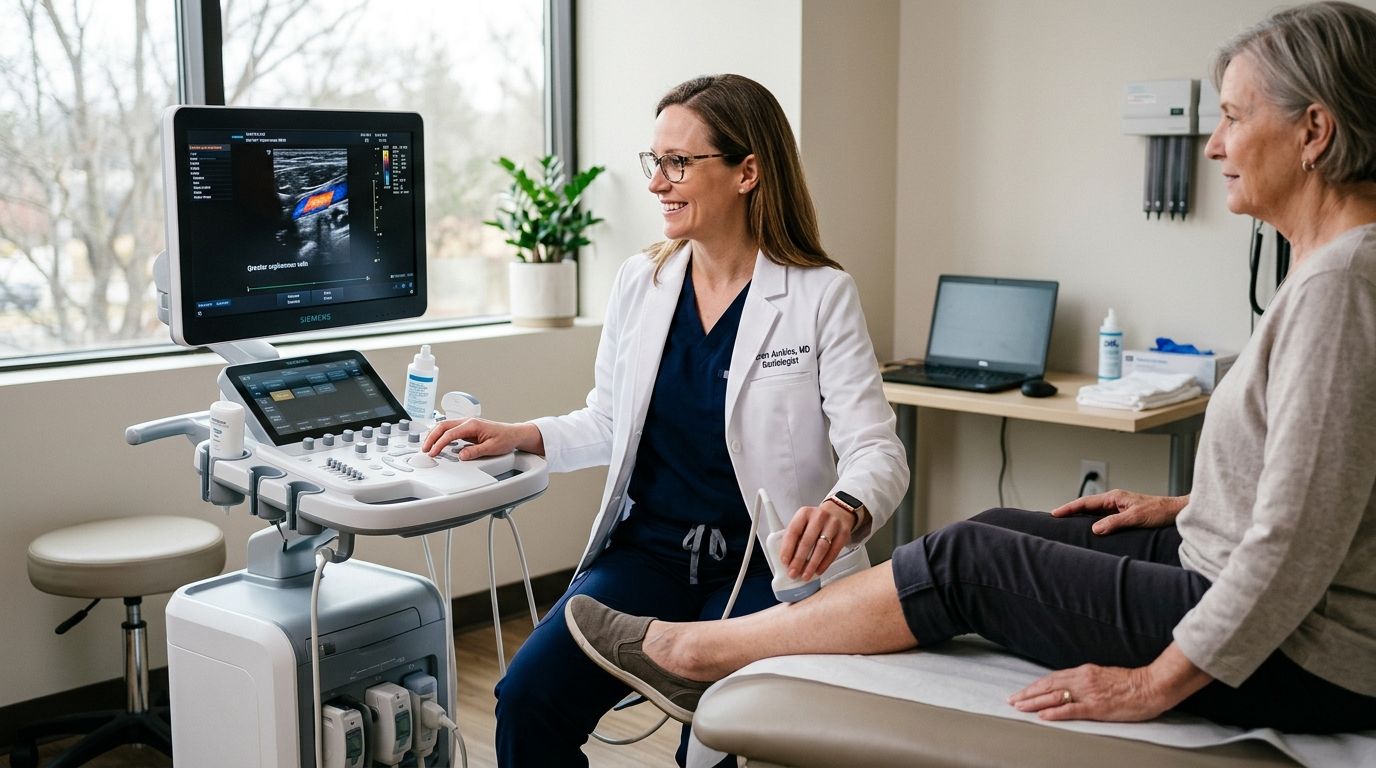
Vein clinic radiology jobs combine outpatient venous ultrasound reads with procedural work like sclerotherapy and endovenous ablation, built around RVU or collections-based pay instead of hospital call schedules. The role fits radiologists who want daytime hours and procedural variety without inpatient coverage.
- Vein clinic radiology jobs pay through RVU or collections-based models, not fixed salary, in most 2026 postings.
- IR training or documented procedural competency is the main credentialing gate for these roles.
- Outpatient vein clinics rarely post to hospital job boards — search staffing sites, direct clinic postings, and aggregators.
- Multi-site, private-equity-backed vein clinic chains offer more predictable volume than single-site practices but less autonomy.
- Confirm ablation and sclerotherapy volume per month before accepting an RVU-based offer — a vague volume number means a vague paycheck.
Why vein clinic radiology jobs matter in 2026
Chronic venous disease drives steady outpatient imaging volume that doesn't depend on hospital census or ER throughput. Vein clinics run on scheduled duplex ultrasound studies, follow-up scans after ablation, and pre-procedure vascular mapping — work that's predictable week to week, which is exactly what draws radiologists away from hospital-based reading rooms.
These jobs rarely surface on hospital career pages. Most postings sit on staffing agency sites, physician-owned practice websites, or private-equity-backed group career pages that don't feed into the boards most radiologists check first. RadBoard's radiology job search platform pulls from 5,000+ listings across 20 sources, including smaller outpatient and specialty postings that general hospital boards skip — though it still won't tell you a clinic's actual procedure volume, so confirm that in the interview.
The pay structure is the other reason this niche matters. Vein clinics lean on RVU or collections-based compensation more than salaried hospital roles, which means your income tracks the clinic's referral volume and payer mix directly. That's an upside if the clinic has steady flow and a risk if it doesn't.
How to land vein clinic radiology jobs in 2026
1. Confirm your scope of practice for venous procedures
Vein clinic postings split into two categories: reads-only diagnostic roles and procedural roles that include sclerotherapy, endovenous laser ablation (EVLA), or radiofrequency ablation (RFA). Know which one you're applying for before you submit a CV.
- Diagnostic-only roles: duplex ultrasound interpretation, venous mapping, post-procedure follow-up scans
- Procedural roles: EVLA, RFA, sclerotherapy, sometimes phlebectomy
- IR-trained radiologists typically qualify for both categories; diagnostic-only trained radiologists are usually limited to reads-only work
- Ask directly whether the posting's "procedures" line means you perform them or supervise a technologist
2. Search every source, not just hospital boards
Vein clinic openings post on staffing agency sites, direct practice career pages, and specialty vascular association boards before they ever reach a hospital system's careers tab.
- Check phlebology and vascular society job boards directly
- Search practice websites for physician-owned regional chains
- Set alerts on staffing agency sites that specialize in outpatient imaging
- Run one AI-powered search across multiple sources instead of checking a dozen sites by hand — RadBoard indexes 5,000+ radiology jobs from 20 sources in a single query
3. Vet the compensation model before you apply
Most vein clinic offers run on RVU or collections-based compensation models rather than a flat salary, so the number on the offer letter means little without volume context.
- Ask for average monthly procedure volume, not just an annual estimate
- Confirm whether pay is pure collections or blended RVU-plus-base
- Check whether the collections model deducts overhead costs you didn't expect
- Compare payer mix — commercial-heavy panels pay differently than Medicare-heavy ones
- Request the last two years of volume trend, not a single snapshot
4. Evaluate imaging volume and protocol standardization
Outpatient vein clinics vary widely in daily study count and exam mix. A clinic running mostly reflux mapping behaves differently than one running mostly DVT rule-outs.
- Daily or weekly study volume per site
- Split between reflux mapping, DVT rule-out, and post-op follow-up scans
- Whether protocols are standardized across every location in a multi-site chain or left to each technologist
- Turnaround time expectations for reads
- Backup coverage plan when volume spikes
5. Check credentialing and IR training requirements
Procedural vein clinic roles usually require more than a standard diagnostic radiology certificate. Roles overlapping with ablation or sclerotherapy often draw from the same pool as interventional radiology jobs.
- Confirm which certification the clinic requires: ABR diagnostic radiology vs. an IR/DR certificate
- Ask whether procedural privileging requires a case log or a proctoring period
- Verify state licensing timelines if the clinic operates across multiple states
- Confirm malpractice coverage extends to office-based procedures, not just diagnostic reads
6. Negotiate schedule, call, and complication coverage
Outpatient doesn't always mean zero after-hours responsibility. Some clinics still need someone reachable for post-ablation complications like DVT or skin burns.
- Ask explicitly whether "no call" means zero phone coverage or just no overnight shifts
- Confirm who covers a post-procedure complication after clinic hours
- Clarify how PTO interacts with collections-based pay — does volume-based income drop while you're out
- Negotiate a minimum guarantee period while your referral base builds
7. Compare ownership structures before you sign
Physician-owned single-site clinics, PE-backed multi-site chains, and hospital-affiliated vein centers each change your autonomy, equity potential, and income stability.
- Physician-owned: more autonomy and partnership potential, but income tied directly to one clinic's referral base
- PE-backed multi-site: steadier volume and shared infrastructure, but standardized protocols limit clinical autonomy
- Hospital-affiliated: salaried stability and easier access to complication backup, with lower collections upside
Vein clinic job options compared
| Option | Best for | Key limitation |
|---|---|---|
| Physician-owned single-site vein clinic | Radiologists wanting autonomy and a partnership track | Income depends entirely on that clinic's referral volume |
| PE-backed multi-site vein clinic chain | Radiologists wanting predictable volume across locations | Standardized protocols limit clinical autonomy |
| Hospital-affiliated vein or vascular center | Radiologists wanting salary stability | Lower RVU or collections upside than private clinics |
| Locum tenens vein clinic coverage | Radiologists testing the niche before committing | Inconsistent scheduling, no equity path |
| Teleradiology venous ultrasound overread | Radiologists wanting remote flexibility | No procedural income, reads-only |
Vein clinic radiology jobs work best for radiologists who want outpatient hours and procedural variety and can tolerate income tied to referral volume — they're a poor fit for anyone who needs a guaranteed base salary.
“If a vein clinic can't give you a monthly ablation and sclerotherapy volume number, its RVU offer is a guess, not a contract.”
Find vein clinic radiology jobs faster
AI-powered search across 5,000+ radiology listings from 20 sources.
Common mistakes radiologists make chasing vein clinic jobs
- Assuming "outpatient" means zero after-hours responsibility, then getting paged for post-ablation complications anyway
- Signing a collections-based contract without a volume guarantee or trailing volume data
- Not confirming which procedures they're credentialed to perform before the first clinic day
- Overlooking protocol inconsistency across sites in a PE-backed multi-site chain
- Ignoring malpractice tail coverage for office-based procedures when leaving a job
FAQ
What is a vein clinic radiology job?
A vein clinic radiology job covers outpatient diagnosis and treatment of venous disease, including duplex ultrasound reads and, in procedural roles, sclerotherapy or endovenous ablation. Pay in 2026 typically runs on RVU or collections-based models rather than flat salary.
Do vein clinic radiologists perform procedures or just read images?
It depends on the posting. Diagnostic-only roles cover duplex ultrasound interpretation and venous mapping, while procedural roles add sclerotherapy, EVLA, or RFA — confirm which category a job falls into before applying.
Is vein clinic radiology work RVU-based or salaried?
Most vein clinic postings in 2026 use RVU or collections-based compensation tied to procedure and read volume. Hospital-affiliated vein centers are more likely to offer a flat salary with lower upside.
What training do you need for vein clinic radiology jobs?
Diagnostic-only roles require standard ABR diagnostic radiology certification. Procedural roles involving ablation or sclerotherapy usually require IR training or a documented case log and proctoring period.
Are vein clinic radiologist jobs outpatient with no call?
Most are outpatient with limited or no overnight call, but many still require phone availability for post-procedure complications like DVT or skin burns. Confirm the exact after-hours expectation before signing.
How do vein clinic jobs compare to hospital vascular imaging jobs?
Vein clinic jobs focus narrowly on venous disease with outpatient scheduling and collections-based pay, while hospital vascular imaging jobs cover broader arterial and venous work with salaried, call-inclusive schedules.
Can interventional radiologists work in vein clinics?
Yes, IR-trained radiologists qualify for both diagnostic and procedural vein clinic roles, including ablation and sclerotherapy, while diagnostic-only trained radiologists are usually limited to reads.
One last thing
The clinics willing to hand over the last two years of monthly ablation and sclerotherapy volume on the first call are usually the ones with a real referral pipeline behind the offer. Vagueness about volume on a collections-based contract in 2026 isn't a minor detail — it's the entire compensation model hiding in plain sight.