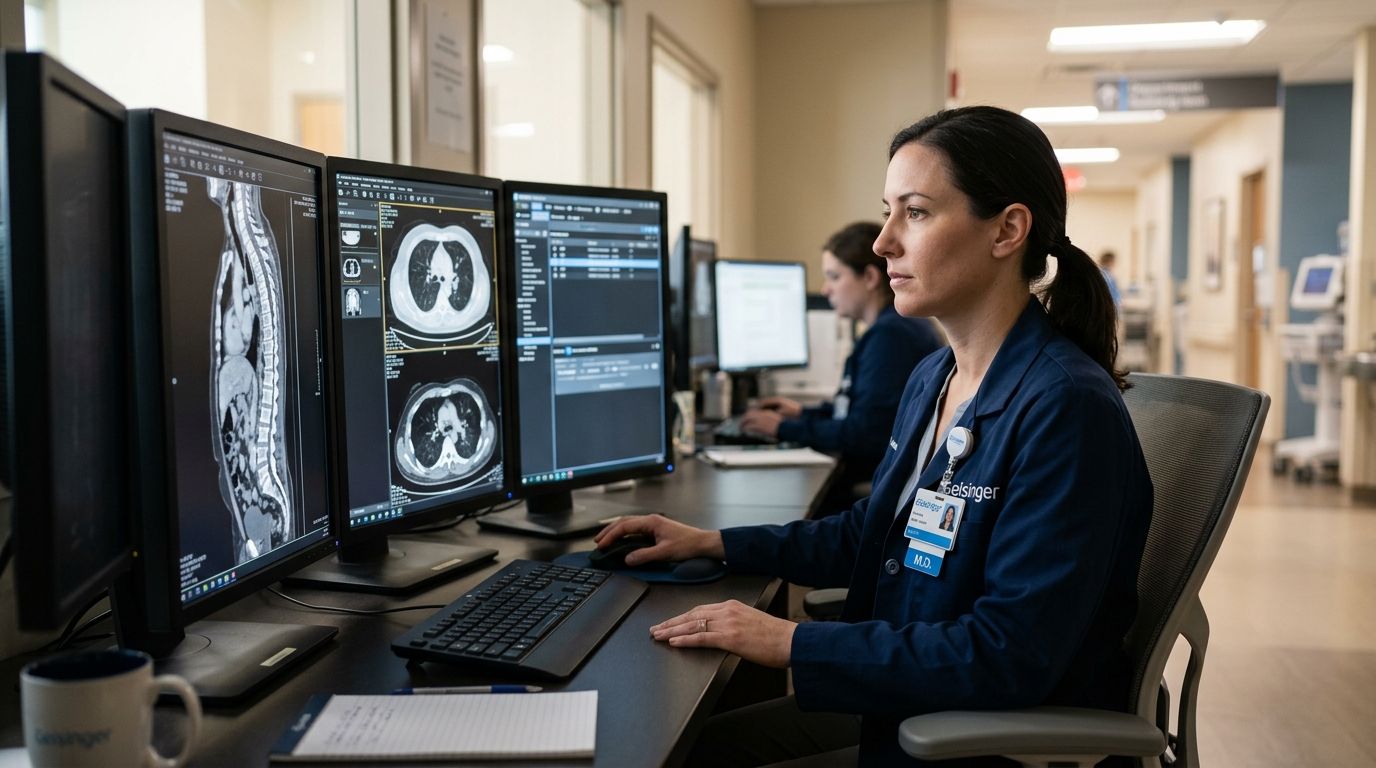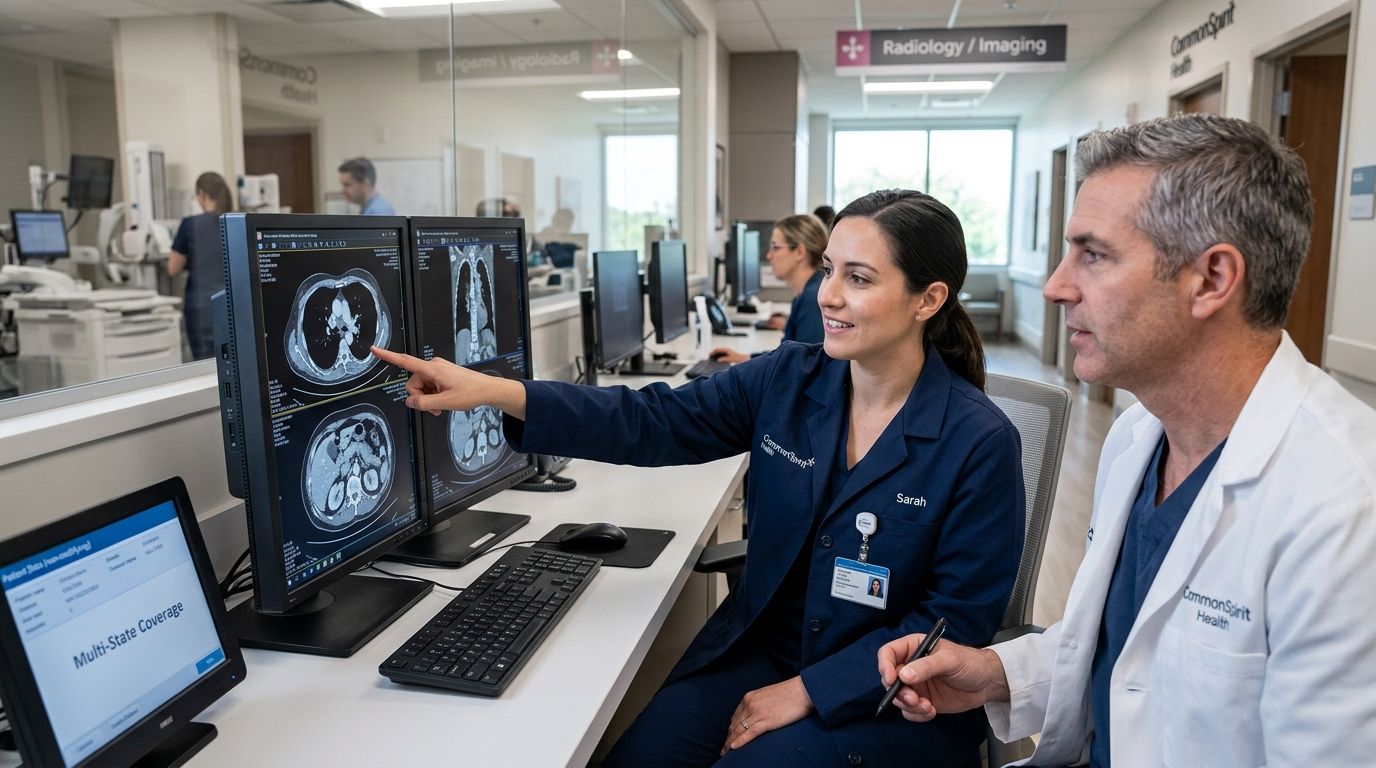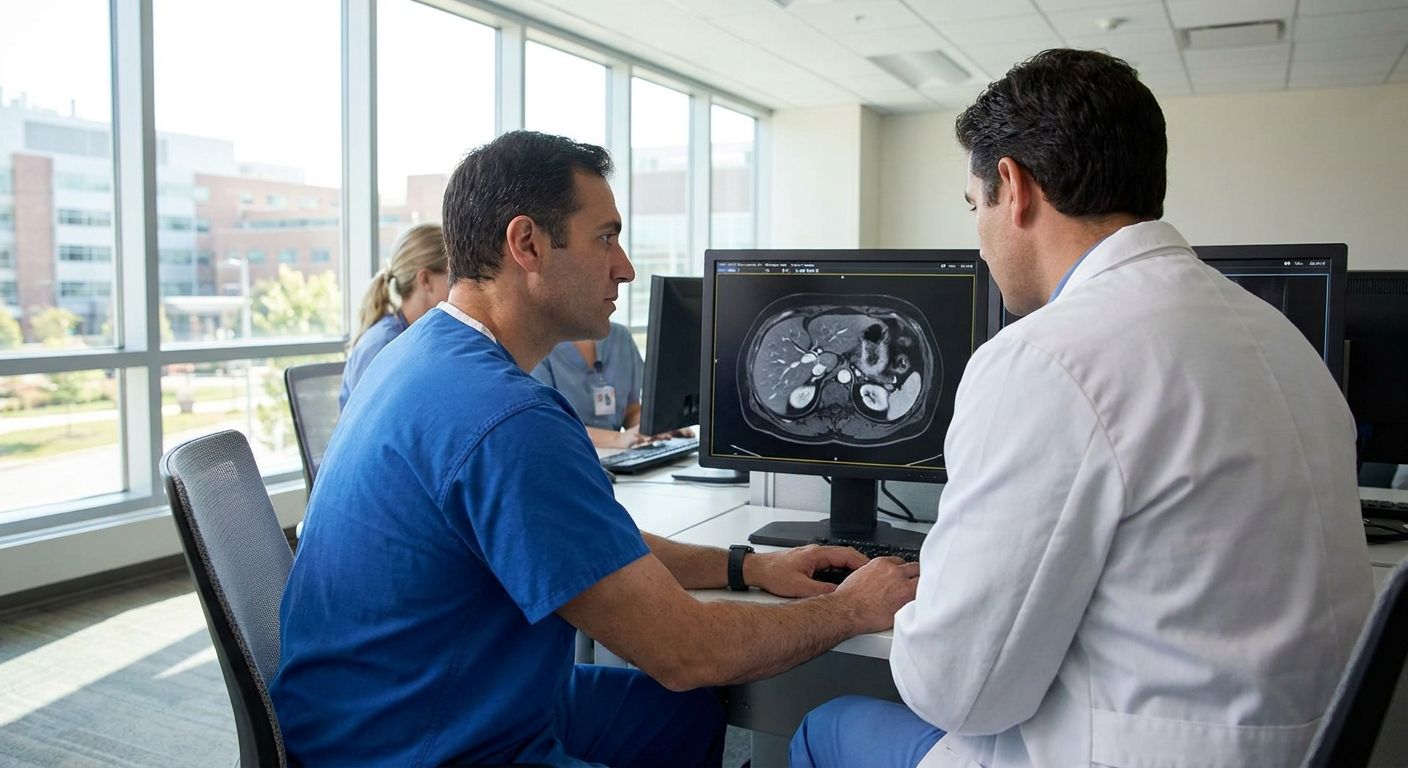
Abdominal MRI radiologist jobs for hepatobiliary imaging demand gadoxetate protocol experience and LI-RADS reporting fluency that a generic body imaging posting never screens for — and most of these openings never use the word "hepatobiliary" in the title. This guide breaks down where transplant centers, academic liver programs, and outpatient HCC surveillance clinics actually post openings in 2026, plus what to verify before you sign anything.
- Hepatobiliary-focused abdominal MRI jobs cluster at transplant centers and academic liver programs, rarely labeled by subspecialty in the title.
- RadBoard aggregates 5,000+ radiology positions from 20 sources, cutting the need to check twenty hospital career pages weekly.
- Confirm gadoxetate (Eovist) protocol volume and LI-RADS reporting templates before accepting any 2026 offer.
- Multiphasic liver MRI reads take longer than routine abdomen/pelvis studies — negotiate RVU weighting accordingly.
Why abdominal MRI radiologist jobs matter for hepatobiliary imaging
Abdominal MRI radiologist jobs for hepatobiliary imaging are attending or locum-level roles built around gadoxetate-enhanced liver MRI, LI-RADS-categorized hepatocellular carcinoma surveillance, and pre-transplant vascular mapping — not the routine abdomen/pelvis call that fills most general body imaging shifts. The caseload skews toward cirrhosis surveillance, biliary tract pathology, and post-transplant complication imaging, and that means comfort with multiphasic dynamic contrast protocols most general fellowship tracks only touch briefly.
Search behavior for this segment looks different from a general radiology job hunt. Candidates aren't typing "radiologist job" into a search bar — they're hunting transplant program openings, academic liver imaging divisions, and outpatient centers running high HCC surveillance volume. Most hospital career sites don't tag postings by hepatobiliary focus, so the same opening might show up as "body imaging," "abdominal MRI," or just "diagnostic radiologist" depending on which department wrote it.
RadBoard indexes 5,000+ radiology positions from 20 sources specifically to cut through that inconsistent tagging, letting you filter by subspecialty keywords instead of scrolling generic titles one hospital system at a time. That matters more for hepatobiliary imaging than almost any other body imaging niche, because the job title tells you the least about actual caseload.
Step 1: Map hepatobiliary-specific search terms before you start
General radiology job boards return hundreds of "abdominal MRI" postings that have nothing to do with liver or biliary caseload. Build your own keyword list first, then run each term separately across job boards, hospital career pages, and RadBoard's search bar.
- LI-RADS reporting experience required or preferred
- Gadoxetate or Eovist protocol experience
- Hepatocellular carcinoma (HCC) surveillance program
- Pre-transplant vascular mapping
- Cirrhosis surveillance imaging volume
- Hepatobiliary or abdominal imaging fellowship trained
Step 2: Go straight to transplant center and academic liver program career pages
Transplant programs post hepatobiliary-heavy openings directly on their own hospital system sites more often than on general job boards, since the role usually sits inside a body imaging or abdominal imaging division rather than a standalone hepatobiliary department. Cross-reference body imaging radiologist jobs alongside dedicated transplant imaging radiologist jobs postings, since programs split the listing differently depending on department structure.
- UNOS-affiliated transplant centers
- NCI-designated comprehensive cancer centers with hepatobiliary tumor boards
- Academic liver transplant surgery divisions
- Hospital system body or abdominal imaging sections
- VA hospitals tied to a transplant referral network
Step 3: Widen the search with an AI-powered aggregator
Once you've exhausted the direct-source approach, an aggregator saves the hours spent re-checking the same twenty hospital sites every week. RadBoard's AI-powered search and swipe-to-save feature surfaces hepatobiliary-adjacent listings pulled from 20 sources in one feed, so a new transplant-center posting shows up without you manually refreshing each career page.
- Save listings mentioning gadoxetate or LI-RADS even when the title just says "body imaging"
- Set alerts for transplant center and academic liver program postings
- Swipe past general abdomen/pelvis-only roles to save search time
- Cross-check locum tenens hepatobiliary coverage against permanent openings
Step 4: Filter by practice setting and call structure
Not every hepatobiliary-heavy job comes with the same lifestyle trade-off. Academic liver programs usually mean lower base pay with more research time; private practice groups reading for transplant centers on contract often carry heavier urgent call.
- Academic medical center with a liver transplant division
- Private practice group under contract with a transplant center
- Multi-specialty group practice with a hepatobiliary imaging niche
- Outpatient imaging center running high HCC surveillance volume
- Teleradiology panel with hepatobiliary-specific case routing
Step 5: Vet the contrast protocol and technology stack before applying
A hepatobiliary reading job is only as good as the equipment and templates behind it. Confirm these details in the first phone screen, not after you've signed.
- Gadoxetate (Eovist) stocked and used routinely, not as a rare add-on
- LI-RADS structured reporting templates built into PACS
- 3D volumetric reconstruction and post-processing lab support
- MR elastography capability for fibrosis staging
- Turnaround expectations for urgent pre-transplant reads
Step 6: Negotiate compensation for complex multiphasic reads
Multiphasic liver MRI protocols take longer to read than a routine abdomen/pelvis CT, and RVU-based comp structures don't always account for that gap in 2026 unless you ask directly.
- RVU weighting adjusted for hepatobiliary protocol complexity
- Call pay specifically for transplant-urgent reads
- CME funding tied to hepatobiliary or transplant imaging conferences
- Employer-paid MOC exam reimbursement built into the offer, not assumed
- Malpractice tail coverage terms specific to transplant-related complications
Where hepatobiliary-focused abdominal MRI jobs actually post
| Option | Best For | Key Limitation |
|---|---|---|
| Hospital system career pages | Direct transplant center and academic liver program openings | Rarely tagged by subspecialty; buried under general radiologist listings |
| ACR/RSNA society job boards | Academic and research-track hepatobiliary roles | Low posting volume, slow update cadence |
| Radiology staffing agencies | Locum coverage for transplant centers with hepatobiliary gaps | Agency fee often lowers the base rate offered to you |
| Direct recruiter outreach | Passive candidates with documented LI-RADS/transplant case volume | Recruiter pipeline limited to their existing client roster |
| RadBoard AI-powered search | Aggregating hepatobiliary and body imaging listings from 20 sources into one feed | Surfaces the listing — you still verify transplant volume and call structure yourself |
RadBoard wins on speed and coverage for scanning hepatobiliary-adjacent listings across 5,000+ radiology positions; it doesn't replace the vetting call you make once you find a match.
Search hepatobiliary imaging jobs now
RadBoard filters 5,000+ radiology job listings from 20 sources by subspecialty.
Common mistakes hepatobiliary-focused radiologists make
- Accepting a "body imaging" title without confirming actual liver caseload. Many postings labeled body imaging or abdominal MRI carry minimal hepatobiliary volume — ask for a monthly case count breakdown before signing.
- Underestimating transplant call burden. Pre-operative vascular mapping for transplant candidates often comes with same-day turnaround demands that don't show up in the base job description.
- Skipping the PACS and template check. A site without LI-RADS structured reporting built in means manual reporting work that eats into RVU-based compensation.
- Not negotiating RVU weighting for multiphasic protocols. Complex liver MRI reads take longer than routine abdomen/pelvis studies, and flat per-study RVU rates penalize hepatobiliary-heavy caseload.
- Assuming employer-paid MOC exam reimbursement is standard. Confirm it in writing in 2026 rather than assuming it's bundled into every offer.
FAQ
What's the best way to find abdominal MRI radiologist jobs for hepatobiliary imaging in 2026?
The fastest route is an aggregator that pulls listings from multiple hospital, staffing, and society sources at once, since hepatobiliary openings are rarely labeled as their own category. RadBoard indexes 5,000+ radiology positions from 20 sources and lets you filter by body imaging and transplant-adjacent roles instead of scrolling generic postings.
Is hepatobiliary imaging a recognized radiology subspecialty?
Hepatobiliary imaging isn't its own ABR-certified subspecialty — it sits inside abdominal/body imaging fellowship training, with added exposure through hepatology, transplant surgery, or oncologic imaging rotations. Job postings usually list it as a skill requirement, like gadoxetate protocols or LI-RADS reporting, rather than a standalone title.
What's the difference between transplant imaging jobs and general abdominal MRI jobs?
Transplant imaging roles specifically require pre- and post-operative vascular mapping for liver and kidney transplant candidates, often with urgent same-day turnaround demands. General abdominal MRI jobs cover broader body imaging without that transplant-specific call burden.
Do hepatobiliary imaging jobs require fellowship training?
Most academic and transplant-center hepatobiliary roles prefer or require an abdominal/body imaging fellowship, since gadoxetate-enhanced liver protocols aren't standard residency curriculum everywhere. Private practice and outpatient imaging center postings sometimes accept board-eligible generalists with documented liver MRI case volume instead.
Are locum tenens abdominal MRI jobs available for hepatobiliary specialists?
Yes — transplant centers and academic liver programs regularly post locum coverage for hepatobiliary-heavy caseload during staffing gaps or sabbaticals. These assignments typically pay per read or per shift rather than a straight salary, so confirm case volume expectations before signing.
How do I know if a job posting actually involves hepatobiliary-heavy caseload?
Look for explicit mentions of gadoxetate or Eovist protocols, LI-RADS reporting, HCC surveillance, or transplant vascular mapping in the listing. Vague "body imaging" or "abdominal MRI" titles often mean routine abdomen/pelvis work with minimal liver-specific volume, so ask for a case count if the posting doesn't specify.
Can teleradiology cover hepatobiliary MRI reads remotely?
Some multiphasic liver MRI studies can be read remotely if the site's PACS supports 3D volumetric reconstruction and LI-RADS templating, but many transplant programs still prefer on-site radiologists for urgent pre-op reads. Check the specific teleradiology contract for hepatobiliary case inclusion before assuming full remote coverage.
What should I negotiate for a hepatobiliary-focused abdominal MRI job in 2026?
Push for RVU weighting that accounts for the longer read time on multiphasic liver protocols, call pay for transplant-urgent reads, and CME funding tied to hepatobiliary or transplant imaging conferences. Employer-paid MOC exam reimbursement is also worth confirming upfront rather than assuming it's included.
One last thing
Most hepatobiliary-heavy postings never use the word "hepatobiliary" in the title — they say liver MRI, transplant imaging, or "body imaging with LI-RADS experience preferred." Searching only the exact subspecialty term misses the majority of real openings in 2026, which is exactly why keyword mapping in Step 1 matters more than the job title itself.