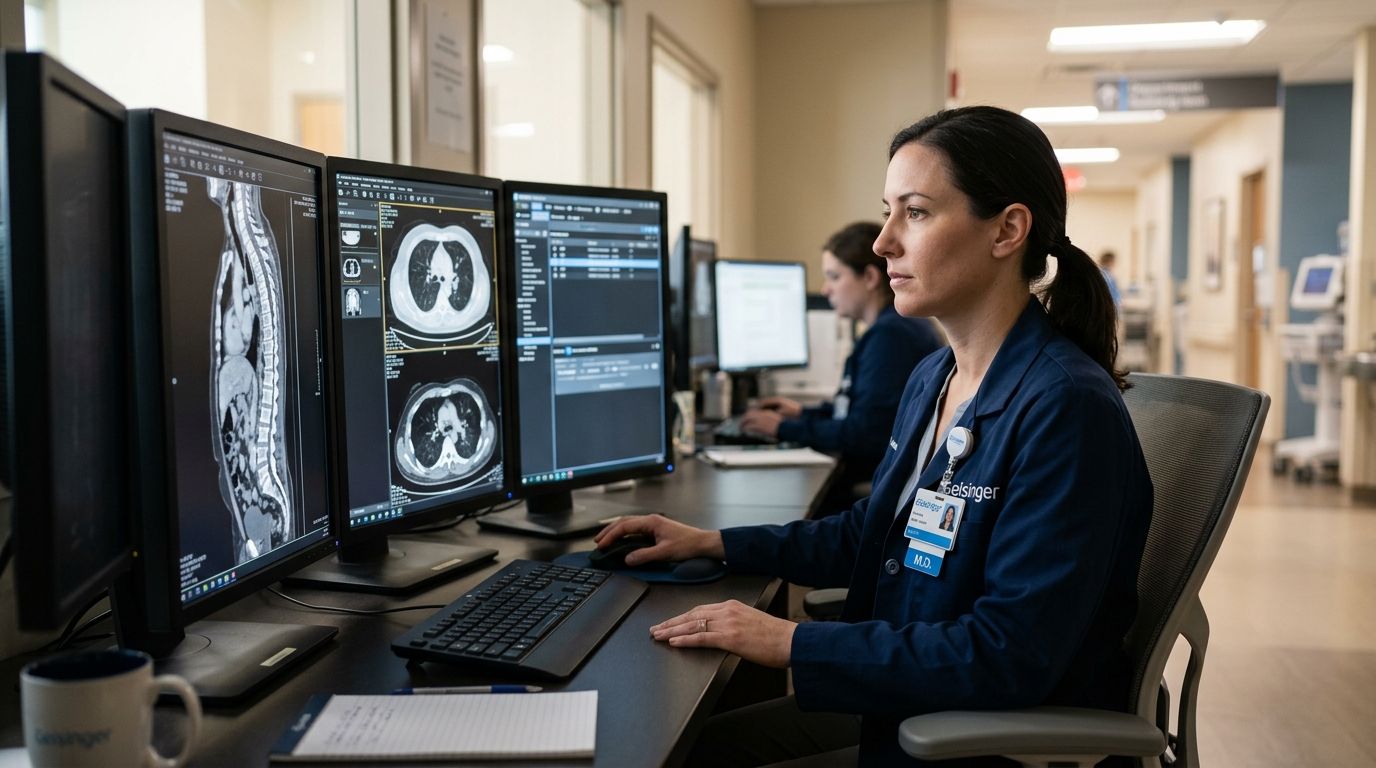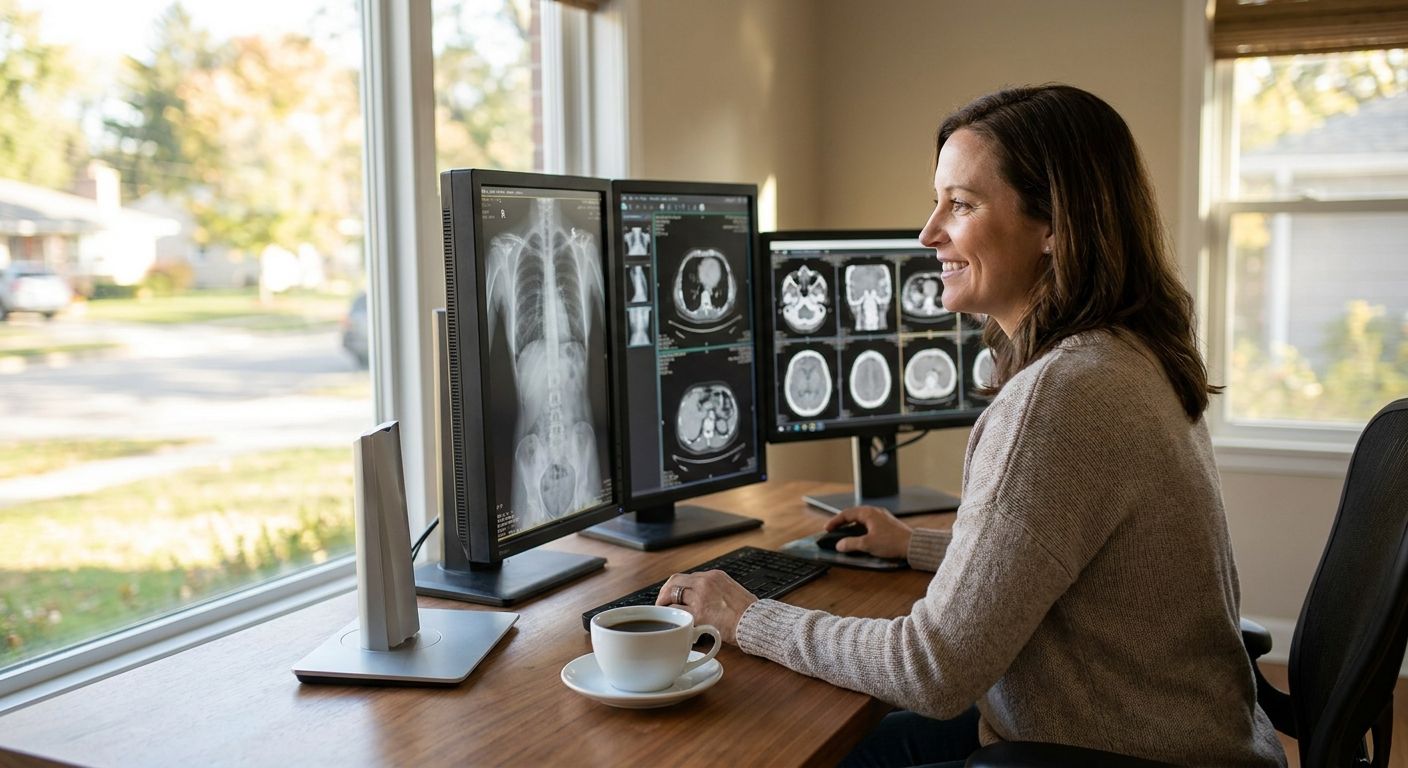
Asynchronous radiology reading jobs for shift-free physicians are positions built around a worklist instead of a clock-in time, letting a radiologist clear studies on personal hours rather than cover a fixed shift block. The pay structure, credentialing footprint, and contract terms for this work look nothing like a standard hospital-employed role, and physicians who chase remote work without checking the schedule model often end up in a job that is remote but still shift-bound.
- Asynchronous radiology reading jobs let you clear a worklist on your own hours instead of a fixed shift.
- Best fits in 2026: 1099 teleradiology contracts, nighthawk batch reading, and PRN async pools.
- Turnaround time, not shift attendance, decides pay and contract renewal in async roles.
- RadBoard tracks 5,000+ radiology jobs from 20 sources, filterable by schedule type.
- Verdict: shift-free reading works best as supplemental or contract income, not a first attending job.
Why asynchronous reading matters for shift-free physicians
Shift-free does not mean workload-free. It means the job measures you on turnaround time and case volume instead of showing up for a 7am or 7pm block, and that distinction changes how you evaluate every posting in 2026. A growing share of listings billed as remote or flexible are actually gig-style radiology jobs with self-scheduling platforms, where you claim open slots from a queue rather than being assigned a shift at all.
The practical draw is control. A physician managing family logistics, a second income stream, or a phased retirement can pick up a batch of studies at 6am, another batch at 9pm, and never touch a rotating schedule. The tradeoff is that pay per study replaces a guaranteed hourly or salaried rate in most of these arrangements, so income becomes a function of speed and volume rather than time served.
The step-by-step approach
Define what shift-free actually means for you
Async covers several structures that pay and feel differently. Before filtering job boards, decide which version fits your life:
- Fully open worklist with no daily minimum, which is true async
- Batch reading with a soft daily target but no fixed start time
- Self-scheduled blocks you claim in advance but must complete once claimed
- On-call overflow reading with unpredictable volume
- Nighthawk overnight pools with a loose coverage window
Audit your license and credentialing footprint
Async platforms route studies to whichever licensed, credentialed radiologist is available, which means your earning ceiling is capped by where you are licensed, not by demand. Check these before applying:
- Active state medical licenses in every state the platform reads for
- Hospital privileging status if the platform contracts with specific facilities
- Malpractice tail coverage from any prior W-2 or 1099 role
- CAQH profile currency, since stale data stalls credentialing for weeks
- DEA registration if any studies involve interventional or sedation coverage
Sort openings by turnaround-time requirement, not job title
Turnaround time is the real job description in asynchronous radiology reading jobs. STAT studies carry tight turnaround expectations even in async models, while routine outpatient reads usually allow far longer windows. A posting titled flexible teleradiology with a hard STAT clause is a completely different job than one with no STAT obligation, so read the turnaround clause before the compensation clause.
Compare 1099 versus W-2 structures
Most true async reading is contracted, not employed, which changes your tax and benefits math entirely. The guide to the best radiology jobs for 1099 independent contractor physicians covers the contractor side in depth. The checklist to run yourself:
- Quarterly estimated tax obligations versus W-2 withholding
- Who carries malpractice insurance and tail coverage
- Whether retirement contributions require a solo 401(k) setup
- Per-study rate versus RVU-based rate structures
- Contract termination and non-renewal notice periods
Build a home reading room that clears compliance
Platforms and hospital contracts both audit home workstation setups before activating your account, and a failed audit delays your first paycheck. A workable setup needs diagnostic-grade displays, a compliant network configuration, backup internet, and a dedicated workspace. The credentialing team will ask for proof of each before your first login.
Test the arrangement as side income first
Jumping from a full-time shift job straight into fully asynchronous reading is a bigger income gamble than most physicians expect, because per-study pay swings with volume in ways a salary never does. Piloting it the way teleradiology side income jobs for full-time attendings are structured shows you your real hourly rate before you give up a guaranteed paycheck.
Negotiate volume floors and case mix before signing
An open worklist means either steady flow or feast-and-famine, and the contract language decides which one you get. Push for:
- A minimum guaranteed case volume, not just a maximum cap
- Clear language on case mix: routine, STAT, and subspecialty
- Rate escalators tied to volume thresholds
- The right to decline studies outside your subspecialty scope
Filter for shift-free radiology jobs
Search 5,000+ listings from 20 sources by schedule type with AI-powered search.
Comparing your asynchronous reading options
| Option | Best for | Key limitation |
|---|---|---|
| Nighthawk overnight pools | Physicians avoiding daytime schedule conflicts entirely | Per-study pay swings with nightly volume |
| 1099 teleradiology contracts | Physicians setting hours across multiple platforms | No employer benefits; you cover malpractice tail and quarterly taxes |
| Locum tenens remote reading blocks | Testing async work between permanent contracts | Assignments stay block-based, not fully open-ended |
| PRN or per diem async pools | Full-time attendings adding supplemental income | Volume capped by the group's overflow needs |
| Employed asynchronous worklist roles | Physicians wanting async structure with W-2 benefits | Daily RVU or case-count targets still apply |
Verdict: 1099 teleradiology contracts and PRN async pools are the two structures that actually deliver on shift-free in 2026 — nighthawk pools and employed worklist roles still carry coverage-window or RVU obligations underneath the flexible label.
“Read the turnaround clause before the pay rate; it decides whether the job is shift-free or just shift-light.”
Common mistakes shift-free physicians make
- Treating remote as a synonym for asynchronous. Plenty of remote postings still assign fixed shift blocks. The location changed, not the schedule model.
- Skipping the turnaround clause. Missing a STAT window on a per-study contract triggers non-renewal faster than missing a shift ever would.
- Licensing after signing instead of before. Studies route by state license in real time, so a missing license means idle hours you cannot bill for.
- Underestimating malpractice tail between 1099 contracts. Tail coverage does not transfer automatically between platforms, and the gap catches physicians who assumed continuity.
- Ignoring the absence of a volume floor. A contract with a cap but no minimum can leave you reading nine studies one week and forty the next, with no income floor.
FAQ
What are asynchronous radiology reading jobs?
Asynchronous radiology reading jobs let a radiologist clear a worklist on their own schedule instead of covering a fixed shift. Pay and contract renewal are tied to turnaround time and case volume rather than hours logged.
How is async reading different from teleradiology?
Teleradiology means reading remotely; async reading specifically means no fixed shift block. A teleradiology job can still require live shift coverage, so the two terms are not interchangeable.
Do asynchronous radiology jobs pay per study or salary?
Most true asynchronous roles pay per study or per RVU rather than a fixed salary. Income scales with reading speed and volume instead of hours worked.
Can a first-year attending take an asynchronous reading job?
It is possible but risky as a sole income source, because per-study pay swings with volume and new attendings often lack the reading speed to hit competitive rates. Pairing it with a base salaried role is the safer 2026 entry point.
What credentialing do you need for async reading across states?
You need an active medical license in every state the platform routes studies from, plus a current CAQH profile and any facility-specific privileging the contract requires.
Are asynchronous radiology jobs 1099 or W-2?
Most are 1099 contractor arrangements. Some larger groups now offer employed asynchronous worklist roles with W-2 benefits and softer daily targets.
How many studies do async radiologists read per day?
Volume varies by contract and case mix, from a handful of subspecialty reads to dozens of routine outpatient studies. The contract's volume floor or cap determines whether that number is predictable.
Are asynchronous radiology jobs good for burnout recovery?
They can be, since removing fixed shift blocks cuts schedule-driven fatigue. Per-study pay pressure can reintroduce a different kind of stress if volume is not capped.
One last thing
Most 2026 postings advertising true async still carry a coverage-window clause buried in the contract: a requirement to stay reachable or active during a set band of hours even though no shift is assigned inside it. That clause, not the pay rate, is what separates a genuinely shift-free job from a repackaged one.