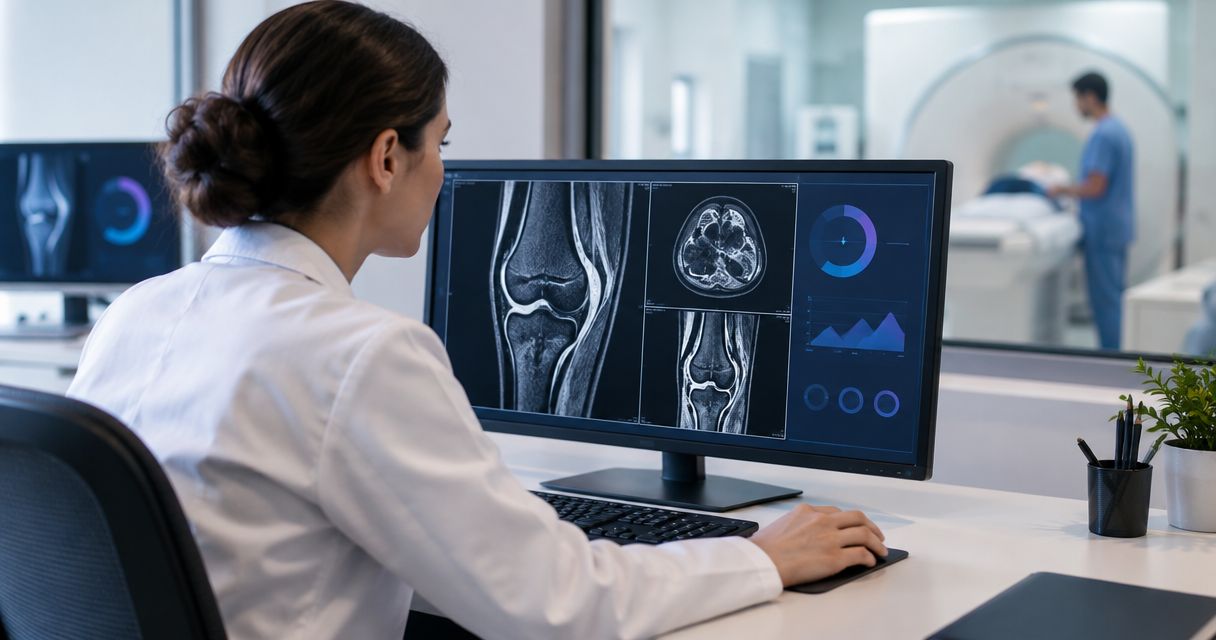
Outpatient MSK radiology jobs in 2026 break into seven distinct tracks, and picking the wrong one means trading procedural variety for call-free schedules you didn't actually want, or vice versa. Best overall for pure outpatient MSK: daytime no-call clinic-only reads. Best for procedure-heavy MSK work: arthrogram and joint injection jobs. Best for testing a practice before committing: locum tenens MSK radiology assignments.
- Daytime no-call outpatient imaging center jobs are the best outpatient MSK radiology jobs for radiologists who want zero call and pure MSK volume in 2026.
- Arthrogram and joint injection roles suit radiologists who want hands-on procedure time inside an MSK-only practice.
- Locum tenens MSK MRI jobs let you sample multiple outpatient sites before signing a permanent contract.
- Orthopedic specialty hospital jobs trade some scheduling flexibility for closer integration with surgeons.
Why this matters
MSK radiology sounds like one job until you compare an orthopedic-hospital MSK role against a freestanding outpatient imaging center gig — the call structure, the modality mix, and the referral relationships are different in each. RadBoard aggregates 5,000+ radiology positions from 20 sources, and outpatient MSK listings show up across every category from imaging-center employment to locum tenens fill-ins.
The 2026 job market for radiologists rewards subspecialty clarity. A radiologist who markets themselves as "general diagnostic" competes against a much larger applicant pool than one who markets themselves as "pure outpatient MSK, no call." That distinction is worth building your search around before you open any single listing.
What makes the best outpatient MSK radiology job
- No inpatient or ED overflow — MSK-only reading lists, not trauma call mixed in
- Modality depth — routine radiographs, MSK MRI, ultrasound-guided procedures, and CT arthrograms under one roof
- Referral network stability — direct feeds from orthopedic surgeons or sports medicine clinics, not a rotating payer mix
- Predictable schedule — daytime hours with a defined start and stop time
- RVU or salary structure that rewards volume — not a flat rate that penalizes a busy outpatient MSK panel
- Procedure access — image-guided injections and arthrograms available to radiologists who want them, optional for those who don't
Outpatient MSK radiology jobs at a glance
| Job type | Best for | Standout feature | Key limitation |
|---|---|---|---|
| Daytime no-call outpatient imaging jobs | Pure outpatient MSK, zero call | Clinic-only reads with fixed hours | Limited exposure to complex trauma cases |
| Orthopedic specialty hospital jobs | Surgeon-integrated MSK practice | Direct tumor board and pre-op collaboration | Less schedule flexibility than freestanding sites |
| Sports medicine imaging jobs | Athlete-focused MSK subspecialists | High MRI and ultrasound volume on joints | Smaller geographic footprint of openings |
| Spine and orthopedic referral network jobs | Spine-focused MSK reads | Deep myelography and spine MRI volume | Fewer general MSK cases mixed in |
| Arthrogram and joint injection jobs | Procedure-oriented MSK radiologists | Built-in fluoroscopic and CT-guided procedure time | Requires comfort with hands-on patient contact |
| Locum tenens MSK MRI jobs | MRI-only reads between contracts | Flexible short-term assignments | No long-term site continuity |
| Locum tenens MSK radiology jobs (general) | Testing a practice before signing | Multiple sites, multiple schedules to compare | Credentialing overhead at each site |
1. Daytime no-call outpatient imaging center jobs: best outpatient MSK radiology job overall
These roles sit inside freestanding outpatient imaging centers reading MSK radiographs, MRI, and ultrasound during standard clinic hours, with no overnight call and no ED overflow. The referral base is orthopedic and sports medicine clinics, so the case mix stays MSK-heavy instead of drifting toward general body work.
Daytime no-call outpatient radiology jobs pros:
- Fixed schedule, no unpredictable overnight pages
- Case mix stays consistently MSK
- Easier to plan personal time around a known shift pattern
Daytime no-call outpatient radiology jobs cons:
- Fewer complex or unusual cases than a trauma-adjacent site
- Volume can plateau in a stable outpatient market
Best for: radiologists who want pure outpatient MSK radiology jobs with a predictable day and no call rotation. Clinic-only, daytime no-call outpatient radiology jobs list openings matching this exact profile. Verdict: Buy.
2. Orthopedic specialty hospital jobs: best for surgeon-integrated MSK practice
Orthopedic specialty hospitals run their own imaging departments feeding directly into surgical planning. Radiologists here work alongside orthopedic surgeons on pre-op imaging, post-op follow-up, and complication reads, often with same-day turnaround expectations.
Orthopedic specialty hospital jobs pros:
- Direct collaboration with orthopedic surgeons on case planning
- Strong subspecialty depth in joint replacement and sports injury imaging
- Institutional stability compared to a standalone imaging center
Orthopedic specialty hospital jobs cons:
- Less scheduling flexibility than a freestanding site
- Reporting turnaround expectations run tighter around surgical cases
Best for: MSK radiologists who want to work inside a surgical ecosystem rather than a purely diagnostic one. Verdict: Buy for surgically-integrated practices; Hold if you want independence from a single referral source.
3. Sports medicine imaging jobs: best for athlete-focused MSK subspecialists
Sports medicine imaging roles concentrate on joint and soft-tissue MRI and ultrasound for active patients, often tied to sports medicine clinics or university athletic programs. The modality mix leans heavily on MRI and dynamic ultrasound over radiographs.
Sports medicine imaging jobs pros:
- Heavy MRI and ultrasound volume, less plain film routine work
- Referral relationships with sports medicine physicians and physical therapists
- Strong fit for radiologists who did an MSK fellowship with a sports emphasis
Sports medicine imaging jobs cons:
- Smaller number of openings compared to general MSK roles
- Often concentrated in specific metro areas near sports medicine hubs
Best for: subspecialists who trained specifically in sports-related MSK imaging. Verdict: Buy if your fellowship focused here.
4. Spine and orthopedic referral network jobs: best for spine-focused MSK reads
These positions run through orthopedic referral networks that funnel spine MRI, myelography, and post-surgical spine imaging to a dedicated reading group. The volume skews toward spine cases rather than extremity joints.
Spine imaging jobs pros:
- Deep spine subspecialty case volume
- Stable referral base from orthopedic spine surgeons
- Often pairs well with a general MSK caseload for variety
Spine imaging jobs cons:
- Less exposure to extremity MSK cases if the group specializes narrowly
- Spine MRI protocol disputes with referring surgeons can add friction
Best for: radiologists who want spine-heavy MSK work inside an established referral network. Verdict: Hold — strong fit only if spine imaging is your actual interest, not a generalist landing spot.
5. Arthrogram and joint injection jobs: best for procedure-oriented MSK radiologists
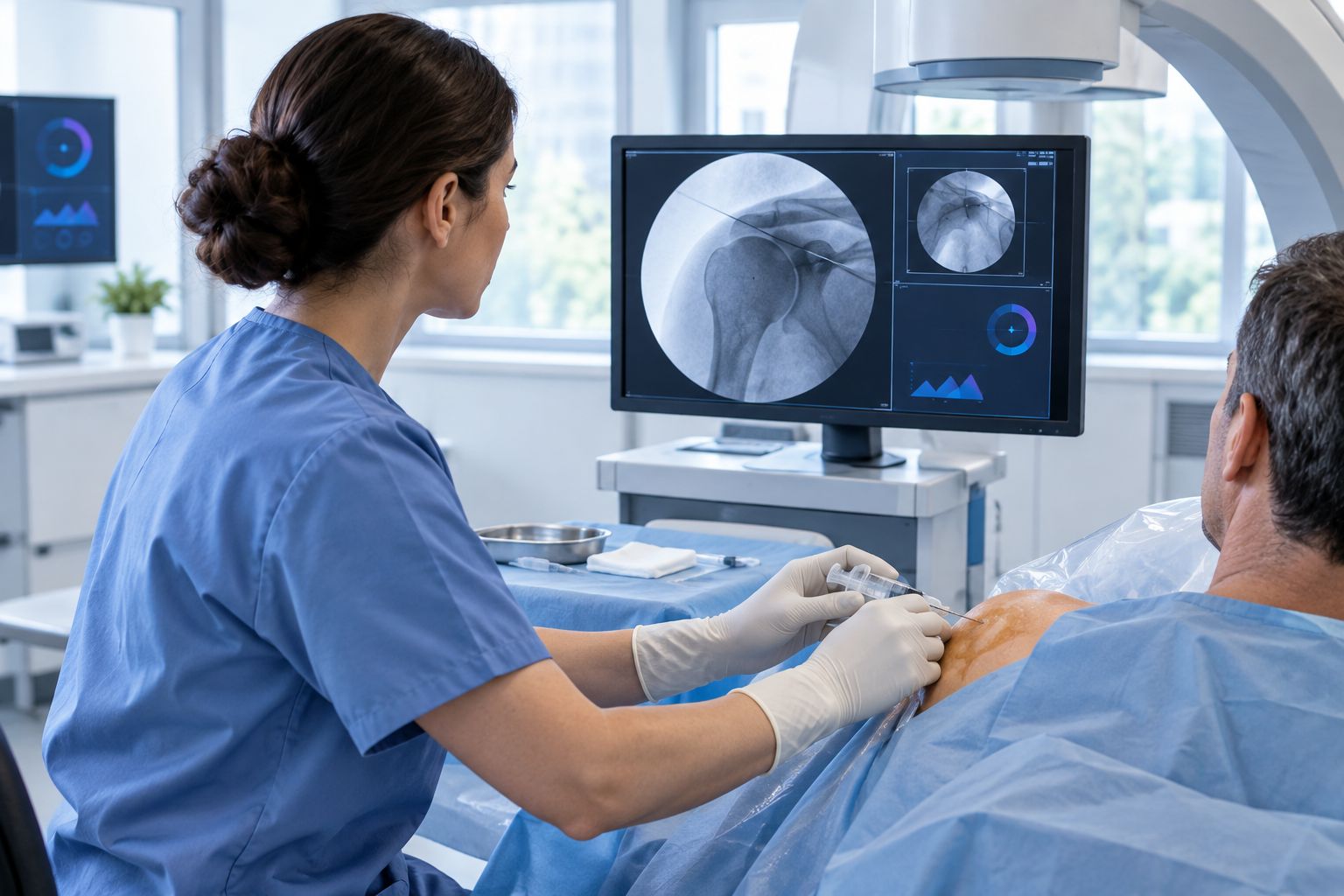
Arthrogram and joint injection roles build fluoroscopic and CT-guided procedure time directly into the outpatient MSK schedule. Radiologists here perform image-guided joint injections and diagnostic arthrograms alongside standard interpretation work, which sets this track apart from pure read-only MSK jobs.
Arthrogram and joint injection jobs pros:
- Hands-on procedure variety inside an otherwise reading-heavy specialty
- Procedure volume can support additional RVU-based compensation
- Appeals to radiologists who miss patient contact from residency rotations
Arthrogram and joint injection jobs cons:
- Requires comfort with direct patient interaction and informed consent conversations
- Procedure scheduling can compress the day compared to read-only roles
Best for: MSK radiologists who want procedural variety without a full interventional radiology fellowship. Arthrogram and joint injection jobs for MSK procedure radiologists outline the procedure volumes typically expected at these sites. Verdict: Buy for procedure-minded MSK radiologists.
6. Locum tenens MSK MRI jobs: best for MRI-only reads between contracts
Locum tenens MSK MRI assignments focus narrowly on MRI interpretation, often at high-volume outpatient sites that need coverage for a set number of weeks or months. These roles suit radiologists between permanent contracts or supplementing a lighter home schedule.
Locum tenens MSK MRI jobs pros:
- Short-term commitment with defined start and end dates
- Pay structures often favor high-volume MRI-only reading
- No long-term administrative or partnership obligations
Locum tenens MSK MRI jobs cons:
- No continuity with a single referral base or patient population
- Credentialing has to happen fresh at each new site
Best for: MSK radiologists who want MRI-focused income between permanent positions. Verdict: Hold — strong short-term fit, weak as a career-long strategy.
7. Locum tenens MSK radiology jobs (general): best for testing a practice before committing
General locum tenens MSK assignments cover the full outpatient MSK caseload — radiographs, MRI, ultrasound, and sometimes procedures — at sites that need temporary coverage. This is the track for radiologists who want to sample a practice's culture, volume, and referral quality before signing a permanent contract.
Locum tenens MSK radiology jobs pros:
- Direct look at daily volume and referral quality before committing long-term
- Exposure to multiple practice models in a short period
- Useful leverage when negotiating a permanent offer afterward
Locum tenens MSK radiology jobs cons:
- Repeated credentialing across sites eats into billable time
- No built-in path to partnership or equity
Best for: radiologists deciding between multiple outpatient MSK practices in 2026 who want real data before signing. Verdict: Buy as a trial strategy, not a permanent plan.
Find outpatient MSK radiology openings
Search current no-call outpatient imaging listings across 20 aggregated sources.
How this ranking was built
The ranking weighs call structure, modality depth, referral stability, schedule predictability, and procedure access — the five criteria listed above. Daytime no-call outpatient imaging jobs rank first because they satisfy the largest share of radiologists searching specifically for pure outpatient MSK radiology jobs with zero call in 2026, not because they're the highest-paying track available.
Which outpatient MSK radiology job should you choose?
If zero call and a predictable daytime schedule matter most, start with daytime no-call outpatient imaging center jobs. If procedure time is the draw, arthrogram and joint injection roles fit better than a read-only position. If you're not sure which practice culture suits you yet, locum tenens MSK assignments give you real data before you sign anything permanent in 2026.
FAQ
What's the best outpatient MSK radiology job in 2026?
Daytime no-call outpatient imaging center jobs rank best overall for radiologists who want pure outpatient MSK radiology jobs with zero call. Arthrogram and joint injection roles are the top pick for radiologists who also want procedure time.
Do outpatient MSK radiology jobs require call coverage?
Most freestanding outpatient imaging center MSK jobs carry no call obligation at all. Orthopedic specialty hospital roles sometimes include limited call tied to surgical cases.
Is locum tenens MSK radiology work a good way to test a practice?
Yes, locum tenens MSK assignments let you see actual case volume, referral quality, and practice culture before signing a permanent contract. The tradeoff is repeated credentialing at each new site.
What modalities do outpatient MSK radiologists read most?
Outpatient MSK radiologists primarily read radiographs, MSK MRI, and musculoskeletal ultrasound, with CT arthrograms and image-guided procedures at sites that offer them.
Are sports medicine imaging jobs different from general outpatient MSK jobs?
Sports medicine imaging jobs skew more heavily toward MRI and dynamic ultrasound for joint and soft-tissue injuries, tied to sports medicine clinics rather than a general orthopedic referral base.
Can I do arthrograms and joint injections without an interventional radiology fellowship?
Yes, arthrogram and joint injection roles are typically staffed by MSK-trained radiologists, not IR fellows, since the procedures are fluoroscopic or CT-guided joint injections rather than vascular interventions.
How do I find outpatient MSK radiology openings fast?
Aggregated platforms that pull listings from multiple sources at once cut search time compared to checking individual health system career pages one by one.
One last thing
The modality mix is the detail most radiologists skip when comparing outpatient MSK radiology jobs — a site that's 80% plain radiographs reads very differently day-to-day than one that's 60% MRI and ultrasound, even if both call themselves "outpatient MSK." Ask for a breakdown before you sign, not after your first week.