
Best overall: part-time outpatient radiology with written no-call terms. Best for working from your new home: daytime teleradiology. Best for seasonal work: defined locum assignments. This 2026 guide compares job formats for semi-retired radiologists relocating to the Sun Belt; RadBoard aggregates 5,000+ radiology positions from 20 sources for your search.
- Best radiology jobs for retirees Sun Belt: prioritize part-time outpatient roles with written schedule and call limits.
- RadBoard suits radiologists comparing career opportunities across aggregated job sources.
- Daytime teleradiology fits home-based work; confirm reading hours, licensing, and workload before signing.
- Defined locum assignments fit seasonal work; verify assignment dates, cancellation terms, and malpractice coverage.
Why this matters
Relocating and reducing clinical work are separate decisions. A position near your new home does not meet your retirement goals if it recreates the call schedule, reading pressure, or administrative obligations you intended to leave.
For a 2026 search, rank the work arrangement before the city. This guide compares job formats, not named employers or verified local openings. You still need to confirm each employer’s actual duties and terms.
RadBoard is a radiology job search platform for physicians comparing opportunities across sources. It supports discovery; the employer’s written offer establishes the schedule, scope, and obligations.
What makes the best radiology jobs for retirees?
These criteria determine the ranking. Geography matters, but it comes after whether the job fits the clinical work you want to retain.
- Schedule control: Written working days, shift boundaries, and rules for extra coverage.
- Call boundaries: Explicit treatment of nights, weekends, holidays, and backup responsibilities.
- Clinical fit: Modalities, procedures, and subspecialty work that match your current competence.
- Workload clarity: Expected volume, turnaround requirements, interruptions, and end-of-shift handoffs.
- Relocation fit: A workable commute or an approved remote reading location, with required licensing and privileges confirmed.
- Exit clarity: Understandable notice, cancellation, malpractice, and post-employment obligations.
A short shift with an undefined worklist is not a clearly bounded job. Ask what happens when cases remain at your scheduled stopping time, and who handles urgent findings after you leave.
Radiology retirement options at a glance
| Job format | Best for | Standout feature | Key limitation |
|---|---|---|---|
| Part-time outpatient radiology | A recurring local routine | Reduced scheduled clinical time | Part-time status does not establish no-call terms |
| Daytime teleradiology | Working from your new home | Remote interpretation | Remote work does not establish flexible hours |
| Defined locum assignments | Seasonal work blocks | A specified assignment period | Credentialing and cancellation need close review |
| Per-diem breast imaging | Occasional patient-facing shifts | Discrete coverage days | Mammography qualifications and procedure scope matter |
| Hybrid onsite and remote radiology | Keeping local professional contact | A split work location | Coverage and logistics can become fragmented |
| Part-time teaching-focused radiology | Retaining an educational role | Trainee interaction | Teaching time needs protection from service demands |
1. Part-time outpatient: best for a recurring local routine
Part-time outpatient radiology gives you a recurring role at an imaging practice without committing to a full-time schedule. The strongest retirement fit is a position that specifies working days, limits call, and defines the studies and procedures you cover.
Do not treat “outpatient” as shorthand for light work. Ask about diagnostic consultations, contrast responsibilities, procedures, and reading expectations before evaluating the commute.
Part-time outpatient pros:
- Recurring scheduled days make personal commitments easier to organize.
- Onsite work retains contact with technologists and referring clinicians.
- Defined clinical scope supports a focused transition from full-time practice.
Part-time outpatient cons:
- The arrangement still requires travel to the workplace.
- Reduced hours do not establish reduced call or workload expectations.
Best for: A semi-retired radiologist who wants a stable local routine and continued clinical contact after relocating.
Ask whether the employer can add shifts without your agreement. A retirement-oriented contract should distinguish voluntary extra work from required coverage.
Verdict: Buy into this format when the schedule, call exclusions, and workload boundaries are written into the offer.
2. Daytime teleradiology: best for working from your new home
Daytime teleradiology separates your reading location from the facilities whose studies you interpret. It suits a relocation plan built around working from home, provided the employer approves that location and the clinical requirements are satisfied.
In 2026, evaluate remote radiology as a clinical coverage role, not a promise of self-scheduling. Confirm the shift in your local time zone, the worklist composition, and the response expected for urgent findings.
Daytime teleradiology pros:
- Home-based interpretation removes the commute for remote shifts.
- Defined reading sessions keep clinical work separate from onsite duties.
- Remote work supports a home-centered relocation plan.
Daytime teleradiology cons:
- Licensing, credentialing, and coverage requirements still apply.
- Reading targets and turnaround expectations can constrain your working pace.
Best for: A radiologist who wants home-based clinical work and accepts a clearly defined reading schedule.
Request the workstation requirements, technical support arrangements, and downtime procedure. Also ask who handles phone calls, critical-result communication, and unfinished cases at shift change.
Verdict: Buy when the remote location is approved and the reading obligations fit your intended working hours.
3. Defined locum assignments: best for seasonal work blocks
A defined locum assignment provides temporary coverage for a specified period. This format fits physicians who want clinical work concentrated into selected parts of the year rather than recurring obligations throughout it.
For a Sun Belt relocation, separate local assignments from assignments requiring travel. The relevant question is whether the contract protects your intended work calendar, not whether the listing uses the word “flexible.”
Defined locum assignment pros:
- Specified assignment dates establish the intended coverage period.
- Temporary work avoids committing immediately to a permanent position.
- Separate assignments let you assess different practice settings.
Defined locum assignment cons:
- Each assignment requires review of its credentialing and coverage conditions.
- Cancellation or extension provisions can disrupt your planned calendar.
Best for: A semi-retired radiologist who prefers seasonal clinical work to a standing weekly schedule.
Confirm the facility, scope, dates, call duties, and cancellation language before proceeding. Identify who provides malpractice coverage and what protection applies when the assignment ends.
Verdict: Buy for bounded seasonal work; skip assignments that leave the coverage period or duties undefined.
4. Per-diem breast imaging: best for occasional patient-facing shifts
Per-diem breast imaging provides coverage on individual scheduled days. It fits radiologists who want to retain breast imaging work and patient interaction without choosing a recurring part-time position.
The scope deserves particular attention. Screening interpretation, diagnostic evaluation, ultrasound, and biopsy work are different commitments; the employer must specify which responsibilities belong to your shift.
Per-diem breast imaging pros:
- Individual coverage days suit occasional clinical participation.
- Breast imaging retains direct patient and technologist interaction.
- A defined modality focus supports continued use of established expertise.
Per-diem breast imaging cons:
- Mammography work requires applicable qualifications and continuing compliance.
- Diagnostic follow-up and procedures require clear responsibility beyond the initial interpretation.
Best for: A currently qualified breast imager who wants selected onsite days rather than general radiology coverage.
Ask who manages callbacks, pathology correlation, and communications after your coverage day. Do not accept a screening-only description if the actual schedule includes diagnostic or procedural duties.
Verdict: Buy when your qualifications are current and the complete clinical scope is explicit; otherwise hold until both are resolved.
5. Hybrid radiology: best for keeping local professional contact
Hybrid radiology combines onsite and remote work. It suits physicians who want some local clinical connection without commuting for every scheduled reading session.
Evaluate the onsite and remote portions separately. A hybrid label does not explain whether you have fixed days, interchangeable shifts, or an obligation to attend in person whenever coverage changes.
Hybrid radiology pros:
- Onsite days retain relationships with the local clinical team.
- Remote days reduce commuting within the agreed schedule.
- Separate settings support a mix of interpretation and onsite responsibilities.
Hybrid radiology cons:
- Changing locations adds scheduling and technical coordination.
- Vague coverage rules can turn planned remote days into onsite obligations.
Best for: A relocating radiologist who values local professional relationships but does not want every workday onsite.
Confirm which duties require physical presence and how schedule changes are approved. If remote days matter to your retirement plan, put them in the agreement rather than relying on an interview assurance.
Verdict: Buy when the split is fixed and responsibilities are clear; skip open-ended onsite substitution requirements.
6. Teaching-focused radiology: best for retaining an educational role
A part-time teaching-focused position centers your contribution on trainee education alongside defined clinical responsibilities. It fits physicians who want to remain involved in radiology without making uninterrupted production reading the central purpose of work.
Teaching-focused does not mean clinical-duty-free. Ask how supervision, conferences, service coverage, research, and administrative work are allocated before deciding whether the position fits semi-retirement.
Teaching-focused radiology pros:
- Trainee interaction provides a distinct reason to remain professionally active.
- Scheduled educational duties make the role’s purpose explicit.
- Case discussion uses clinical experience beyond individual report production.
Teaching-focused radiology cons:
- Clinical service can compete with intended teaching time.
- Meetings and preparation add work outside the visible reading schedule.
Best for: An experienced radiologist who wants education to remain a central professional activity.
Request the actual allocation of clinical and educational duties. Clarify whether research or leadership responsibilities are expected, even when the advertised position emphasizes teaching.
Verdict: Hold until the employer specifies protected teaching duties and the full clinical commitment.
How these job formats are ranked
Part-time outpatient radiology ranks first because a recurring local schedule directly addresses the transition from full-time practice to bounded clinical work. Daytime teleradiology ranks next for home-based work; defined locum assignments lead for seasonal participation.
This is a use-case ranking, not an employer performance ranking. For your 2026 search, move an option down whenever its written obligations conflict with your schedule, clinical scope, or exit requirements.
Screen a Sun Belt offer before choosing the city
Use this 3-step screening process before treating an appealing location as a reason to accept. RadBoard brings together radiology positions from multiple sources; your screening process turns a broad search into a shortlist that fits retirement.
Schedule first
Write down the work you will accept: recurring days, occasional shifts, seasonal assignments, or home-based sessions. Then require the employer to describe nights, weekends, holidays, backup coverage, and schedule changes in writing.
Scope next
Match the case mix and procedures to your current practice. Confirm licensing, privileges, recent clinical activity requirements, and any reentry expectations directly with the relevant organizations before committing to a start date.
Exit terms
Have qualified advisers review notice requirements, malpractice provisions, restrictive clauses, and tax implications. For a 2026 relocation, also confirm what happens if credentialing is incomplete when the intended start date arrives.
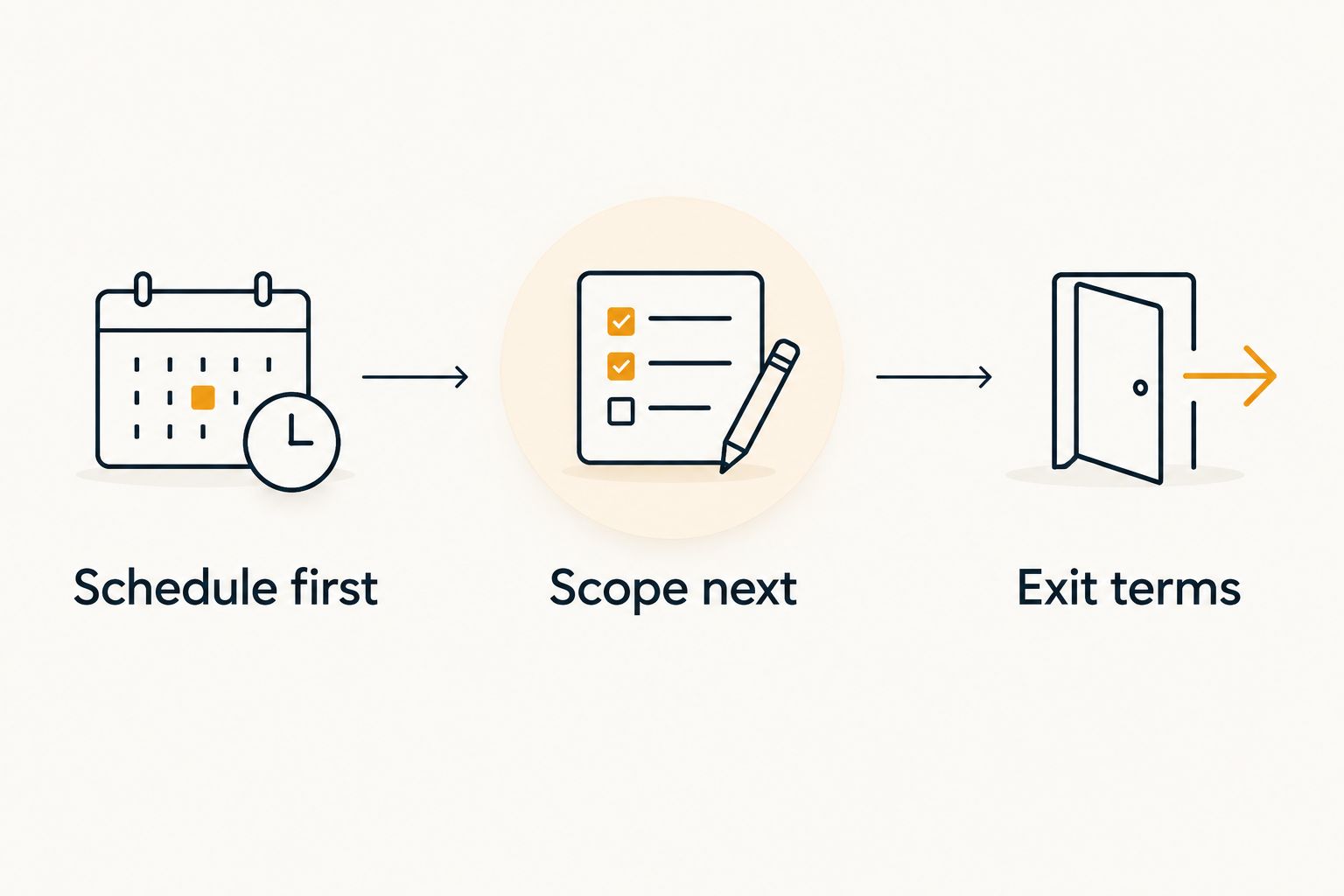
A location shortlist should follow this screen, not replace it. Visit the actual worksite, check the commute during scheduled working hours, and confirm whether coverage involves additional facilities.
Search radiology positions
Compare career opportunities aggregated from 20 sources.
Which radiology job should you choose?
Choose part-time outpatient radiology with written no-call terms as the default for a recurring local routine. Choose daytime teleradiology instead when working from home is your primary requirement, or defined locum assignments when you want seasonal work.
The best Sun Belt offer is the one that preserves your intended retirement schedule. In 2026, reject vague flexibility claims and compare the actual obligations: hours, case mix, call, coverage changes, and departure terms.
FAQ
What are the best radiology jobs for retirees moving to the Sun Belt?
Part-time outpatient radiology with written no-call terms is the strongest default for a recurring local routine. Daytime teleradiology fits home-based work, while defined locum assignments fit seasonal clinical participation.
Is teleradiology better than onsite work for a semi-retired radiologist?
Teleradiology is the better fit when working from home matters more than onsite clinical contact. Confirm the approved reading location, shift hours, licensing, workload, and technical support before accepting.
Does a part-time outpatient radiology job mean no call?
No. Part-time status and outpatient location do not establish no-call terms; require written clarification of nights, weekends, holidays, and backup duties.
Can a retired radiologist return for occasional shifts?
Occasional clinical work requires meeting the employer’s and relevant authorities’ current requirements. Confirm active licensure, privileges, recent clinical activity expectations, and any reentry process before scheduling work.
Which Sun Belt state is best for a retiring radiologist?
Choose the state after identifying a job format and offer that fit your intended schedule. Compare the approved work location, commute, licensing requirements, and personal relocation priorities rather than treating a state name as a job-quality measure.
What should a seasonal locum radiologist check before signing?
Check assignment dates, clinical scope, call responsibilities, cancellation terms, and malpractice provisions. Establish who handles credentialing and what happens if the start date changes.
How does RadBoard help with a retirement-oriented radiology search?
RadBoard aggregates 5,000+ radiology positions from 20 sources and provides search and swipe-to-save features. Use it to discover opportunities, then verify retirement-critical terms directly with each employer.
One last thing
Ask who owns the worklist when your shift ends. That answer exposes whether a supposedly bounded job really protects your stopping time.
Put the handoff process beside the call schedule in your final offer review. A retirement-oriented position needs a clear end to the working day, not just a clear start.