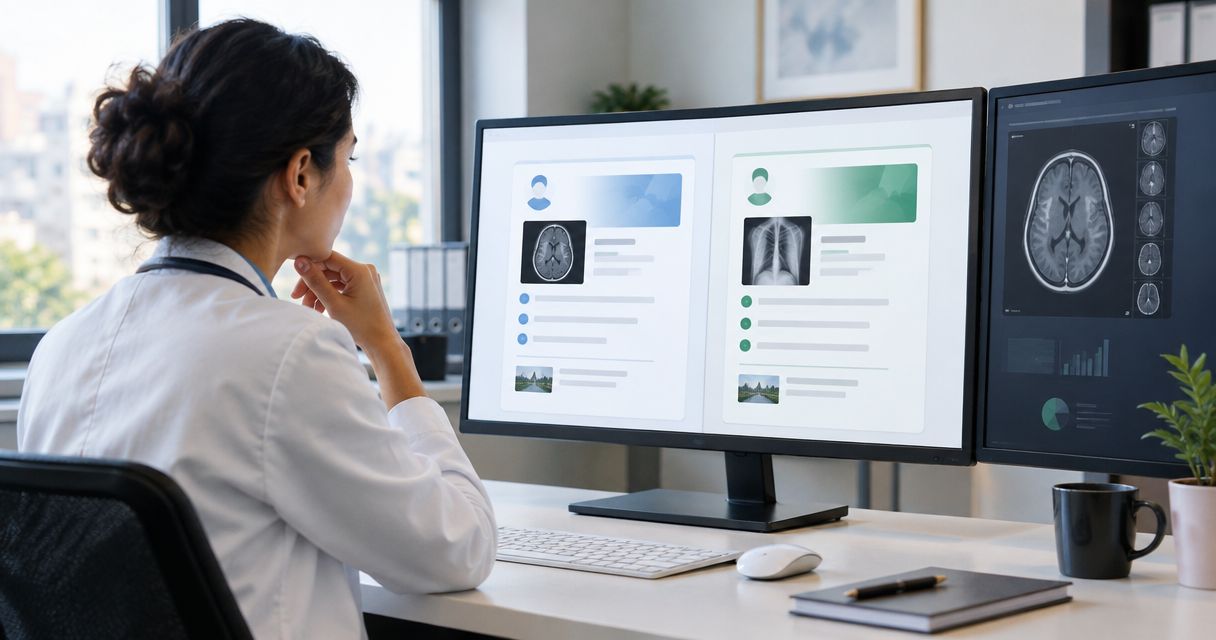
Best overall: outpatient musculoskeletal radiology. Best for fixed on-site sessions: breast imaging. Best for evening reading blocks: diagnostic neuroradiology. This 2026 guide ranks the best radiology subspecialties for part-time work by schedule boundaries, procedural duties, and handoff requirements—not compensation or opening counts.
- Outpatient musculoskeletal imaging leads the best radiology subspecialties for part-time work when procedures and call are excluded.
- Breast imaging suits fixed on-site sessions; diagnostic neuroradiology suits defined evening reading blocks.
- RadBoard aggregates 5,000+ radiology positions from 20 sources; confirm part-time terms directly with each employer.
- Choose the actual coverage agreement, not the subspecialty label or a remote-work promise.
Why this matters
A part-time appointment does not automatically mean protected time off. Reporting, protocol questions, critical-result communication, procedures, and call all need an assigned owner when your scheduled session ends.
RadBoard is a radiology job search platform for physicians comparing opportunities across sources. Its 5,000+ radiology positions come from 20 sources; those totals describe the platform, not the number of part-time positions in any subspecialty.
For your 2026 search, start with the work you want to perform and the responsibilities you want to exclude. A narrow reading assignment with a documented handoff is a different job from a reduced-FTE appointment carrying continuing clinical obligations.
What makes the best radiology subspecialty for part-time work?
Use these criteria before comparing job titles:
- Bounded sessions: Your contract identifies when coverage starts, ends, and transfers.
- Defined case mix: You know the modalities, patient population, and general radiology duties included.
- Procedural separation: Reading, procedures, and patient follow-up have explicit coverage arrangements.
- Location fit: Remote interpretation does not substitute for required on-site clinical duties.
- Proportional obligations: Call, meetings, teaching, and administration match the agreed appointment.
- Continuity coverage: Someone owns pending studies, addenda, and clinical questions during your absence.
The strongest part-time arrangement limits both scheduled hours and responsibility outside those hours. A subspecialty earns its place here by offering a useful coverage model—not by guaranteeing flexibility at every practice.
Best part-time radiology subspecialties at a glance
| Rank and subspecialty | Best for | Standout work model | Key limitation |
|---|---|---|---|
| 1. Musculoskeletal radiology | Outpatient interpretation | Defined MRI and radiograph reading sessions | Procedures and general coverage require separate agreement |
| 2. Breast imaging | Fixed on-site sessions | Scheduled screening, diagnostic, and procedural work | Patient-facing duties limit location flexibility |
| 3. Diagnostic neuroradiology | Evening reading blocks | Defined brain, spine, and head-and-neck coverage | Acute imaging requires prompt communication and handoffs |
| 4. Abdominal imaging | Hybrid clinical work | Remote interpretation plus scheduled on-site duties | Protocoling and procedural responsibilities need boundaries |
| 5. Nuclear medicine | Scheduled PET interpretation | A specified interpretation service | Therapy and supervision duties are separate considerations |
| 6. Pediatric radiology | Planned specialist relief | Defined coverage within a pediatric service | Fluoroscopy, consultations, and broad case mix complicate scope |
1. Musculoskeletal radiology: best for outpatient reading sessions
Musculoskeletal radiology covers imaging of bones, joints, muscles, and related structures. An interpretation-focused role separates that work from joint injections, arthrograms, and other hands-on duties when the practice assigns those services separately.
Best for: Fellowship-trained MSK radiologists seeking defined outpatient reading sessions rather than procedural coverage.
Ask whether the position is genuinely MSK-only. An orthopedic referral workload and a mixed hospital worklist create different expectations, even when both advertisements use the same subspecialty title.
Musculoskeletal radiology pros:
- Offers a clearly describable anatomical scope.
- Supports interpretation-focused assignments when procedures are excluded.
- Lets you evaluate the MRI, CT, ultrasound, and radiograph mix before accepting.
Musculoskeletal radiology cons:
- Arthrograms and injections require separate location and staffing arrangements.
- A subspecialty title does not exclude general radiology or call.
For a 2026 application, request a representative worklist and the procedure expectations. Confirm who answers orthopedic consultations after your session ends.
Verdict: Hold until the employer documents an outpatient reading scope, procedural exclusions, and handoff coverage.
2. Breast imaging: best for fixed on-site sessions
Breast imaging combines screening and diagnostic interpretation with patient-facing assessment and image-guided procedures. A session-based appointment suits physicians who want specific clinical days rather than an entirely remote role.
Best for: Breast imagers who prefer scheduled on-site work and direct patient interaction.
Distinguish screening interpretation from a complete breast service. Diagnostic examinations, ultrasound, biopsies, and communication of results introduce responsibilities that a reading-only description does not capture.
Breast imaging pros:
- Allows a specific agreement about screening, diagnostic, and biopsy sessions.
- Preserves direct clinical work in a reduced schedule.
- Makes on-site responsibilities identifiable during contract review.
Breast imaging cons:
- Hands-on procedures and patient assessment require appropriate on-site coverage.
- Follow-up and quality responsibilities need coverage beyond your attendance days.
Confirm the applicable Mammography Quality Standards Act personnel requirements and the facility's credentialing expectations. Reducing your schedule does not remove professional qualification obligations.
Verdict: Hold until the practice assigns responsibility for results, biopsies, and follow-up on your days away.
3. Diagnostic neuroradiology: best for evening reading blocks
Diagnostic neuroradiology covers brain, spine, and head-and-neck imaging. Keep diagnostic interpretation separate from neurointerventional practice when assessing part-time options; the clinical duties are not interchangeable.
Best for: Diagnostic neuroradiologists seeking defined evening coverage rather than daytime outpatient sessions.
A remote assignment still requires real-time clinical communication. Stroke imaging, hemorrhage, and other urgent findings demand an explicit escalation process and a responsible receiving clinician.
Diagnostic neuroradiology pros:
- Supports an anatomically defined interpretation assignment.
- Separates diagnostic reading from interventional procedures when contracted accordingly.
- Allows clear discussion of acute versus nonurgent case responsibility.
Diagnostic neuroradiology cons:
- Time-sensitive examinations constrain control over reading pace.
- Overnight or weekend obligations defeat a daytime-only preference unless excluded.
For your 2026 shortlist, ask about preliminary versus final reports, emergency coverage, and general radiology expectations. Confirm who handles examinations received near the end of the shift.
Verdict: Hold until turnaround expectations and end-of-shift ownership are explicit.
4. Abdominal imaging: best for a hybrid clinical schedule
Abdominal imaging includes interpretation of abdominal and pelvic CT, MRI, and ultrasound. A hybrid appointment separates remote reading from scheduled on-site work, but only when the practice defines each component.
Best for: Abdominal radiologists who want interpretation sessions alongside selected on-site clinical duties.
Ask whether the job includes biopsies, fluoroscopy, contrast-related responsibilities, or protocoling. Do not treat those duties as incidental: each affects how reliably you can finish a session and disconnect.
Abdominal imaging pros:
- Offers a defined anatomical focus across several modalities.
- Permits separate negotiation of interpretation and procedural duties.
- Supports a deliberately structured combination of remote and on-site work.
Abdominal imaging cons:
- Complex comparisons and clinical consultations require time beyond image review.
- Mixed emergency and outpatient coverage complicates workload boundaries.
Request the actual division of reading, protocoling, and procedures. If the employer describes the role as hybrid, ask which duties require attendance and who sets those days.
Verdict: Hold until the remote and on-site portions have separate, written expectations.
5. Nuclear medicine: best for scheduled PET interpretation
Nuclear medicine includes diagnostic imaging and therapeutic applications of radiopharmaceuticals. For part-time work, evaluate a PET interpretation assignment separately from a role that includes therapy, supervision, or broader service responsibilities.
Best for: Appropriately trained physicians seeking a specified PET interpretation service.
The relevant question is scope, not simply whether examinations are scheduled. Determine whether you interpret the CT component, cover other nuclear medicine examinations, attend conferences, or participate in treatment services.
Nuclear medicine pros:
- Allows an explicitly defined interpretation service.
- Separates diagnostic reading from therapy duties when the agreement does so.
- Provides a focused basis for discussing oncology imaging responsibilities.
Nuclear medicine cons:
- A reading assignment does not establish qualification for every nuclear medicine duty.
- Therapy and supervision responsibilities add separate clinical and regulatory requirements.
Confirm your credentials against the exact services involved. Do not accept a broad nuclear medicine coverage obligation on the strength of a narrow PET reading description.
Verdict: Hold until diagnostic interpretation, supervision, and therapy responsibilities are distinguished.
6. Pediatric radiology: best for planned specialist relief
Pediatric radiology addresses imaging in children across multiple organ systems and modalities. A defined relief appointment suits physicians who want scheduled participation in a pediatric service without assuming an unspecified continuing appointment.
Best for: Pediatric radiologists seeking planned coverage with a clearly limited service assignment.
Clarify whether the role includes fluoroscopy, ultrasound supervision, emergency imaging, teaching, or procedures. Pediatric coverage is not equivalent to an adult general radiology assignment with a different patient age range.
Pediatric radiology pros:
- Preserves work within a specialist pediatric team.
- Allows advance agreement on the service being covered.
- Supports a defined combination of interpretation and clinical consultation.
Pediatric radiology cons:
- Hands-on examinations and procedures require on-site arrangements.
- Broad departmental coverage increases the importance of current scope and competence.
Ask who provides support for examinations outside your agreed expertise. Match your appointment to the actual pediatric service rather than accepting an unrestricted coverage description.
Verdict: Hold until the service list, on-site duties, and backup arrangements match your current practice.
How these subspecialties were ranked
This is a work-design ranking, not a measured ranking of part-time openings, pay, or employer demand. The order favors defined outpatient interpretation first, then distinct alternatives for on-site sessions, evening blocks, hybrid work, scheduled PET reading, and pediatric relief.
Within each category, the contract decides the result. An MSK position with unrestricted call is a weaker fit for protected time off than a pediatric appointment with bounded sessions and reliable coverage.
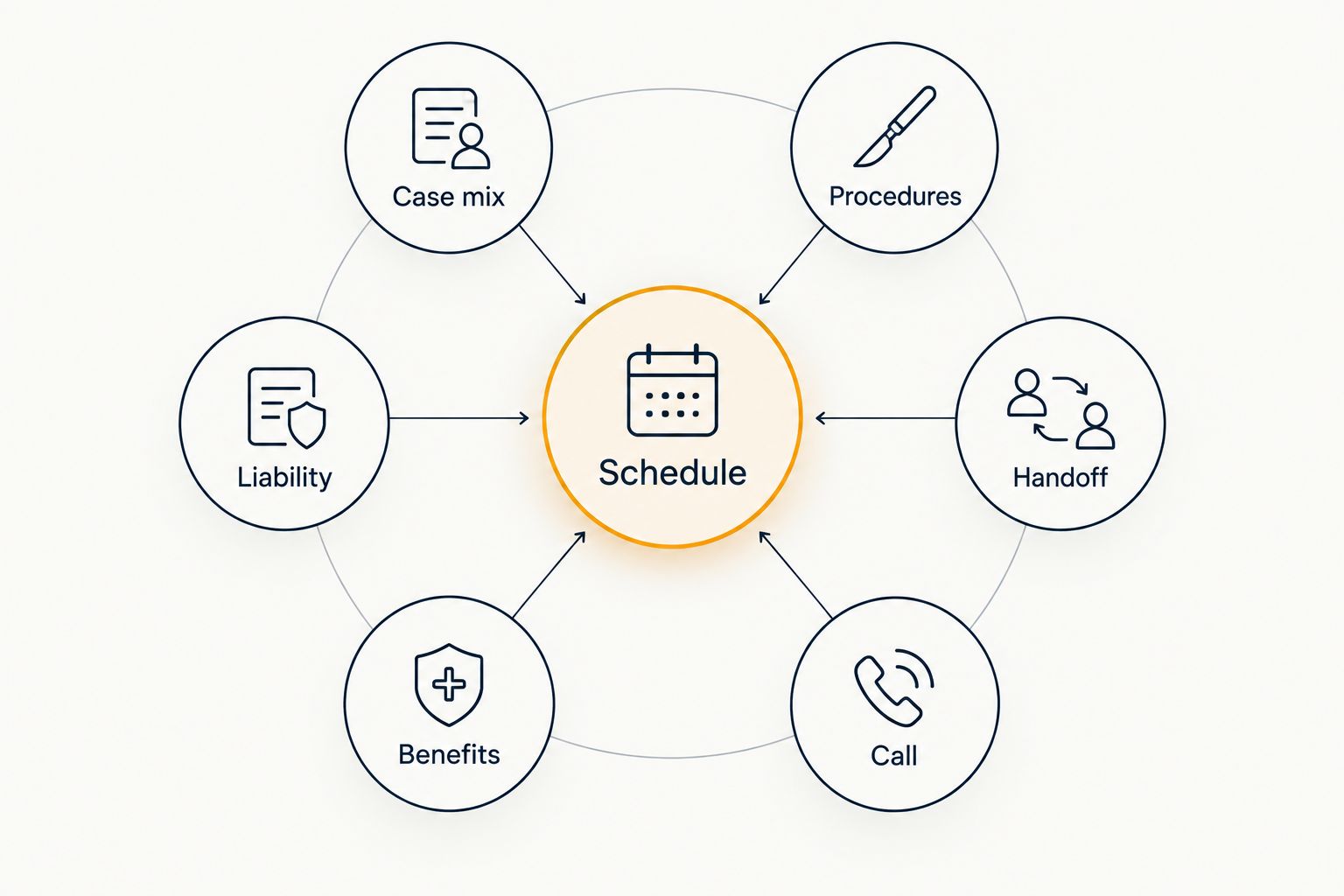
Ask these 7 contract questions before accepting
For every 2026 offer, turn the schedule discussion into written answers. Use the same questions across employers so you compare obligations rather than job titles.
- Schedule: Which days and hours are mandatory, and who can change them?
- Case mix: Which modalities, subspecialties, and general studies must you cover?
- Procedures: Which hands-on services and supervision duties belong to you?
- Handoff: Who owns pending examinations and urgent questions when you leave?
- Call: Are nights, weekends, holidays, or backup coverage included?
- Benefits: What eligibility rules apply to your agreed appointment?
- Liability: What coverage applies during employment and after the arrangement ends?
Treat unanswered questions as unfinished negotiations, not minor administrative details. Request written terms before judging whether an appointment meets your part-time goal.
Compare radiology career opportunities
RadBoard aggregates 5,000+ radiology positions from 20 sources.
Which radiology subspecialty should you choose?
Choose outpatient MSK as the default if you already have the relevant training and want interpretation-focused sessions. Choose breast imaging for scheduled patient-facing work, or diagnostic neuroradiology for defined evening coverage.
Do not pursue new subspecialty training solely because a category appears flexible. First assess whether your current expertise supports a better-bounded appointment; the job design matters more than its label.
For your 2026 search, RadBoard is best for radiologists who want to compare career opportunities aggregated from multiple sources. Confirm every employer's schedule, qualifications, and clinical obligations directly.
FAQ
What's the best radiology subspecialty for part-time work?
Outpatient musculoskeletal radiology is the default recommendation for interpretation-focused part-time work. That recommendation depends on defined reading sessions, appropriate training, and explicit exclusions or arrangements for procedures and call.
Is breast imaging a good choice for part-time radiologists?
Breast imaging suits radiologists who want fixed on-site sessions with patient-facing work. Clarify screening, diagnostic imaging, biopsies, follow-up coverage, and applicable qualification requirements before accepting.
Is remote neuroradiology the same as flexible scheduling?
Remote neuroradiology describes where you work, not when you work. Shift times, turnaround requirements, emergency communication, and handoff duties still determine your schedule.
Can a part-time abdominal radiologist work a hybrid schedule?
A part-time abdominal radiologist can structure an appointment around remote interpretation and specified on-site duties. The employer must agree to that division, including protocoling, procedures, and coverage during absences.
Does going part-time remove mammography qualification requirements?
Part-time status does not remove applicable mammography personnel qualification requirements. Check current FDA requirements and the facility's credentialing standards against your intended duties.
Should I change radiology subspecialties just to work part-time?
Do not change subspecialties solely for presumed schedule flexibility. First compare bounded roles within your current competence and assess the training required for any proposed change.
How can RadBoard help me compare part-time radiology options?
RadBoard aggregates 5,000+ radiology positions from 20 sources and includes swipe-to-save features. Use it to identify career opportunities, then verify part-time terms, clinical scope, and coverage expectations with the employer.
One last thing
Ask the employer to describe what happens when an urgent examination arrives just before your session ends. The answer exposes the real handoff process—and whether your scheduled finishing time is a boundary or merely an expectation.