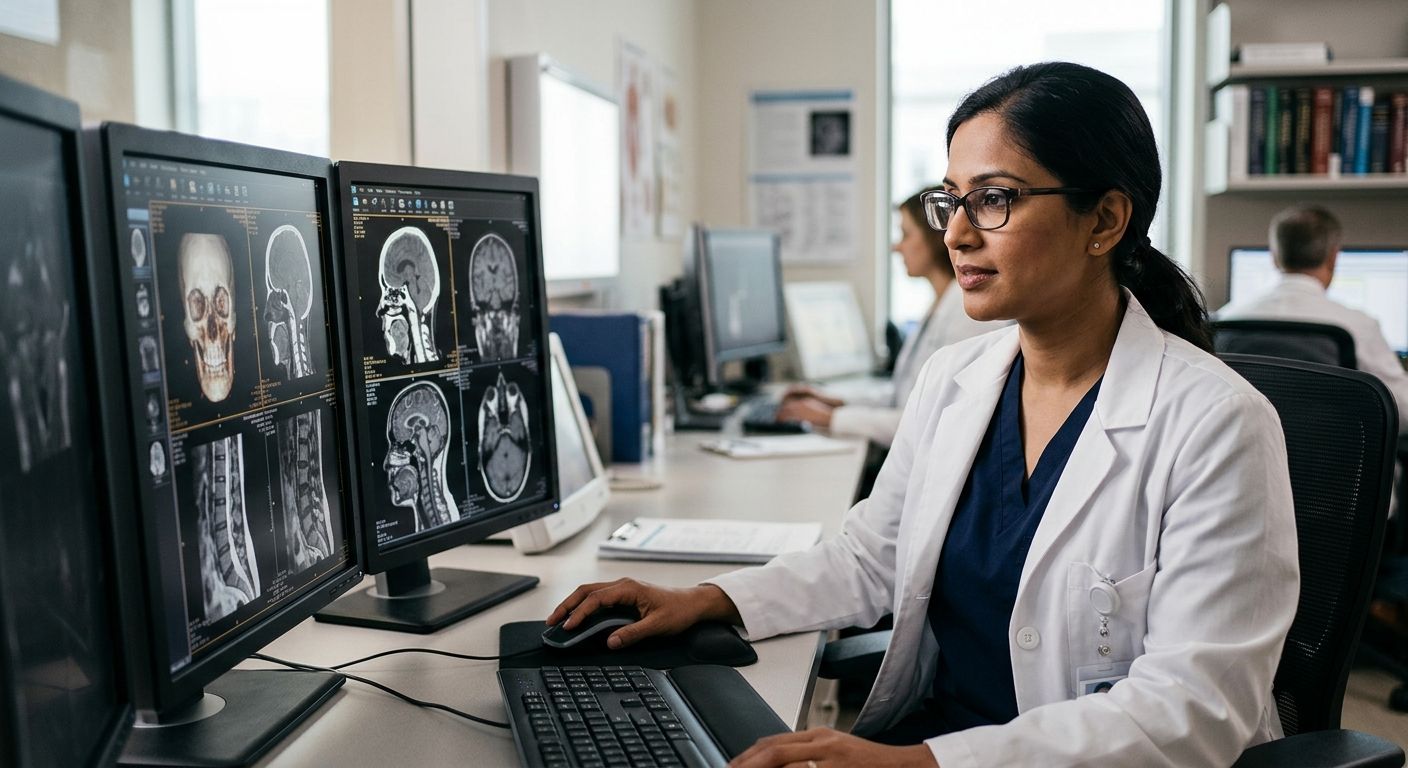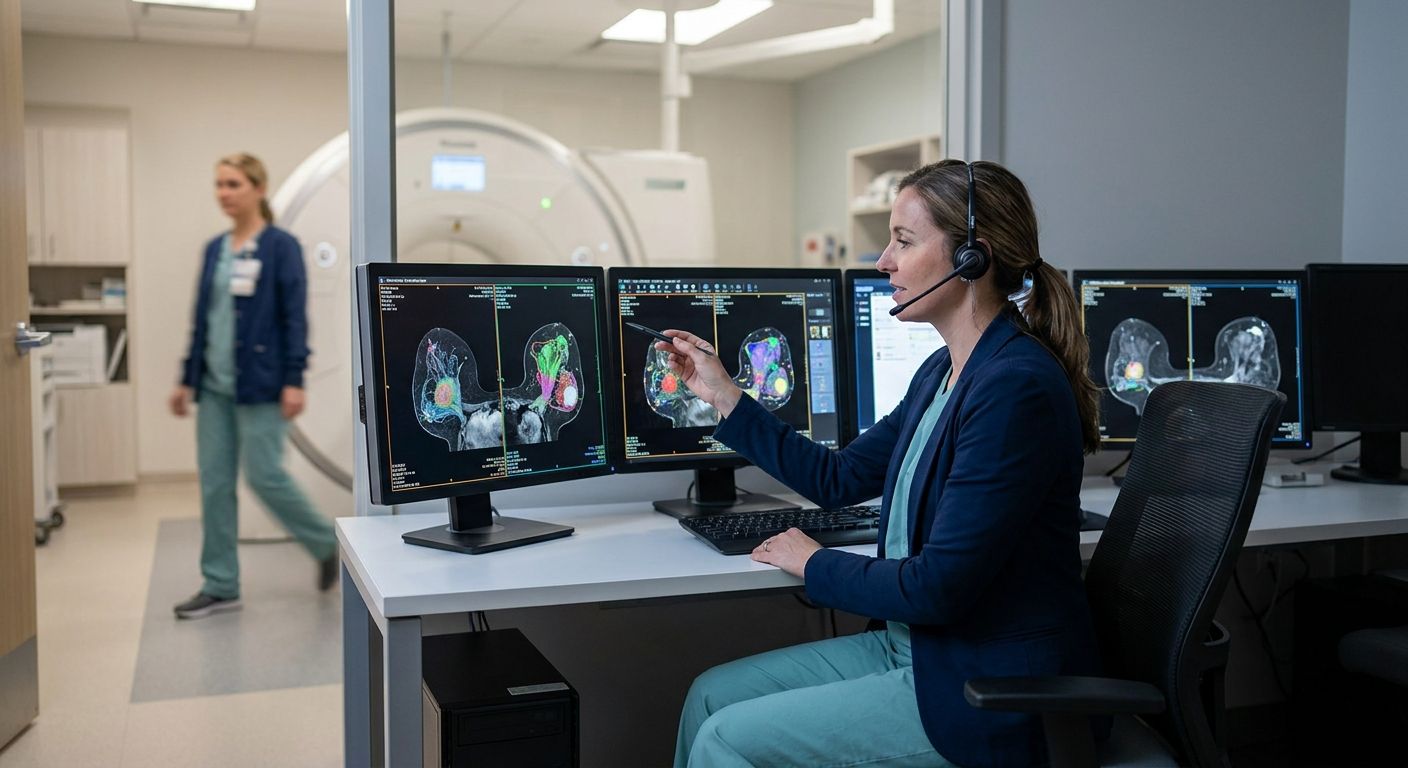
Breast MRI radiologist jobs at high-risk screening clinics reward fellowship-trained breast imagers who can read kinetic curves fast and sit comfortably in a multidisciplinary tumor board. This guide breaks down what separates a strong fit from a mismatch in 2026.
- Breast MRI radiologist jobs at high-risk screening clinics favor fellowship-trained readers who meet MQSA's 960-exam continuing volume rule.
- Remote breast imaging roles and locum tenens mammography coverage both work as entry points if a full-time seat isn't open yet.
- Skip screening-only mills without MRI-guided biopsy privileges or tumor board access—the case mix won't build subspecialty depth.
- RadBoard aggregates 5,000+ radiology openings from 20 sources, which is where most of these positions actually surface first.
Why this matters
High-risk screening clinics run a different caseload than a general breast center. Patients arrive with a documented lifetime risk of 20% or higher under American Cancer Society guidelines, meaning the MRI is supplemental to annual mammography, not a one-off workup.
That case mix changes what a radiologist needs on day one: comfort with kinetic curve analysis, background parenchymal enhancement grading, and enough volume to stay sharp on MQSA's federal interpretation requirements. A generalist who reads five breast MRIs a month will not keep pace with a clinic doing five a day.
The FDA's national breast density notification rule took effect in September 2024, and by 2026 it has pushed more primary care referrals into supplemental MRI pathways nationwide. Demand for radiologists who can read this study type well is up, and the job postings reflect it.
Who this is for
This guide is for fellowship-trained breast imagers, or general diagnostic radiologists with a documented breast MRI caseload, who are targeting a dedicated high-risk screening program rather than a general mammography seat. It also applies to radiologists weighing remote or locum breast MRI reads as a way into the subspecialty before committing to a full-time clinic role. Start any search inside RadBoard's radiology job platform, which pulls listings from 20 sources so subspecialty postings like this one don't get buried under general diagnostic openings.
What to look for in breast MRI radiologist jobs for high-risk screening clinics
Interpretation volume that meets MQSA
Federal regulation under MQSA requires 240 mammographic exams for initial qualification and 960 exams interpreted in the preceding 24 months to maintain it. A high-risk screening clinic with real MRI volume gets you there faster than a mixed general practice where breast studies are a fraction of the day. Ask for actual monthly MRI counts before signing, not just "high volume" language in the posting.
Fellowship training or equivalent CAQ pathway
Most dedicated high-risk programs want breast imaging fellowship training, or a documented track record of high-volume breast MRI interpretation if you trained generally. Programs staffing a screening-only clinic without this bar tend to have weaker peer review and less institutional support when a case gets contentious.
MRI-guided biopsy privileges
A high-risk screening job without MRI-guided biopsy access forces every BI-RADS 4 or 5 finding out the door to another physician. That breaks continuity of care and slows the workup. Confirm the job includes biopsy privileges, not just diagnostic interpretation, if you want full ownership of the case.
Multidisciplinary tumor board integration
High-risk screening clinics that feed directly into a tumor board give you a feedback loop on your calls and keep you connected to the surgical and oncology side. A screening program that operates in isolation from oncology loses that clinical context fast.
CAD and kinetic curve software access
Kinetic curve interpretation depends on the post-processing software available. Ask what platform the clinic runs and whether it supports the workflow you trained on—switching software adds real ramp-up time in your first 90 days.
Schedule structure: screening-only vs. mixed diagnostic
Some high-risk clinic jobs are pure screening MRI, others blend in diagnostic breast MRI and biopsy days. Decide which structure fits your career goals before you negotiate, because the two schedules build very different subspecialty depth over a few years.
Search live breast MRI openings
Filter 5,000+ radiology jobs from 20 sources by subspecialty and setting.
Top picks for breast MRI radiologist jobs in 2026
The safe pick: dedicated breast imaging attending role
A full-time attending seat at a dedicated breast center running a documented high-risk screening program is the safest route into this subspecialty. These roles typically build interpretation volume well past the MQSA 960-exam threshold within a single year, and most come with MRI-guided biopsy privileges built in. Mammography radiologist jobs for breast imaging specialists covers what these postings look like and how to evaluate them. Verdict: Buy if you have fellowship training or a strong breast MRI caseload already documented.
The flexible pick: locum tenens mammography coverage
Locum tenens mammography assignments let a breast-trained radiologist test a high-risk screening clinic's caseload and culture before committing to a permanent contract. Assignments run in blocks, so you can stack two or three clinics in a year and compare workflows directly. Locum tenens mammography jobs for breast imaging specialists breaks down how these contracts are structured. Verdict: Consider if you want to sample high-risk screening work before a permanent move.
The remote pick: breast MRI second-opinion reads
Some high-risk screening networks route their breast MRI second-opinion volume to remote breast-trained radiologists, especially for centers without an on-site breast fellowship-trained reader. This model keeps your caseload subspecialized without relocating. Remote breast imaging jobs for mammography-trained radiologists covers licensing and equipment requirements for this setup. Verdict: Consider if you're breast-trained but tied to a location without a strong local screening program.
The wildcard: per-diem extra shifts at an outside screening clinic
Per-diem mammography and breast MRI shifts at a separate high-risk clinic can supplement a general diagnostic base salary while you build subspecialty volume toward MQSA thresholds. The trade-off is inconsistent scheduling and no guarantee of tumor board access. Verdict: Consider as a volume-building bridge, not a long-term subspecialty home.
What to avoid
- Screening-only mills with no biopsy access. These postings read like high-risk clinic jobs but hand off every positive finding elsewhere, which caps your subspecialty growth.
- Generalist teleradiology contracts labeled "breast imaging." A contract that includes occasional breast MRI alongside a general nighthawk caseload will not get you to the 960-exam MQSA threshold on breast studies specifically.
- Programs without a documented tumor board connection. If the job posting doesn't mention multidisciplinary case review, ask directly in the interview—isolated screening work weakens your clinical feedback loop over time.
Verdict comparison
| Job type | MQSA volume pace | Biopsy privileges | Tumor board access | 2026 verdict |
|---|---|---|---|---|
| Dedicated breast center attending | Fast | Yes, typically | Yes, typically | Buy |
| Locum tenens mammography | Moderate | Varies by site | Varies by site | Consider |
| Remote breast MRI second-opinion | Moderate | No | No | Consider |
| Per-diem outside screening shifts | Slow | Rarely | Rarely | Consider as bridge |
| Screening-only mill, no biopsy access | Fast on volume, weak on skill depth | No | No | Skip |
FAQ
What qualifies a radiologist for breast MRI jobs at high-risk screening clinics?
Fellowship training in breast imaging or a documented high-volume breast MRI caseload qualifies most radiologists for these roles in 2026. Clinics also check that you can meet MQSA's federal interpretation volume requirements once hired.
How many mammography and breast MRI exams does MQSA require?
MQSA requires 240 exams for initial qualification and 960 exams interpreted in the preceding 24 months to maintain certification. High-risk screening clinics with strong MRI volume make hitting this threshold faster than a general diagnostic caseload.
Is remote breast MRI reading a real career path in 2026?
Yes, some high-risk screening networks route second-opinion breast MRI volume to remote breast-trained radiologists. It works best as a supplement to an existing subspecialty caseload rather than a first job out of fellowship.
Do breast MRI radiologist jobs at high-risk clinics include biopsy privileges?
Not always—confirm this directly, since some screening-only programs interpret studies but refer every positive finding out for biopsy. MRI-guided biopsy privileges give you full ownership of the case and are worth negotiating for.
What lifetime risk threshold defines a high-risk screening patient?
The American Cancer Society defines high-risk as a documented lifetime breast cancer risk of 20% or higher, which is the population most supplemental MRI screening programs serve. Clinics built around this criterion run a more subspecialized caseload than general mammography centers.
Are locum tenens mammography assignments a good way into high-risk screening work?
Locum tenens mammography assignments let you sample a high-risk clinic's caseload and workflow before signing a permanent contract. Several short assignments across different clinics also build comparison data on volume and culture fast.
How does the FDA's breast density notification rule affect job demand?
The FDA's national breast density notification rule took effect in September 2024, pushing more patients into supplemental MRI screening pathways nationwide. That has increased posting volume for breast MRI radiologist jobs heading into 2026.
Where do most breast MRI radiologist job postings appear first?
Subspecialty postings like breast MRI roles often get buried inside general diagnostic radiology listings on single-source job boards. RadBoard aggregates 5,000+ radiology openings from 20 sources specifically to surface postings like these.
One last thing
Most radiologists chasing this niche fixate on fellowship credentials and skip the software question entirely—ask what kinetic curve platform a clinic runs before you sign, because relearning post-processing software on the job costs more ramp-up time than most contracts account for. The FDA's breast density notification rule is only two years old as of 2026, and clinics are still scaling MRI volume to match demand, which means this is an early window to negotiate for biopsy privileges and tumor board access rather than settling for screening-only duties.