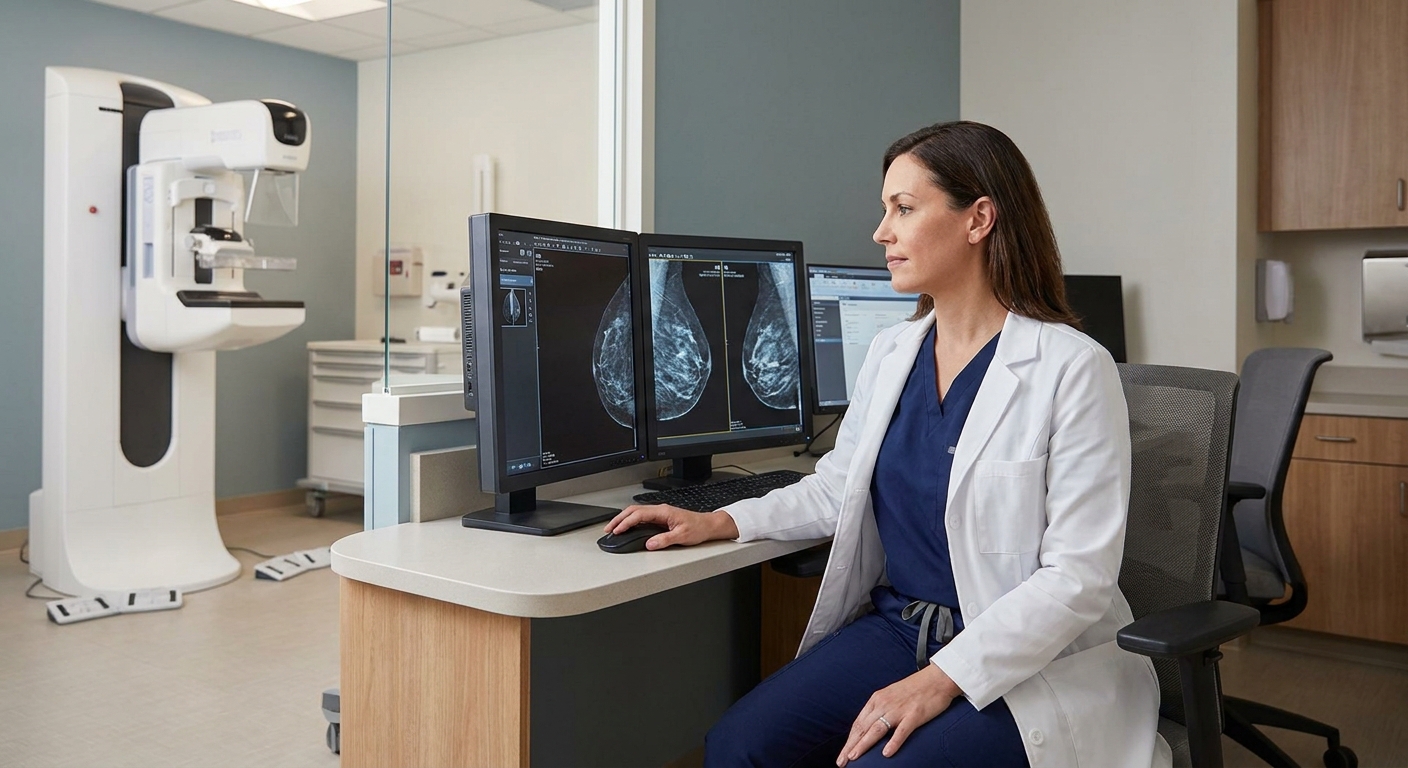
Mammography radiologist jobs range from high-volume screening mills to academic breast centers doing biopsies and MRI correlation all day — the right fit depends on whether you want reps, teaching, or a lighter schedule with more control over your week.
- Private practice breast centers pay more per RVU but expect 80+ screening reads a day — Buy for high-volume readers.
- Remote breast imaging jobs let mammography-trained radiologists read off-site with a documented turnaround, not a live-read requirement — Consider for flexibility.
- Academic breast imaging jobs pay less but include biopsy volume and fellow supervision — Buy for career-building.
- Part-time weekend mammography roles fill screening gaps without full FTE commitment — Consider for side income in 2026.
- Avoid "general radiology with a mammography component" postings that bury your subspecialty training in unrelated call coverage.
Why this matters
Breast imaging is one of the few radiology subspecialties where volume, liability exposure, and pay structure vary this much between practice settings. A screening-heavy job at one center might read 90 mammograms a day at a flat salary; a diagnostic-heavy academic job might read 30 studies but include stereotactic biopsies, MRI correlation, and BI-RADS audit responsibility.
In 2026, demand for fellowship-trained breast imagers is outpacing supply in most metro markets, which means compensation and schedule terms are negotiable in ways they weren't five years ago. The job title "mammography radiologist" hides enormous variation — the criteria below tell you what's actually inside the posting before you apply.
Who this is for
This guide is for radiologists with breast imaging fellowship training or a heavy mammography caseload from residency who are evaluating job offers in 2026 — whether you're targeting a first job out of fellowship, a lateral move to a higher-volume screening center, or a remote breast imaging role that lets you read from home. If you're a general radiologist doing occasional mammography as part of a broader call pool, most of the criteria here still apply, but the volume expectations will look different.
On RadBoard, breast imaging listings are tagged separately from general diagnostic radiology postings, so you can filter for mammography-specific volume and modality requirements instead of scanning generic "radiologist wanted" ads.
What to look for in mammography radiologist jobs for breast imaging specialists
Screening-to-diagnostic ratio
A job posting that says "breast imaging" without a ratio is a red flag. Ask directly: what percentage of daily volume is screening mammography versus diagnostic workup, biopsy, and MRI correlation? A 90/10 screening-heavy job builds speed but stalls procedural skill; a 50/50 split keeps you sharp on stereotactic and ultrasound-guided biopsies.
Modality access
Confirm whether the site has tomosynthesis, contrast-enhanced mammography, and dedicated breast MRI, or whether you'll be reading 2D-only studies. In 2026, most accredited breast centers have moved to tomosynthesis as the screening default — a job still running 2D-only mammography is a sign the site hasn't reinvested in equipment.
Turnaround and call structure
BI-RADS 4 and 5 findings need same-day or next-day communication to referring providers and patients. Ask what the expected turnaround is for diagnostic reads and whether you're on call for callback biopsies or same-day ultrasound-guided procedures. A job with vague turnaround language usually means unclear liability exposure when a callback gets missed.
Compensation structure
Breast imaging pay is usually RVU-based, salary-based, or a hybrid, and the split matters more here than in general radiology because screening volume is predictable and easy to game with low base pay plus aggressive RVU thresholds. Before signing, run the offer through a negotiation framework built for radiologist compensation so you know what a competitive RVU rate looks like for breast imaging specifically, not general diagnostic work.
Remote and hybrid flexibility
Mammography historically required live reads with a technologist present, but 2026 workflows increasingly allow off-site screening reads with a defined turnaround window instead of real-time presence. If schedule flexibility matters more than base pay, this criterion should carry more weight than volume or modality access.
Practice culture and supervision load
Academic breast centers often expect fellow and resident supervision as part of the role, which adds teaching value but also adds non-clinical hours that aren't always compensated separately. Private practice roles skip supervision but also skip the built-in pipeline of case variety that teaching brings.
Top picks for mammography radiologist jobs in 2026
The volume pick: private practice high-volume screening center Expect 70-90 screening reads per day with RVU-based pay layered on top of a base salary. The spec that matters: confirm the RVU conversion rate before signing, since screening mammography RVUs run lower per study than diagnostic breast MRI. Buy if you want to maximize earnings and can handle a fast-paced screening pace without burning out by year two.
The training-ladder pick: academic breast imaging position Pay typically runs 10-20% below private practice equivalents, but the role includes stereotactic and MRI-guided biopsy volume plus fellow supervision. The number that matters: ask how many biopsies per week are guaranteed, since some academic postings advertise "procedural experience" with fewer than five biopsies a month. Buy if you're building a CV toward a leadership or fellowship director track.
The flexibility pick: remote breast imaging Sites running off-site screening workflows are growing fastest in 2026, especially for practices covering multiple rural hospital systems from a single reading hub. Check remote breast imaging roles built for mammography-trained radiologists to compare turnaround requirements against on-site pay before assuming remote means a pay cut — some hybrid postings pay the same RVU rate with no commute. Consider if schedule control matters as much as raw compensation.
The side-gig pick: part-time weekend screening mammography Hospitals and outpatient centers running Saturday screening clinics frequently pay a premium hourly or per-study rate to fill weekend slots without adding full FTE headcount. Compare options through part-time weekend radiology jobs if you want supplemental income without giving up a weekday position elsewhere. Consider for radiologists moonlighting alongside an academic or salaried role.
The leadership pick: multi-site breast center medical director This role blends clinical reading (usually capped around 40-50% of the week) with quality assurance, MQSA compliance oversight, and staffing decisions across two or more sites. The number that matters: confirm the administrative percentage in writing, since "director" titles sometimes come with clinical volume expectations unchanged from a staff radiologist role. Consider if you have five-plus years of breast imaging experience and want to move off the reading list eventually.
What to avoid
- "General radiology with a mammography component" postings that bury your fellowship training inside broad call coverage — you'll end up reading chest CTs at 2 a.m. instead of building a breast imaging caseload.
- Screening-only roles with zero diagnostic mix — these look easy on paper but stall procedural skills and make lateral moves to academic or leadership tracks harder later.
- Unclear callback liability language — if the contract doesn't specify who owns communication of BI-RADS 4/5 results to the ordering provider, that ambiguity becomes your problem during a missed-diagnosis review.
Verdict comparison
| Job type | Screening/diagnostic mix | Pay structure | Flexibility | Verdict |
|---|---|---|---|---|
| Private practice, high-volume | 80/20 | RVU-heavy | Low | Buy |
| Academic breast center | 50/50 | Salary + modest RVU | Low | Buy |
| Remote breast imaging | 90/10 | RVU or salary | High | Consider |
| Part-time weekend screening | 95/5 | Per-study or hourly | High | Consider |
| Multi-site director | 40/60 clinical/admin | Salary | Medium | Consider |
FAQ
What is the best mammography radiologist job for a new fellowship graduate in 2026?
Academic breast imaging positions are the strongest fit for new fellowship graduates because they guarantee biopsy volume and MRI correlation cases that build procedural skill. Private practice roles pay more immediately but offer less structured mentorship in the first two years.
Do remote breast imaging jobs pay less than on-site roles?
Not always — some remote breast imaging jobs in 2026 match on-site RVU rates because they fill coverage gaps at rural or multi-site systems that would otherwise go unread. Pay usually depends on turnaround requirements rather than location alone.
How many mammograms does a full-time breast imaging radiologist read per day?
High-volume private practice screening centers run 70-90 reads per day, while academic centers with a 50/50 screening-diagnostic split run closer to 30-50 studies. The exact number depends on whether diagnostic workups and biopsies are included in the daily count.
Is a mammography radiologist job the same as a breast imaging fellowship job?
Mammography radiologist jobs are a broader category that includes general radiologists reading screening studies as part of a mixed caseload. Breast imaging fellowship jobs specifically require fellowship training and usually include diagnostic workup, biopsy, and MRI correlation responsibilities.
What compensation model is standard for mammography radiologists in 2026?
Most 2026 postings use a base salary plus RVU incentive above a production threshold, with screening-heavy roles weighting RVU pay more than academic salaried positions. Confirm the RVU conversion rate specific to mammography, since it runs lower per study than cross-sectional imaging.
Can a breast imaging radiologist work part-time or weekends only?
Yes — part-time and weekend-only mammography screening roles are common at outpatient centers running Saturday clinics to reduce backlog. These roles typically pay a per-study or hourly premium instead of a full FTE salary.
What modality access should a mammography job offer in 2026?
A competitive 2026 breast imaging job should include tomosynthesis as the screening default, plus access to contrast-enhanced mammography or dedicated breast MRI for diagnostic workup. A 2D-only mammography setup signals the site hasn't updated equipment recently.
How do I negotiate a higher salary for a mammography radiologist position?
Start by confirming the RVU conversion rate and screening-to-diagnostic ratio, since both directly affect real earning potential beyond the base salary listed. A structured negotiation framework for radiologist compensation helps benchmark the offer against comparable breast imaging roles before you counter.
One last thing
The biggest gap between a good and a bad mammography radiologist job in 2026 rarely shows up in the salary line — it shows up in the callback liability clause. A posting that clearly assigns who communicates BI-RADS 4/5 results to the ordering provider protects you during a missed-diagnosis review far more than an extra $10,000 in base pay.