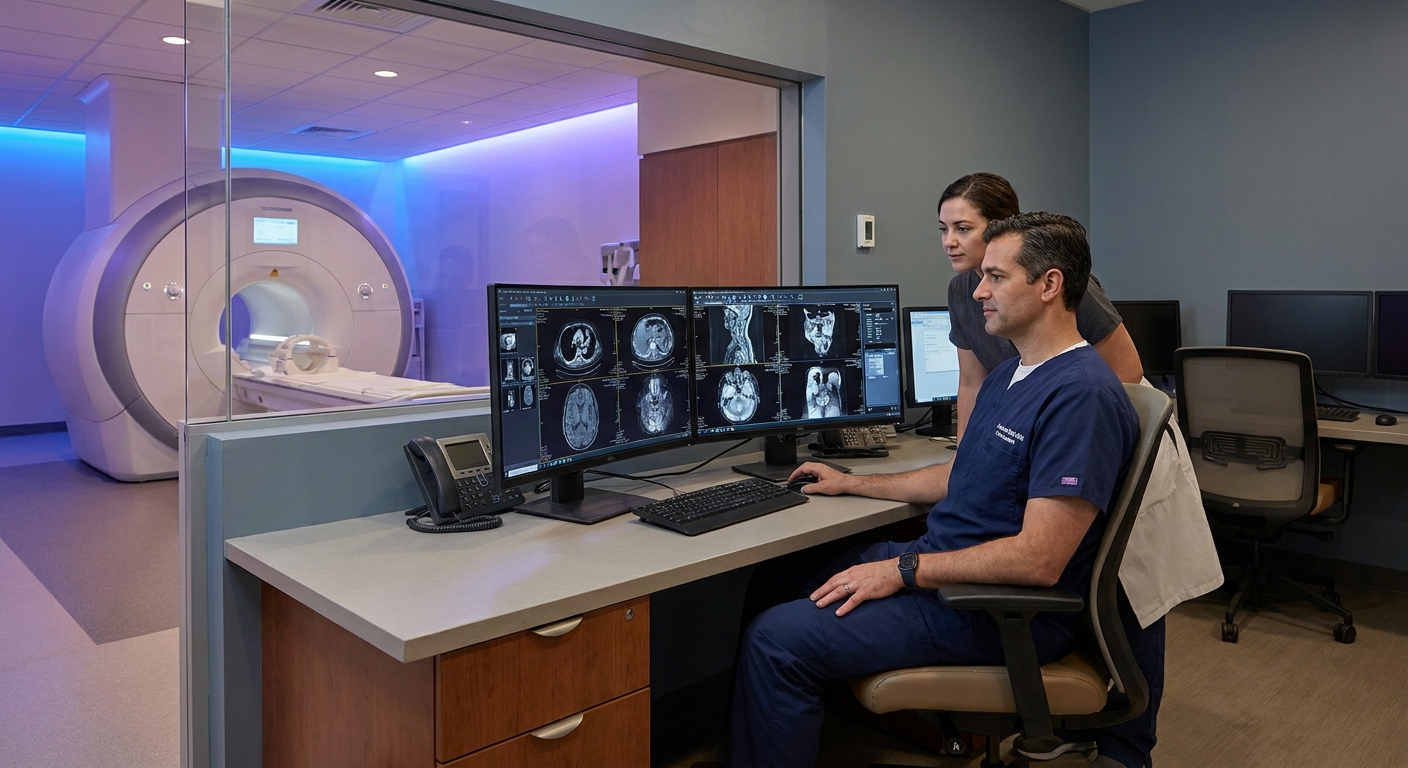
Cancer center radiology jobs reward subspecialty training in 2026 — breast imaging, interventional radiology, and neuroradiology fill faster than general diagnostic openings at comprehensive and NCI-designated centers. This guide breaks down which track fits your fellowship, what cancer centers actually screen for before a tumor board seat, and which listings are worth pursuing right now.
- Cancer center radiology jobs favor breast imaging, IR, and neuroradiology fellowship training over general diagnostic backgrounds in 2026.
- Mammography radiologist jobs move fastest at comprehensive cancer centers when MQSA certification is already current.
- Interventional radiology jobs with Y-90 credentialing get first-round interviews at NCI-designated centers this year.
- Neuroradiology jobs inside cancer centers carry a research stipend most general diagnostic roles don't offer.
- Locum tenens radiology jobs fill fellowship-specific cancer center gaps on 13-week contracts through 2026.
Why this matters
RadBoard aggregates 5,000+ radiology positions from 20 sources, and cancer center listings don't sit under one tidy "oncology" category — they're scattered across breast imaging, IR, and neuroradiology postings instead. That makes cancer center radiology jobs harder to search for than they should be, and it means fellowship-trained radiologists competing against general diagnostic candidates for the same opening usually win on credentialing alone.
Comprehensive cancer centers in 2026 are staffing around tumor board cadence, not just call schedule. A radiologist who reads for a multidisciplinary board twice a week needs different protocols and turnaround expectations than one covering a general hospital float pool. Start with a broad look at the radiology job search platform before narrowing to a subspecialty track — the filters matter more here than in general diagnostic search.
Who this is for
This guide is built for fellowship-trained radiologists — breast imaging, interventional radiology, neuroradiology, or nuclear medicine — targeting comprehensive or NCI-designated cancer centers, academic or community. If you're finishing residency without a fellowship, the entry-point section below still applies, but expect a longer ramp to full oncologic imaging privileges.
What to look for in cancer center radiology jobs
Subspecialty fellowship alignment
Cancer centers hire against named service lines, not general diagnostic coverage. A breast imaging fellowship or IR credential moves you past the first screen; a general diagnostic background without one usually gets routed to a different, lower-paying track.
Multidisciplinary tumor board access
Regular tumor board participation is the clearest signal a role is actually oncologic imaging, not general radiology with a cancer center address on the building. Ask how many boards a week the position covers before you ask about salary.
Procedure volume and equipment
A center's stated case volume — mammography reads, ablation cases, brain MRI throughput — tells you whether the equipment and support staff match the caseload. Low volume on paper often means you'll be doing general reads to fill the schedule.
Call burden and compensation model
RVU-based comp at cancer centers varies more than at general hospitals because procedural subspecialties (IR, breast biopsy) carry separate RVU tiers. Confirm whether call is subspecialty-specific or general pool coverage before signing.
Credentialing timelines
Y-90 radioembolization, MQSA certification, and stereotactic biopsy privileges each have their own approval timeline, sometimes 60-90 days. A center that expects you credentialed on day one without support is a red flag, not a strength.
Know Your Offer Before You Sign
Compare RVU models and call pay across cancer center offers.
Top picks for oncologic imaging specialists
Breast imaging and mammography — the safe pick Mammography-trained radiologists move fastest at comprehensive cancer centers in 2026 because MQSA certification is already a hard accreditation requirement. A tomosynthesis volume of 8,000 or more annual screening exams signals a center invests in 3D detection rather than 2D holdovers, and stereotactic biopsy volume pays a separate RVU tier at most academic sites. Buy this track if you hold current MQSA certification — check mammography radiologist jobs for open comprehensive-center listings.
Interventional radiology — the procedural pick IR-trained physicians who add Y-90 radioembolization credentialing get first-round interviews at NCI-designated centers in 2026 because tumor ablation volume has outpaced staffing. A center running 200 or more ablation and embolization cases a year needs a second IR body, not a locum patch. Buy if you're Y-90 credentialed or willing to complete it within your first 90 days — see interventional radiology jobs.
Neuroradiology — the fellowship pick Neuro-oncology imaging — brain tumor MRI protocols, spine metastases, post-treatment pseudoprogression reads — sits inside almost every comprehensive cancer center's core service line. Fellowship-trained neuroradiologists reading 15 or more brain MRIs a day at a cancer center often get a research stipend, a line general diagnostic radiologists rarely see. Consider this track if you finished a neuroradiology fellowship in the last five years — browse neuroradiology jobs.
Diagnostic radiology — the entry point Physicians finishing residency without fellowship training can still land cancer center work, usually in a general oncologic imaging rotation rather than a named subspecialty slot. Ramp time to full tumor board participation runs 6-12 months longer than for fellowship hires. Wait on this path unless the center offers a formal oncologic imaging track with mentored sign-off.
Locum tenens — the flexible pick Cancer centers use locum tenens radiology jobs to fill fellowship-specific gaps on 13-week contracts, especially in breast imaging and neuroradiology when a permanent search stalls. Consider a locum contract if you want to sample two or three cancer centers before committing to a permanent RVU structure.
What to avoid
- General community hospital reads billed as "oncologic imaging" with no tumor board access — the title says cancer, the workflow doesn't.
- Teleradiology-only night coverage for cancer center overflow with no subspecialty credentialing path and no direct tumor board contact.
- Research-heavy academic fellowships with low clinical RVU that delay full attending compensation by two years or more.
Verdict comparison
| Pick | Fellowship required | Volume signal | Call burden | Verdict |
|---|---|---|---|---|
| Breast imaging / mammography | MQSA certification | 8,000+ annual mammograms | Low-moderate | Buy |
| Interventional radiology | IR fellowship + Y-90 | 200+ ablation/embolization cases/yr | Moderate-high | Buy |
| Neuroradiology | Neuro fellowship | 15+ brain MRIs/day | Moderate | Consider |
| Diagnostic radiology (general) | None | No dedicated oncologic track | Moderate-high | Wait |
| Locum tenens | Varies by contract | 13-week terms | Variable | Consider |
FAQ
What is the best radiology job for oncologic imaging specialists in 2026?
Breast imaging and interventional radiology roles at comprehensive cancer centers rank highest in 2026 because MQSA certification and Y-90 credentialing are already hard requirements at accredited centers. Neuroradiology fellowship holders come in close behind for centers with a strong neuro-oncology service line.
Do cancer centers require fellowship training for radiologists?
Most comprehensive and NCI-designated cancer centers require or strongly prefer fellowship training for named subspecialty roles like breast imaging, IR, or neuroradiology. General diagnostic radiologists without a fellowship can still find cancer center work, but usually in a slower-ramping general oncologic imaging rotation.
Is interventional radiology in demand at cancer centers?
Yes, IR demand at cancer centers has grown alongside tumor ablation and Y-90 radioembolization volume in 2026. Centers running 200 or more ablation cases a year are actively adding a second IR-trained radiologist rather than relying on locum coverage.
Can neuroradiologists work at cancer centers without a fellowship?
General diagnostic radiologists can read some brain and spine imaging at cancer centers, but named neuroradiology roles with tumor board seats almost always require fellowship training. Without it, expect assignment to general reads rather than dedicated neuro-oncology cases.
Are locum tenens radiology jobs available at cancer centers?
Yes, cancer centers use locum tenens radiology jobs on 13-week contracts to cover fellowship-specific gaps, most often in breast imaging and neuroradiology. It's a practical way to sample a center's tumor board workflow before committing to a permanent RVU structure.
What credentialing do I need for Y-90 radioembolization at a cancer center?
Y-90 radioembolization credentialing typically requires IR fellowship training plus a separate approval process that runs 60-90 days at most cancer centers in 2026. Confirm whether the center supports this timeline with a mentored ramp before your start date.
Is teleradiology an option for oncologic imaging specialists?
Teleradiology can supplement cancer center coverage for overflow reads, but standalone teleradiology-only roles rarely include tumor board access or subspecialty credentialing paths. Treat teleradiology-only cancer reads as a supplement, not a primary oncologic imaging career track.
How much do breast imaging radiologists make at cancer centers?
Compensation varies by center and region, and RVU models differ between procedural breast imaging (biopsy-inclusive) and screening-only roles. Compare the specific RVU structure and call burden of each cancer center offer rather than relying on a single national average.
One last thing
Cancer center radiology jobs don't show up under a single "oncology" filter on most job boards in 2026 — they're indexed under breast imaging, IR, or neuroradiology instead. Search by subspecialty, not by employer type, and you'll surface listings that a generic "cancer center" keyword search misses entirely.