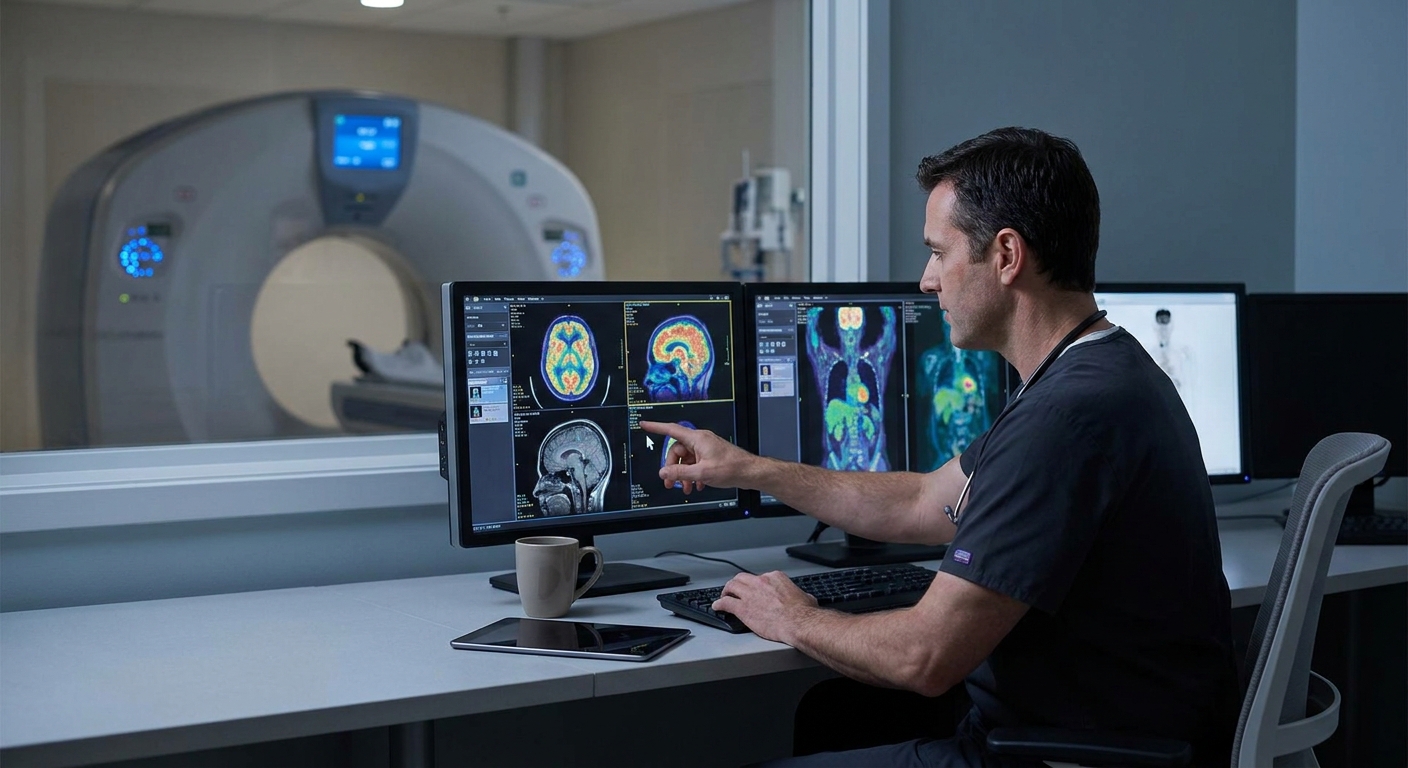
Nuclear medicine radiologist jobs in 2026 split into two very different tracks — the mixed-modality reader who covers PET/CT and SPECT/CT alongside general diagnostic call, and the dedicated nuclear medicine physician running theranostics, dosimetry, and radiation safety officer duties. This guide sorts postings by what the job actually asks you to do, not what the title says.
- Cancer center PET/CT roles carry the highest oncologic imaging volume and pay for it — Buy for readers who want subspecialty depth.
- Nuclear medicine radiologist jobs at outpatient imaging centers skip call entirely but cap procedure variety — Buy for lifestyle-first readers.
- Academic nuclear medicine positions add RSO duties and protected research time but trade off compensation ceiling — Consider.
- VA and federal nuclear medicine roles offer fixed schedules and pension benefits with no RVU pressure — Consider for stability-first candidates.
- Postings that call themselves "nuclear medicine" but budget under 10% PET/SPECT volume are the most common trap in 2026 listings.
Why this matters
A job titled "nuclear medicine radiologist" can mean three different daily schedules. Some practices genuinely need a physician to read 60-70% PET/CT and SPECT/CT, run theranostics clinics, and hold the radiation safety officer title. Others post the same title for a general diagnostic radiologist who reads nuclear medicine studies two shifts a week and covers body imaging the rest of the time.
RadBoard indexes radiology positions from 20 sources, and nuclear medicine and PET/SPECT-heavy roles show up across cancer centers, academic hospitals, VA systems, and outpatient imaging centers — each with a different call structure and pay model. The label on the posting won't tell you which one you're looking at. The criteria below will.
Who this is for
This guide is built for radiologists who are fellowship-trained or board-eligible in nuclear medicine (or holding the ABR Nuclear Radiology CAQ), and for dual-certified physicians deciding how much of their week they want dedicated to PET/SPECT and theranostics versus general diagnostic reads. If you're finishing a nuclear medicine fellowship in 2026 and want to know what a real caseload looks like before you sign, keep reading.
What to look for in nuclear medicine radiologist jobs
PET/CT and SPECT/CT volume mix
Ask for the actual percentage split before you ask about salary. A cancer center posting a "nuclear medicine radiologist" role for oncologic PET/CT is a different job than a community hospital where nuclear medicine is 15% of a general diagnostic schedule. The volume mix determines whether your fellowship training actually gets used daily or fades into occasional coverage.
Theranostics and radiopharmaceutical therapy exposure
Radioligand therapy volume is growing across cancer centers and academic sites in 2026, and jobs that include dosimetry planning and therapy administration pay differently than diagnostic-only nuclear medicine roles. If theranostics is part of your training, confirm the site actually runs a therapy program rather than referring those cases out.
Board certification and CAQ requirements
Some postings require the ABR Nuclear Radiology CAQ or ABNM certification outright; others accept general diagnostic radiologists willing to build the caseload. Confirm which one you're applying for — a CAQ requirement usually signals a dedicated nuclear medicine service line rather than a rotating coverage assignment.
Radiation safety officer duties
Many nuclear medicine radiologist jobs bundle the RSO title into the clinical role. That's additional administrative time, dose calibration oversight, and regulatory reporting — work that should show up as either protected non-clinical time or additional compensation, not an unpaid add-on to a full reading schedule.
Call burden and cross-coverage expectations
Outpatient imaging center roles typically carry no call. Hospital-based and cancer center positions often require nuclear medicine radiologists to cross-cover general diagnostic call, which changes the actual weekly hours significantly from what the base schedule implies.
Site type and caseload stability
Cancer centers, academic hospitals, VA systems, and outpatient imaging centers each structure nuclear medicine differently. Site type predicts caseload consistency more reliably than job title does — an academic post might rotate you through general nuclear medicine one quarter and pure PET oncology the next.
Top picks for PET and SPECT readers
Cancer center PET/CT roles — the volume play. Oncologic imaging centers run PET/CT as the core modality, often alongside SPECT bone scans and MIBG studies for staging and treatment response. One concrete number worth confirming up front: ask what percentage of the weekly caseload is oncologic PET versus other nuclear medicine studies — anything under 50% at a self-described cancer center is a flag. Verdict: Buy for readers who did an oncologic imaging fellowship track. Browse current openings on the cancer center radiology jobs page.
Outpatient imaging center PET/SPECT — the lifestyle pick. These sites run scheduled outpatient PET/CT and SPECT/CT with defined hours and, in most postings, zero call. The tradeoff is procedure variety — you won't see the inpatient nuclear medicine consults or acute studies that a hospital-based job includes. Verdict: Buy for radiologists prioritizing predictable hours over case diversity. Details on current outpatient imaging center roles are worth a look before you rule out no-call positions as lower-paying by default.
Academic nuclear medicine — the credential builder. University hospitals bundle nuclear medicine reading with protected research or teaching time, often 10-20% of the schedule depending on the department. RSO duties and fellow supervision are common additions. Verdict: Consider if academic output matters to your career track; skip if you want maximum clinical volume. Openings live under academic radiology jobs.
VA and federal nuclear medicine positions — the safe pick. Federal nuclear medicine roles come with fixed schedules, no RVU production pressure, and federal benefits including pension eligibility. Caseload tends toward diagnostic nuclear medicine rather than heavy theranostics. Verdict: Consider for radiologists who value schedule predictability and benefits stability over subspecialty intensity.
What to avoid
- "Nuclear medicine" titles with under 10% actual PET/SPECT volume. These postings use the subspecialty label to attract fellowship-trained candidates for what's really a general diagnostic role.
- RSO duties bundled in without extra time or pay. Radiation safety officer responsibilities are regulatory work, not a courtesy add-on to a full reading schedule.
- SPECT-only sites running outdated gamma camera equipment with no PET/CT integration. If the site hasn't upgraded imaging hardware, theranostics and hybrid imaging growth will bypass that practice entirely.
Find nuclear medicine roles by mix, not title
Search and swipe through 5,000+ radiology positions filtered by modality and site type.
Verdict comparison
| Setting | PET/SPECT mix | Call burden | Pay structure | Verdict |
|---|---|---|---|---|
| Cancer center | High oncologic PET/CT | Low to moderate | RVU or hybrid | Buy |
| Outpatient imaging center | High, scheduled | None | Salary or fixed schedule | Buy |
| Academic hospital | Moderate, rotating | Moderate | Salary + protected time | Consider |
| VA / federal | Moderate, diagnostic-focused | Low, fixed | Salary + federal benefits | Consider |
FAQ
What's the best type of nuclear medicine radiologist job for PET/SPECT readers in 2026?
Cancer center roles focused on oncologic PET/CT give the highest concentration of nuclear medicine volume in 2026. Outpatient imaging centers are the better pick if a predictable, no-call schedule matters more than caseload variety.
Do nuclear medicine radiologist jobs require ABNM or the ABR Nuclear Radiology CAQ?
Requirements vary by employer, and some postings accept general diagnostic radiologists without either credential. Dedicated nuclear medicine service lines at cancer centers and academic hospitals are more likely to require the CAQ or ABNM certification.
Is nuclear medicine radiologist job demand growing in 2026?
Theranostics and radioligand therapy programs are expanding at cancer centers and academic sites in 2026, which is increasing demand for radiologists comfortable with dosimetry and radiopharmaceutical therapy alongside diagnostic PET/SPECT reads.
What's the difference between a general PET/CT reader and a full nuclear medicine radiologist?
A general PET/CT reader typically covers oncologic staging scans within a broader diagnostic radiology schedule. A full nuclear medicine radiologist reads SPECT, handles theranostics, and often carries radiation safety officer duties as a dedicated service line.
Can teleradiology cover nuclear medicine reads?
Some teleradiology groups do offer nuclear medicine coverage, but SPECT and theranostics cases with in-person dosimetry or therapy administration generally require on-site presence. Check remote teleradiology listings for modality-specific coverage before assuming full remote flexibility.
How much call is typical for nuclear medicine radiologist jobs?
Outpatient imaging center nuclear medicine roles usually carry no call. Hospital-based and cancer center positions often require cross-coverage of general diagnostic call in addition to nuclear medicine duties.
Are radiation safety officer duties standard in nuclear medicine radiologist jobs?
RSO duties are common in nuclear medicine radiologist postings, especially at hospitals and cancer centers running therapy programs. Confirm whether the role includes protected non-clinical time or additional compensation for the regulatory workload.
What settings hire the most nuclear medicine radiologist jobs in 2026?
Cancer centers, academic hospitals, VA systems, and outpatient imaging centers each post nuclear medicine radiologist jobs in 2026, with cancer centers carrying the highest concentration of oncologic PET/CT volume.
One last thing
The RSO title is the detail candidates skip past fastest and regret ignoring. A nuclear medicine radiologist job that quietly bundles radiation safety officer duties into a full clinical schedule is asking for two jobs at one salary — always confirm whether that time is protected before you sign in 2026.
“If the RSO duties aren't protected time or separate pay, you're doing two jobs for one salary.”