
ED-embedded radiologist jobs place a radiologist physically inside or immediately adjacent to the emergency department to read trauma, stroke, and acute-onset imaging in real time, cutting the gap between scan and report to minutes instead of hours. This segment differs from general diagnostic radiology because the job is built around turnaround speed and case volume under pressure, not subspecialty depth or a quiet reading room.
- ED-embedded radiologist jobs reward turnaround speed over subspecialty depth — best fit for generalists who read high volumes of CT and X-ray fast.
- RadBoard lists ED-embedded, Level 1 trauma, and nighthawk openings among 5,000+ active radiology positions pulled from 20 sources.
- Locum tenens ED coverage fills gaps quickly but trades long-term continuity for schedule flexibility.
- Contract terms in 2026 increasingly spell out turnaround expectations explicitly — read them before you sign, not after your first busy Friday night.
Why ED-embedded radiology matters for this segment
Emergency departments audit imaging turnaround harder than almost any other metric in the hospital, and that pressure is why emergency radiology jobs for fast-paced trauma reads exist as a distinct job category rather than a subset of general diagnostic work. A radiologist sitting in or next to the ED reads the scan the moment it's acquired, flags the critical finding, and calls the ordering physician directly instead of routing through a central reading pool.
That proximity changes what the job actually selects for. Hospitals hiring into this role care less about a fellowship in neuroradiology or MSK and more about whether you can sustain a high-volume CT and plain-film pace across a 10- or 12-hour shift without turnaround creeping up as the department fills. Radiologists coming from a slower academic or outpatient practice underestimate how much the pace itself is the job.
How to find and land ED-embedded radiologist jobs
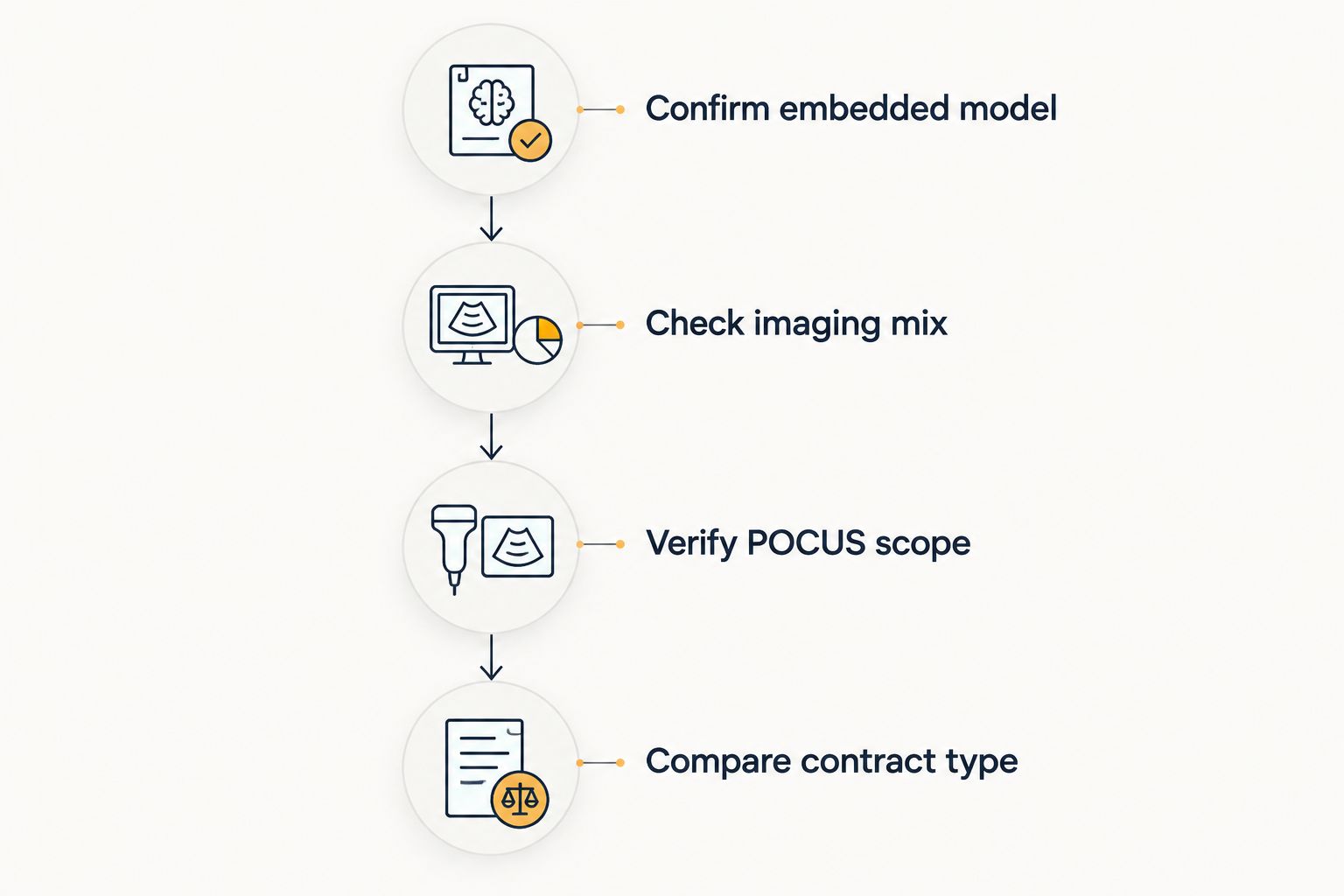
Confirm the embedded model before you apply
Job titles in this space are inconsistent — "embedded," "dedicated ED," and "trauma radiology" sometimes describe the same shift and sometimes describe very different setups.
- Ask whether the radiologist sits physically in the ED reading area or in a shared radiology suite down the hall.
- Confirm whether the role covers adult trauma, pediatric trauma, or both — pediatric cases are often routed to a separate service.
- Check if overnight coverage is staffed by the same radiologist who covers days, or by a separate nighthawk rotation.
- Ask what percentage of the shift is ED-only versus mixed with inpatient or outpatient reads.
Check the imaging mix and acuity level
The volume and type of imaging at a Level 1 trauma center looks nothing like a community ED with lower acuity.
- Ask for a typical shift's case count broken out by modality: CT, X-ray, ultrasound.
- Confirm whether the site handles its own radiology jobs at Level 1 trauma centers for acute imaging volume or diverts overflow to another facility.
- Ask whether stroke and code-STEMI protocols route directly to you or to a separate on-call subspecialist.
- Find out if interventional cases (angio for active bleeds) fall under the ED radiologist's scope or a separate IR team.
Verify point-of-care ultrasound oversight expectations
Many ED-embedded contracts now bundle in supervisory responsibility for bedside ultrasound performed by emergency physicians.
- Ask whether you're expected to review and co-sign every ED-performed POCUS study, not just formal radiology-ordered ultrasounds.
- Confirm if this oversight is billed separately or folded into your base compensation.
- Look at POCUS supervision radiologist jobs for ED oversight postings directly if this is a dealbreaker either way — some radiologists want it, some actively avoid it.
- Ask how disputes between your read and the ED physician's bedside interpretation get resolved.

Ask about the call schedule structure directly
Call structure varies more in ED-embedded roles than almost any other radiology segment, and it's the single biggest driver of burnout complaints.
- Ask if the schedule is block-based (7-on/7-off), weekly rotating, or standard five-day.
- Confirm how backup coverage works when the embedded radiologist calls out sick.
- Find out whether overnight shifts rotate among all group members or fall to a dedicated nighthawk radiologist.
- Check if holiday and weekend coverage is distributed evenly or assigned by seniority.
Compare locum tenens versus employed contracts
ED-embedded work is one of the more common entry points for locum assignments because trauma centers need fast, reliable fill-in coverage.
- Weigh the day rate and assignment length of locum ED coverage against the stability of an employed contract.
- Ask whether a locum assignment includes credentialing support given the tight timelines trauma centers usually work on.
- Confirm malpractice tail coverage terms before accepting either format — this gets missed more in fast-turnaround ED roles than anywhere else.
- Check whether the facility converts locum-to-permanent for radiologists who perform well during a trial period.
Search across sources instead of relying on one job board
ED-embedded and trauma-adjacent postings get scattered across hospital career pages, staffing agency listings, and specialty boards — no single source captures all of them.
- Search hospital-system career pages directly for Level 1 and Level 2 trauma center openings.
- Check staffing agencies that specialize in emergency and trauma radiology placements.
- Use a platform that aggregates listings from multiple sources rather than checking each one manually — RadBoard pulls ED-embedded and trauma-adjacent radiology postings from 20 sources into one searchable list of 5,000+ active radiology jobs, with AI-powered search and swipe-to-save built for exactly this kind of scattered, fast-moving segment.
- Set up saved searches for trauma, emergency, and nighthawk radiology terms so new postings surface without repeated manual checks.
Comparing ED-embedded coverage options
| Option | Best for | Key limitation |
|---|---|---|
| Employed ED-embedded attending | Radiologists wanting long-term continuity at one trauma center | Fixed schedule with less control over shift swaps |
| Locum tenens ED coverage | Radiologists testing a site or filling income gaps between contracts | No long-term site relationships or partnership track |
| Nighthawk overnight coverage | Radiologists who prefer overnight shifts and lower daytime call | Isolated schedule with limited daytime team interaction |
| Freestanding ER radiology coverage | Radiologists wanting ED-style pace outside a hospital campus | Lower acuity mix, fewer major trauma cases |
Verdict: an employed ED-embedded role at a Level 1 trauma center is the strongest fit for radiologists who want sustained high-acuity volume; locum ED coverage is the better move for anyone testing the pace before committing long-term.
Common mistakes radiologists make with ED-embedded jobs
- Underestimating shift pace. Radiologists coming from outpatient or academic settings assume the case load is manageable, then find the volume at a busy Level 1 site far exceeds what they budgeted mental energy for.
- Skipping the POCUS oversight question. Signing a contract without clarifying supervisory responsibility for bedside ultrasound leads to disputes over scope and compensation after the fact.
- Ignoring call schedule granularity. "Rotating call" can mean evenly distributed shifts or a heavier load pushed onto junior members — ask for the actual rotation calendar, not a summary.
- Treating locum and employed contracts as interchangeable. Malpractice tail coverage, credentialing timelines, and conversion terms differ enough between the two that comparing them side by side matters before accepting either.
- Assuming pediatric trauma is automatically included or excluded. This detail is inconsistent across sites and changes both the case mix and the required scope of practice.
Search ED-embedded radiology openings now
Filter 5,000+ active radiology listings by trauma, ED, and emergency coverage in one search.
FAQ
What is an ED-embedded radiologist job?
An ED-embedded radiologist job places a radiologist physically inside or immediately adjacent to the emergency department to read trauma, stroke, and acute imaging in real time. The setup shortens the gap between scan acquisition and reported findings compared to a centralized reading pool.
Is ED-embedded radiology the same as emergency radiology?
Not always. Emergency radiology can be read from a central department reading room, while ED-embedded specifically means the radiologist works from within or next to the ED itself, often with direct verbal communication to the ordering physician.
Do ED-embedded radiologists supervise POCUS studies?
Some contracts include oversight of point-of-care ultrasound performed by emergency physicians, and some don't. This scope detail varies by site and should be confirmed before accepting an offer, since it affects both workload and compensation.
Is locum tenens ED coverage a good way to start in this segment?
Locum ED coverage lets a radiologist test the pace and acuity of a trauma center before committing to an employed contract. It trades long-term continuity and partnership potential for flexibility and faster placement timelines.
What's the difference between ED-embedded and nighthawk radiology jobs?
ED-embedded roles typically involve daytime or rotating shifts physically located at the site, while nighthawk coverage is specifically overnight reading, sometimes remote, sometimes on-site, filling the gap when the daytime embedded team is off.
Do freestanding ERs hire ED-embedded radiologists?
Freestanding emergency rooms hire radiology coverage with a similar fast-turnaround model but generally see a lower-acuity case mix than hospital-based Level 1 trauma centers, with fewer major trauma cases overall.
How does pediatric trauma factor into ED-embedded roles?
Whether pediatric trauma imaging is included in an ED-embedded radiologist's scope depends on the site — some route pediatric cases to a dedicated pediatric emergency radiology service, others fold it into the same coverage.
Where can I find ED-embedded radiologist jobs in 2026?
Postings are scattered across hospital career pages, staffing agencies, and specialty job boards. A platform aggregating listings from multiple sources, like RadBoard's 5,000+ jobs from 20 sources, surfaces more of them in one search than checking each source individually.
One last thing
The detail that trips up more radiologists than any other in this segment isn't pay or schedule — it's whether "embedded" means physically sitting in the ED or just reading ED-ordered studies from a shared department pool. Ask that question in the first phone screen, not after you've already signed. In 2026, with turnaround expectations tightening across trauma centers nationwide, that distinction determines whether your day feels like emergency medicine or like general radiology with a different label on the door.