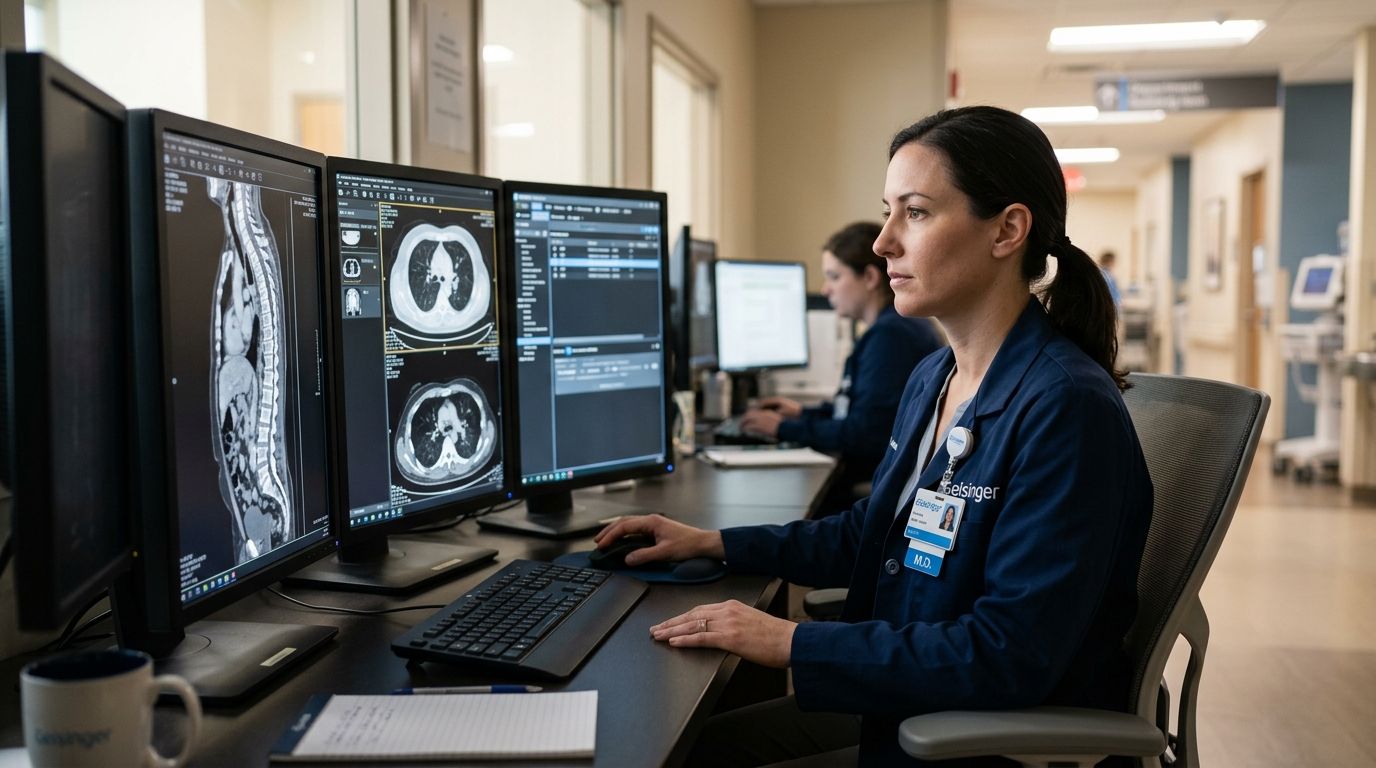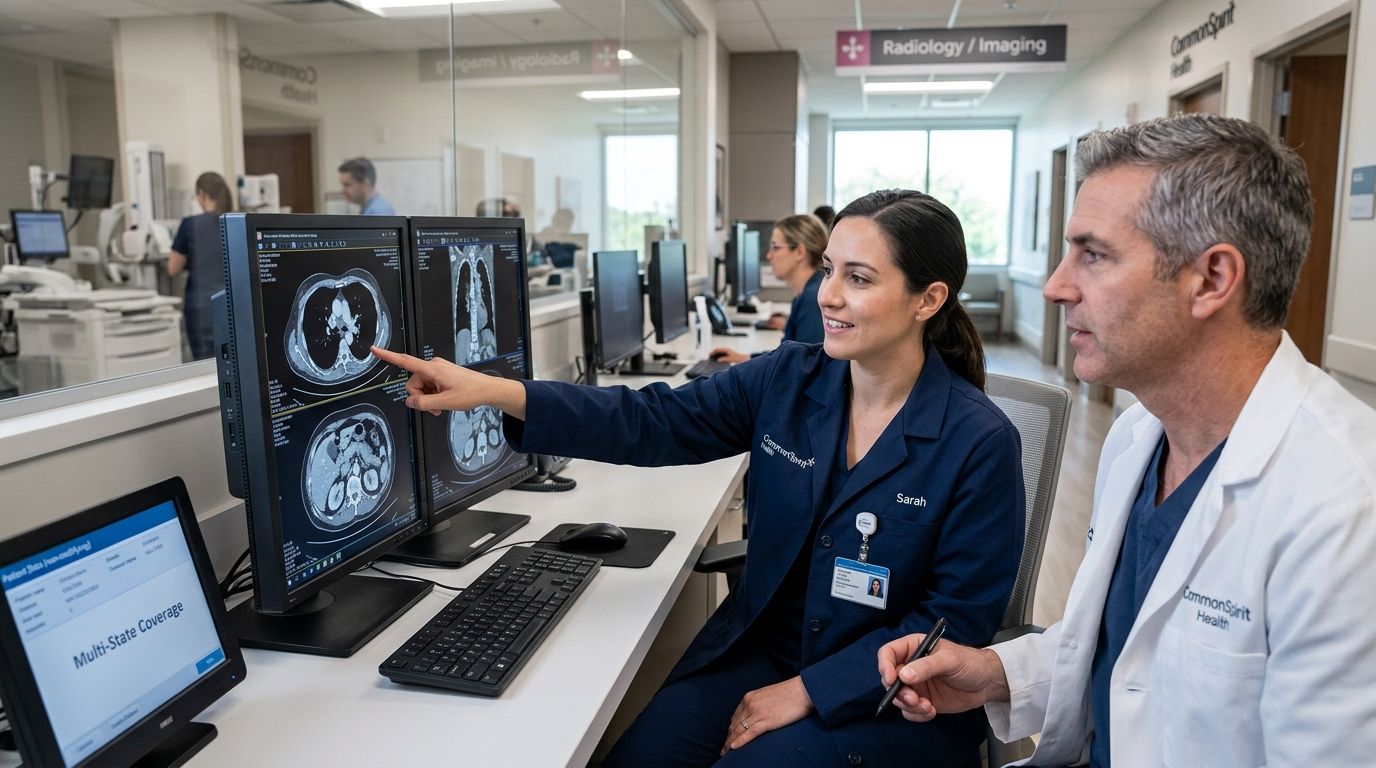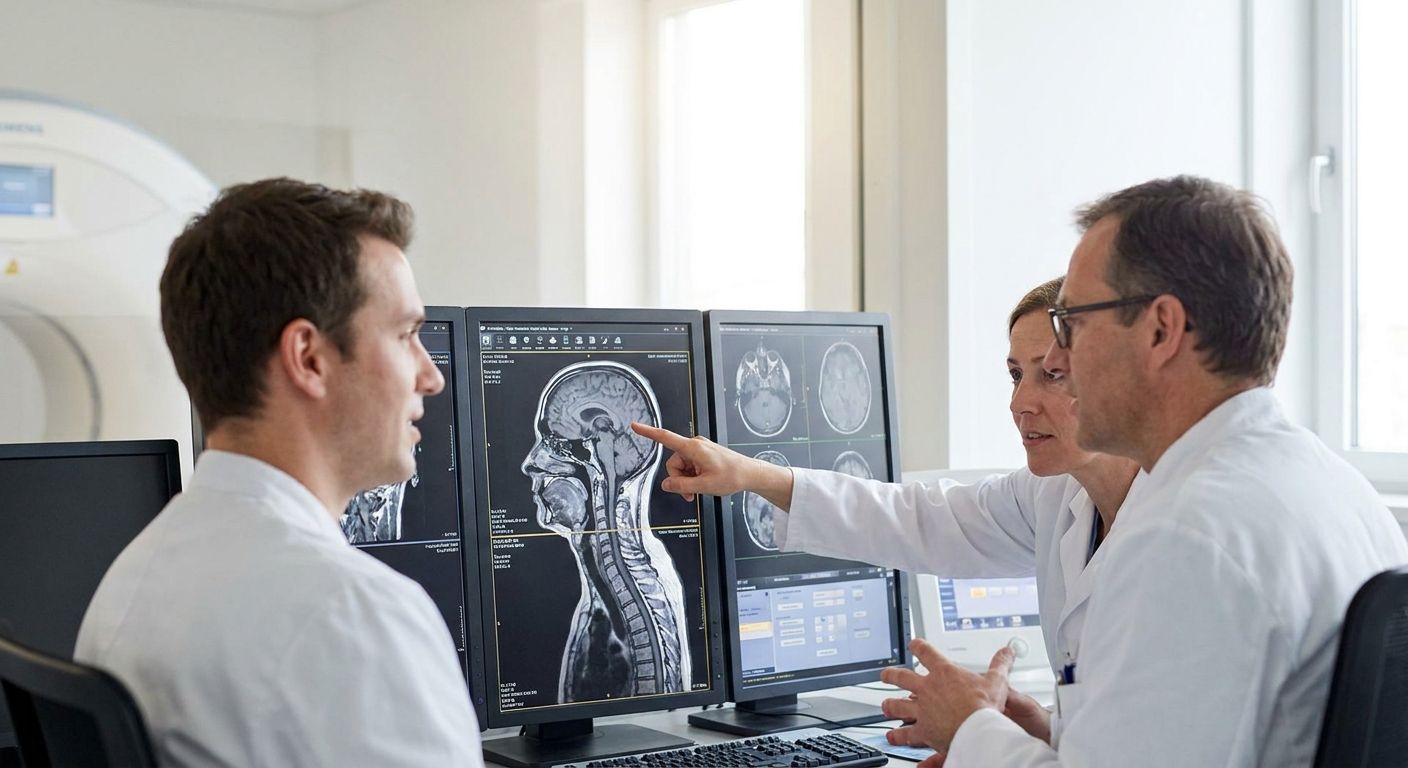
Head and neck radiology jobs at ENT-focused imaging centers ask for a narrower skill set than a general diagnostic slot — sinus, skull base, parotid, and neck-mass reads with tight turnaround for surgical planning — and centers screen for that specifically in 2026.
- Head and neck radiology jobs at ENT-focused centers favor neuroradiology-trained readers over general diagnostic radiologists in 2026.
- ACR accreditation status is the fastest filter for whether a center's imaging protocols meet surgical-planning standards.
- RadBoard aggregates radiology jobs from 20 sources — filtering by subspecialty isolates head and neck and skull base openings fast.
- Skip centers running tumor boards less than weekly if active ENT surgeon collaboration matters to you.
Why this matters
ENT-focused imaging centers don't hire like hospital radiology departments. A general diagnostic radiologist can read a chest CT competently on day one; reading a parotid mass or a skull base tumor with the nuance a head and neck surgeon needs to plan an operation is a different job entirely.
Centers built around ENT referral volume — sinus surgery groups, otology practices, head and neck cancer clinics — need radiologists who speak the surgeon's language: facial nerve course, perineural spread, temporal bone anatomy. That's a smaller applicant pool than general radiology, and it shows up in how these jobs get written and where they get posted in 2026.
Who this is for
This guide is for board-certified or board-eligible radiologists with neuroradiology or head and neck fellowship training, or general diagnostic radiologists building a subspecialty niche, evaluating radiology jobs at ENT-affiliated outpatient centers, academic skull base programs, or head and neck cancer clinics. It's not for readers who want high-volume, low-complexity outpatient CT — that caseload lives elsewhere.
What to look for in head and neck radiology jobs for ENT-focused centers
Sinonasal and skull base imaging volume
A center that calls itself "head and neck focused" but runs mostly routine sinus CT without skull base MRI isn't testing the skill set surgeons actually need. Ask for a breakdown of case mix before signing — volume tells you whether the job matches the title.
Neuroradiology or head and neck fellowship training on staff
Centers that already employ fellowship-trained readers tend to have protocols calibrated to surgical planning, not just diagnosis. If you're the first subspecialist they've hired, expect to build those protocols yourself — that's more work, but it's also leverage.
PET/CT access for cancer staging
Head and neck oncology cases need PET/CT for nodal and distant staging. A center without in-house or contracted PET/CT access can't fully support an ENT oncology practice, no matter what the job posting says.
Tumor board cadence with ENT surgeons
Weekly or twice-weekly multidisciplinary tumor boards mean your reads directly shape treatment decisions. Centers with quarterly or ad hoc tumor boards are asking for interpretation, not collaboration — a real difference in day-to-day work.
Call coverage for facial trauma and temporal bone fractures
ENT-adjacent centers tied to a trauma referral base will need after-hours coverage for facial fractures and temporal bone injuries. Confirm call frequency and whether it's shared across a group or falls on one subspecialist.
Top picks for ENT-focused head and neck radiology roles
The fellowship-trained anchor. Neuroradiology-trained radiologists with head and neck rotation experience are the closest match to what ENT-focused centers actually need — skull base and temporal bone reads sit inside standard neuroradiology fellowship curricula. If you have that training, neuroradiology jobs for fellowship-trained radiologists is the right search filter. Verdict: Buy.
The dental and maxillofacial crossover. Some ENT-adjacent centers pull volume from oral surgery and orthognathic referrals, which overlaps with maxillofacial imaging more than pure ENT work. If a posting mentions cone-beam CT or dental implant planning alongside sinus work, check oral and maxillofacial radiology jobs for dental imaging — the skill overlap is real but the referral base is different. Verdict: Consider.
The oncology-heavy reading pool. Centers embedded in a head and neck cancer program will lean on staging PET/CT and post-treatment surveillance MRI more than routine sinus work. That's a higher-acuity, higher-consequence caseload — good fit if you want subspecialty-only reading, less good if you want variety. Verdict: Consider.
The general diagnostic slot mislabeled as "head and neck." Watch for postings that use "head and neck" in the title but describe a general outpatient CT/MRI caseload with no dedicated ENT referral relationship. The title inflates the role; the actual reads won't build the niche you're after. Verdict: Skip.
What to avoid
- Centers with no ACR accreditation on their imaging equipment. Accreditation status is public and checkable — a center skipping it on skull base MRI or CT is cutting corners a surgeon relying on your read will eventually notice.
- "Full head and neck cancer support" without in-house or contracted PET/CT. Staging accuracy depends on it; a center claiming oncology support without that access is overselling the role.
- Tumor boards described as "as needed." That phrasing usually means they happen rarely. If surgeon collaboration is the draw, get the actual cadence in writing before accepting.
Filter radiology jobs by subspecialty
Search 5,000+ radiology jobs from 20 sources and swipe to save head and neck openings.
Verdict comparison across the criteria
| Criteria | What a strong ENT-focused center looks like | Verdict |
|---|---|---|
| Sinonasal/skull base volume | Dedicated caseload, not incidental sinus CT | Buy if present |
| Fellowship training on staff | At least one neuro or H&N fellowship-trained reader already there | Buy if present |
| PET/CT access | In-house or contracted, used for staging | Consider without it |
| Tumor board cadence | Weekly or twice-weekly, ENT surgeons attend | Buy if weekly+ |
| Call coverage | Shared across group, defined frequency | Skip if undefined |
FAQ
What training do you need for head and neck radiology jobs?
Most ENT-focused imaging centers in 2026 prefer neuroradiology fellowship training with head and neck rotation experience, though general diagnostic radiologists can build the niche over time. Fellowship-trained candidates typically see faster offers at centers with existing skull base caseload.
Is head and neck radiology the same as neuroradiology?
No, but they overlap significantly. Head and neck imaging covers sinonasal, skull base, parotid, and neck-mass reads, and most of that curriculum sits inside standard neuroradiology fellowship training.
Do ENT-focused imaging centers need PET/CT on site?
Not necessarily on site, but they need reliable access for cancer staging. A center supporting an active ENT oncology practice without PET/CT access — in-house or contracted — can't fully support staging work.
How often should tumor boards meet at a head and neck imaging job?
Weekly or twice-weekly cadence signals real surgeon collaboration. Quarterly or ad hoc tumor boards mean your reads are used for interpretation rather than active treatment planning.
Are head and neck radiology jobs in demand in 2026?
Subspecialty-trained readers for skull base and head and neck imaging remain harder to source than general diagnostic radiologists, which gives fellowship-trained candidates more negotiating leverage at ENT-focused centers.
Can a general diagnostic radiologist take a head and neck radiology job?
Yes, but expect a learning curve on skull base and temporal bone anatomy that fellowship-trained candidates don't face. Centers hiring generalists for these roles usually pair them with an existing subspecialist for the first year.
What's the biggest red flag in a head and neck radiology job posting?
A title that says "head and neck focused" describing a caseload that's mostly routine outpatient CT with no dedicated ENT referral base. Ask for actual case mix numbers before assuming the title matches the work.
One last thing
The overlap between head and neck and neuroradiology training means the applicant pool for these roles is smaller than most subspecialty searches — which is exactly why centers that get specific about caseload, PET/CT access, and tumor board cadence in the posting tend to fill faster than ones that just say "head and neck focused" and hope. Read past the title in 2026; the case mix numbers tell you more than the job description does.