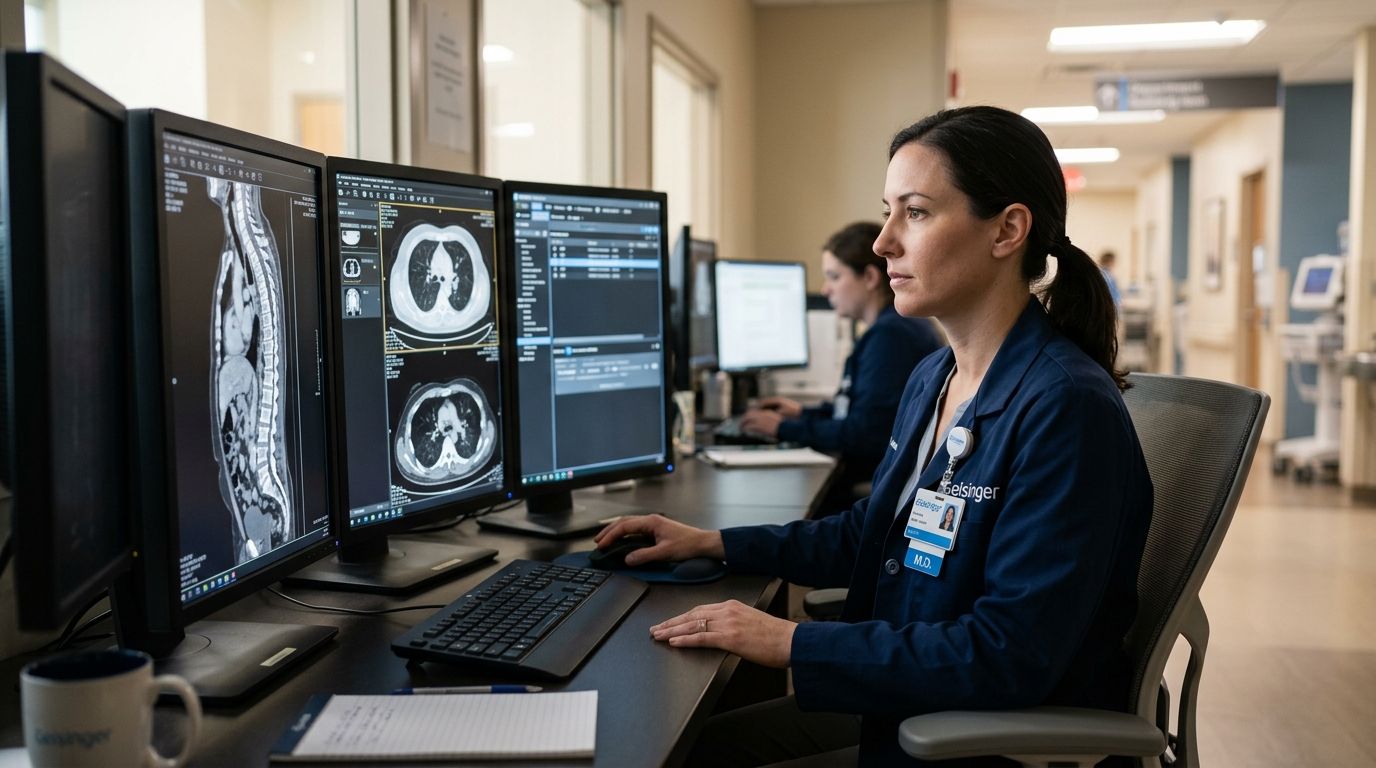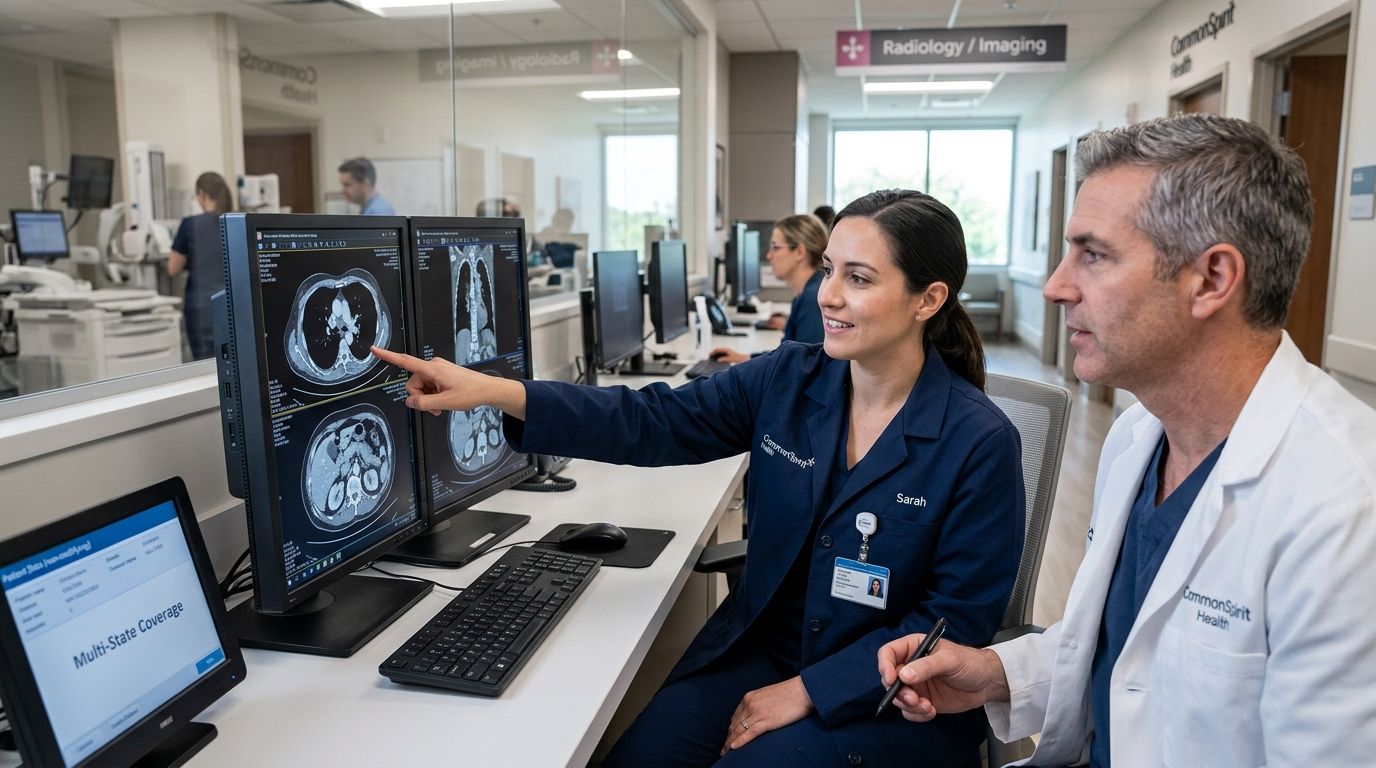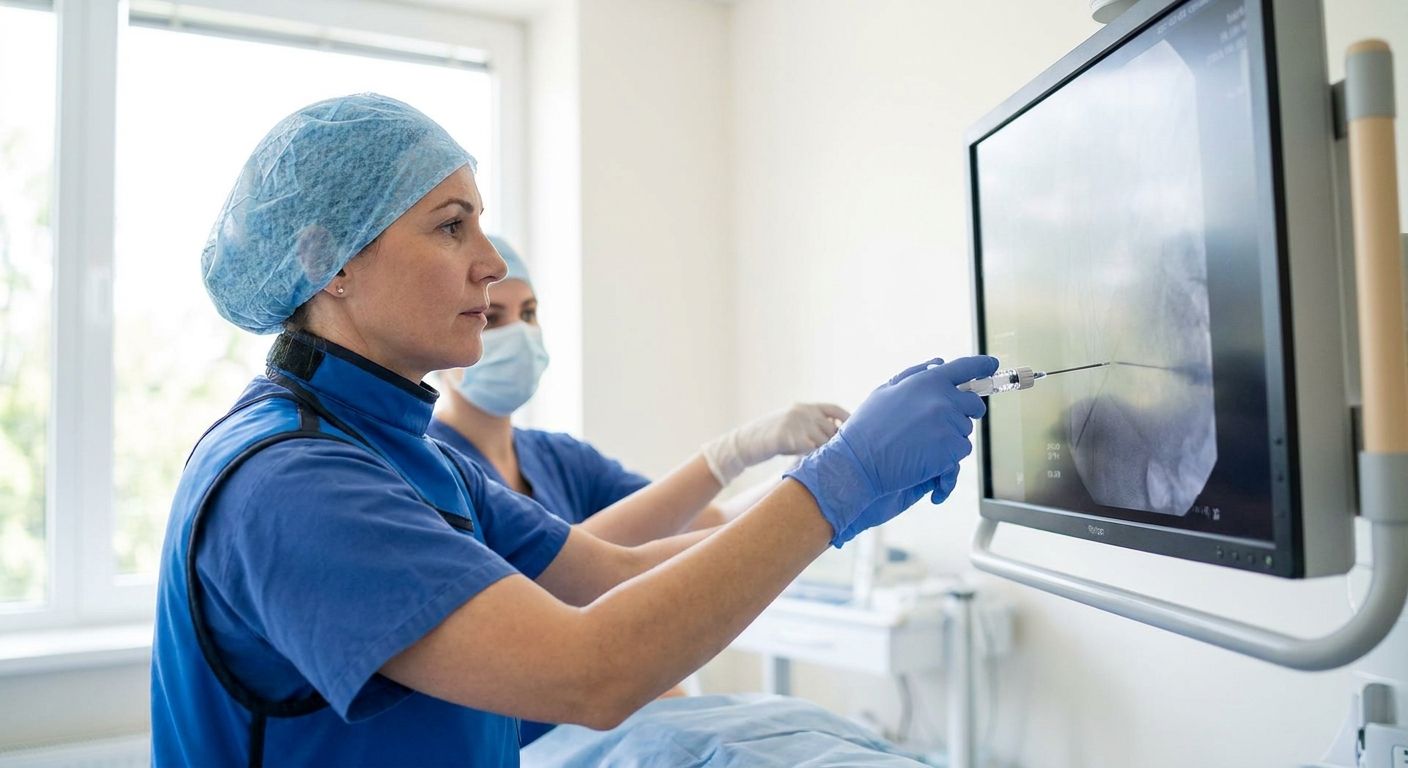
Interventional breast procedure radiologist jobs cover stereotactic, ultrasound-guided, and MRI-guided biopsy work, plus wire and seed localization for surgical planning, and the hiring market for these roles moves faster than general diagnostic openings because fewer radiologists carry the procedural volume to fill them. This guide breaks down how biopsy specialists should search, negotiate, and vet openings in 2026, using the search mechanics of RadBoard's platform as the reference point for what a modern job search actually looks like.
- Interventional breast procedure radiologist jobs reward volume-heavy biopsy experience over general diagnostic breadth.
- RadBoard aggregates 5,000+ radiology openings from 20 sources, filterable by breast imaging and interventional subspecialty in 2026.
- Hospital-employed breast centers and outpatient imaging chains post the bulk of dedicated biopsy roles this year.
- Locum coverage for breast biopsy pays hourly and fills gaps between permanent contracts without long-term commitment.
- Verify ACR breast imaging accreditation and equipment before signing — it affects both case volume and reimbursement.
Why interventional breast procedures matter for biopsy specialists
Biopsy-heavy roles differ from general breast imaging postings because the employer is hiring for a procedural skill set, not just interpretation. A radiologist who reads 40 mammograms a day but does two biopsies a week is a different hire than one running a dedicated procedure clinic three days a week.
That distinction shows up in how openings get worded. Job listings for interventional breast procedure radiologist jobs typically specify stereotactic table experience, MRI-guided biopsy volume, or comfort with wire/seed localization workflows — details a general breast imaging search won't surface. Filtering broadly for "breast imaging" mixes in screening-only mammography roles that don't match a biopsy specialist's actual training or interest.
RadBoard exists to narrow that gap: its AI-powered search reads job descriptions for procedural keywords across 3,700+ active listings, so a biopsy specialist searching in 2026 gets postings that name the actual procedures instead of generic "breast radiologist" titles.
Find the right interventional breast procedure job
Audit your procedure volume and case mix
Before searching, write down your actual monthly numbers — stereotactic core biopsies, ultrasound-guided cores, MRI-guided biopsies, wire localizations, seed placements. Employers screen for this specificity, and vague CVs get filtered out at the first pass in a competitive subspecialty market.
- List monthly biopsy volume by modality, not a lifetime total
- Note whether you've run a dedicated procedure clinic or covered biopsies as a fraction of a general breast reading day
- Flag any second-look ultrasound or MRI correlation experience separately
- Include localization technique variants (wire, seed, clip) since sites often use only one
Update your CV to highlight image-guided biopsy competencies
General radiology CVs bury procedural detail under "clinical experience." For biopsy-heavy roles, procedural competency needs its own section near the top, not a bullet three pages in.
- Create a standalone "Interventional Breast Procedures" section listing each modality and approximate annual volume
- Name the specific biopsy systems you've used (vacuum-assisted, core needle gauge ranges) if you're comfortable being specific
- Mention any BI-RADS reporting consistency metrics from peer review if you track them
- List any second-opinion or tumor board involvement tied to biopsy results
Search multiple job sources instead of one board
Breast imaging and interventional openings get posted across hospital career pages, PACS vendor boards, specialty society listings, and general job aggregators — rarely all in the same place. Checking one source misses a meaningful share of live openings.
Manually, that means bookmarking five or six sites and checking weekly. The faster path is a platform built to pull from all of them at once: RadBoard aggregates 5,000+ radiology positions from 20 sources into a single AI-matched, swipe-to-save search, so a biopsy specialist filtering for interventional breast procedure roles in 2026 sees openings from hospital systems, outpatient chains, and private practices without visiting each site individually.
- Set subspecialty filters for "breast imaging" and "interventional" together, not separately
- Save searches so new postings surface without repeating the query
- Swipe past roles that only list screening mammography with no procedural component
- Cross-check listings against mammography radiologist jobs for breast imaging specialists if you're open to hybrid screening-plus-biopsy roles
Filter for practices with dedicated breast imaging suites
Case volume depends on infrastructure. A site with a standalone stereotactic table and MRI-guided biopsy capability generates more procedural volume per radiologist than a general imaging center that squeezes biopsies between mammography slots.
- Ask directly how many stereotactic and MRI-guided biopsies the site performs monthly
- Confirm whether the practice owns dedicated procedure rooms or shares them with general radiology
- Check whether a breast surgeon or navigator coordinates same-day results and follow-up
- Look for high-risk screening programs, which often feed a steady MRI-guided biopsy pipeline — see breast MRI radiologist jobs for high-risk screening clinics for what those roles typically require
Negotiate procedure-specific compensation and call structure
Biopsy-heavy roles often carry different RVU weighting than diagnostic reads, and call expectations for same-day biopsy results can differ sharply between hospital-employed and outpatient settings.
- Ask whether biopsy procedures are compensated separately from interpretation RVUs
- Clarify who handles urgent same-day biopsy requests and whether that falls on call rotation
- Confirm whether pathology correlation and follow-up communication count toward productivity metrics
- Get same-day biopsy turnaround expectations in writing before signing
Verify accreditation and equipment before accepting
ACR breast imaging accreditation status affects reimbursement and case referral patterns, and equipment age determines what procedures you can actually perform on day one.
- Confirm current ACR accreditation status directly with the practice, not just the recruiter
- Ask the age and model of the stereotactic and MRI-guided biopsy systems
- Check whether the site has a functioning specimen radiography setup on-site
- Verify pathology turnaround times match the practice's stated same-day result promises
Compare locum vs. permanent breast biopsy roles
Locum coverage fills real gaps — maternity leave, retirement transitions, seasonal volume spikes — without requiring relocation or a multi-year commitment, and it's a reasonable way to sample a practice's actual case mix before committing.
- Confirm locum contracts specify procedural scope, not just "breast imaging coverage"
- Ask whether locum assignments include stereotactic and MRI-guided work or diagnostic-only reads
- Check malpractice tail coverage terms for procedure-related claims specifically
- Review locum tenens breast MRI jobs for high-risk screening coverage if MRI-guided volume matters most to you
Comparing your options as a biopsy specialist
| Option | Best for | Key limitation |
|---|---|---|
| Hospital-employed breast center | Radiologists wanting steady procedural volume and institutional infrastructure | Less schedule flexibility, often tied to call rotation |
| Private practice with breast imaging track | Radiologists targeting partnership and long-term case continuity | Buy-in terms vary and take time to negotiate |
| Outpatient imaging chain | Radiologists who want no-call, high-volume screening plus biopsy days | Case mix skews toward screening over complex procedures |
| Locum tenens biopsy coverage | Radiologists testing a practice or filling income gaps between contracts | No long-term site investment or partnership path |
| Academic breast imaging with fellowship teaching | Radiologists who want research and trainee supervision alongside procedures | Lower RVU-based compensation than private practice |
Verdict: hospital-employed breast centers and outpatient chains currently post the highest volume of dedicated biopsy roles, but locum coverage remains the fastest way to add procedural hours without a permanent commitment.
Search live breast biopsy openings
Filter 5,000+ radiology jobs from 20 sources by subspecialty and procedure type.
Common mistakes biopsy specialists make
- Applying to general breast imaging postings without confirming procedural volume — a title that says "breast radiologist" doesn't guarantee stereotactic or MRI-guided biopsy hours.
- Skipping the equipment question until after signing — an outdated stereotactic table or no on-site specimen radiography changes daily workflow immediately.
- Underselling localization technique variety on the CV — sites running seed localization exclusively will pass on candidates who only list wire experience without asking whether it's trainable.
- Treating locum assignments as diagnostic-only by default — some locum contracts explicitly exclude procedures unless negotiated up front, cutting expected income.
- Ignoring same-day result and pathology turnaround expectations during interviews — this detail affects daily pacing more than base salary in high-volume biopsy clinics.
FAQ
What is an interventional breast procedure radiologist job?
It's a role focused on image-guided breast biopsies — stereotactic, ultrasound-guided, and MRI-guided — plus wire or seed localization for surgical planning, distinct from screening-only mammography reads.
Is interventional breast imaging the same as general interventional radiology?
No. Breast biopsy work uses dedicated stereotactic and breast MRI equipment and sits within breast imaging subspecialty training, while general IR covers vascular, oncologic, and non-vascular procedures across the body.
How do I find interventional breast procedure radiologist jobs fast in 2026?
Filter for both breast imaging and interventional subspecialty tags on an aggregator that pulls from multiple sources, since these roles get posted across hospital sites, staffing agencies, and specialty boards separately.
Do locum tenens breast biopsy jobs pay differently than permanent roles?
Locum contracts typically pay hourly or per-shift and may or may not include procedural compensation separately from diagnostic reads — confirm this in writing before accepting an assignment.
What equipment should I ask about before accepting a breast biopsy role?
Ask about the age and model of stereotactic and MRI-guided biopsy systems, on-site specimen radiography, and current ACR breast imaging accreditation status.
Can a general diagnostic radiologist transition into interventional breast procedures?
Yes, with additional procedural training or a fellowship focused on breast imaging, though most employers still ask for documented biopsy volume before hiring into a procedure-heavy role.
Does RadBoard list interventional breast procedure radiologist jobs specifically?
RadBoard aggregates 5,000+ radiology positions from 20 sources and lets you filter by subspecialty, including breast imaging and interventional roles, using AI-powered search and swipe-to-save.
One last thing
The biggest filtering error biopsy specialists make isn't searching the wrong sites — it's searching the right sites with the wrong keyword. "Breast radiologist" and "interventional breast procedure radiologist" pull almost entirely different result sets, and the second phrase is the one that actually screens out screening-only mammography postings before you waste time reading them.