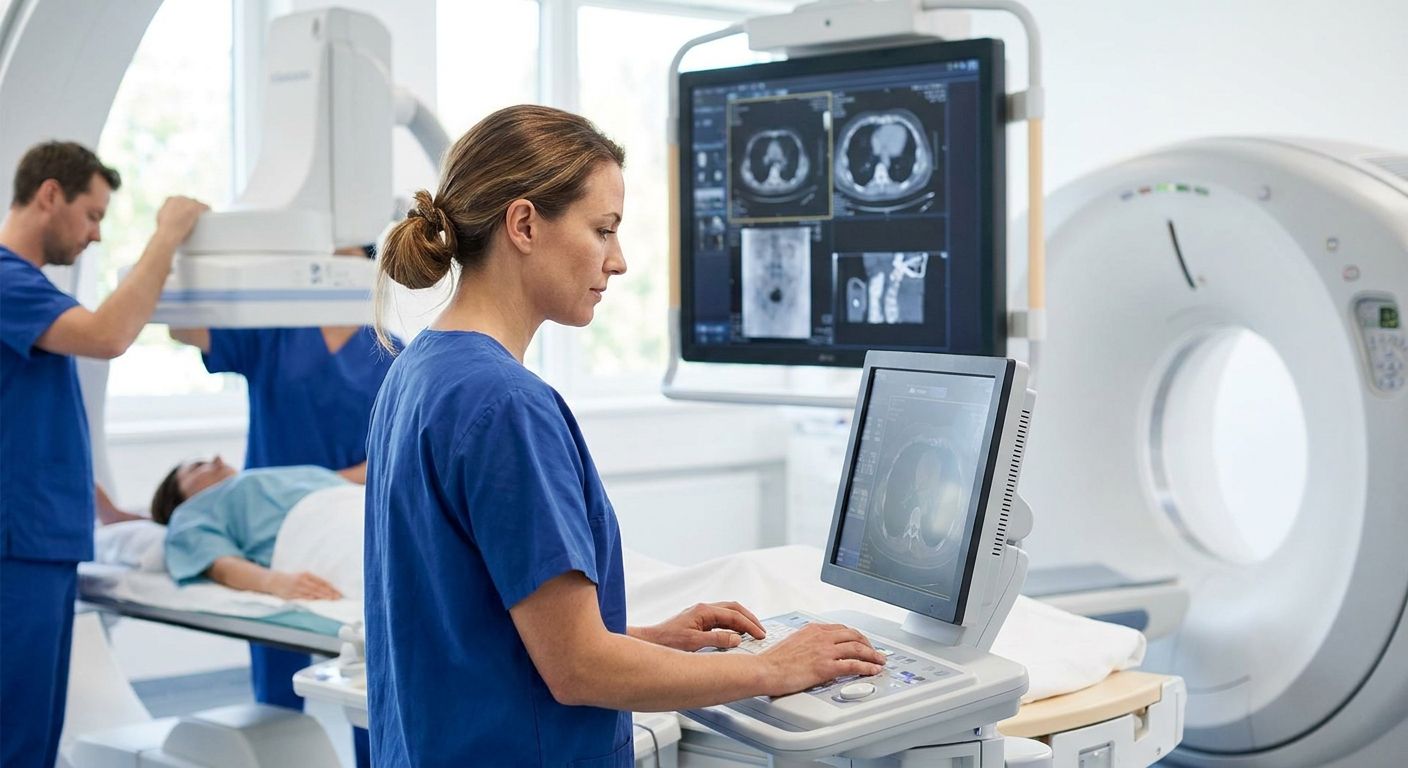
Interventional oncology radiologist jobs for tumor ablation sit at a specific intersection: IR training, oncologic imaging fluency, and enough procedural volume to keep ablation skills sharp. The job title on a posting tells you almost nothing — the case mix, the tumor board access, and the call schedule tell you everything.
- Academic cancer center IO tracks post the highest ablation volume in 2026 — Buy for early-career IR grads chasing complex renal and hepatic cases.
- Tumor-board-integrated groups beat solo IR shops on referral pipeline for interventional oncology radiologist jobs.
- Locum tenens IO coverage bridges contract gaps but rarely includes cryoablation privileges — Consider, not Buy.
- Freestanding ablation centers without oncology backup are a Skip regardless of the RVU rate quoted.
Who this is for
This guide is for IR-trained or dual-certified DR/IR physicians who want their case mix weighted toward image-guided tumor ablation — RFA, microwave ablation, cryoablation, or irreversible electroporation — rather than general vascular and venous access work. If you're finishing an interventional radiology jobs track or already board-certified and chasing a higher-volume oncology caseload, the criteria below apply directly to you.
Why this matters
Ablation volume is climbing as more tumor boards route stage-appropriate renal, hepatic, and lung tumors to interventional oncology instead of straight to surgery. That shift means the job market for interventional oncology radiologist jobs isn't just "more IR postings" — it's a smaller subset of roles with real oncologic case density, and those roles cluster at cancer centers and multi-specialty groups with active tumor boards, not at every practice that lists "IR" in the job description.
The practical problem: a posting that says "interventional radiology, oncology focus" can mean three ablations a month or three a week. You won't know the difference from the job title. You'll know it from the criteria below.
What to look for in interventional oncology radiologist jobs for tumor ablation
Ablation modality mix and case volume
A practice doing only RFA on small renal masses is a different job than one running microwave ablation on liver mets and cryoablation on lung nodules in the same week. Ask for a monthly ablation count broken out by modality and organ system — a number under 8-10 combined ablations per month usually signals a job that's IR-labeled but oncology-light in 2026.
Tumor board integration
Jobs where the interventionalist sits on the weekly tumor board — not just receives referrals from it — build a durable case pipeline and get first look at complex, image-guided candidates. Practices without a standing multidisciplinary tumor board tend to see ablation referrals only after surgery and systemic therapy are ruled out, which caps both volume and case complexity.
Call burden and coverage model
Interventional oncology cases are largely elective and schedulable, but many IO roles get folded into a general IR call pool that also covers GI bleeds, trauma embolization, and line placements overnight. Confirm whether ablation-focused physicians carry general IR call or a separate, lighter oncology-only rotation — the difference changes quality of life more than the base salary line does.
Compensation structure: RVU vs salary
Ablation procedures carry higher RVU weight than diagnostic reads, so a pure RVU model can reward high-volume IO work well — but only if the practice actually generates the referral volume to fill your schedule. A salaried model with a productivity bonus tied to procedure count is usually the safer structure for someone building an oncology caseload from scratch in a new market.
Fellowship and credential requirements
Most cancer-center IO roles in 2026 want an IR/DR dual-certified physician, sometimes with a dedicated interventional oncology fellowship year on top. Roles without that requirement often trade credential depth for lower case complexity — fine for a bridge job, not for building a long-term subspecialty niche.
Search live IO and IR openings now
RadBoard aggregates 5,000+ radiology jobs from 20 sources with AI-powered search.
Top picks by job setting
Academic cancer center IO track — the training ground. These roles typically run the highest combined ablation volume (renal, hepatic, pulmonary) because they sit inside a full oncology service line with in-house tumor boards. Expect research and teaching expectations layered onto clinical time. Cancer center radiology jobs for oncologic imaging specialists are the closest match to a dedicated IO practice. Buy for early-career physicians who want complex case exposure fast.
Tumor-board-integrated multi-specialty group — the collaborative pick. A multi-specialty group with a standing tumor board gives you a referral pipeline without academic administrative load. Second-opinion radiologist jobs for oncology tumor boards fall in this category and often pay competitively on an RVU model. Buy if you want oncology-heavy work without a university affiliation.
Locum tenens IO coverage — the bridge option. Useful between contracts or while relocating, but ablation privileges vary wildly by site and credentialing can lag your start date by weeks. Locum tenens interventional radiology jobs between contracts work well as income continuity, not as a subspecialty-building strategy. Consider, not a long-term play.
Per diem supplemental IO shifts — the side hustle. Some outpatient centers add per diem interventional shifts for physicians who already hold a full-time role elsewhere. Volume is inconsistent — some months zero ablations, some months a full slate. Consider only if your primary job already covers your oncology case quota.
Freestanding ambulatory ablation center — the volume play, with a catch. These sites can post attractive RVU rates because they run high procedure throughput, but many operate without on-site oncology backup or tumor board access, which limits case complexity to straightforward, low-risk ablations. Skip if building a genuine interventional oncology practice is the goal.
What to avoid
- IR postings with vascular-dominant case mix. A job titled "interventional radiology" that's 80% dialysis access and PAD intervention with occasional ablation isn't an interventional oncology role, no matter how the listing reads.
- Non-compete clauses that block ablation privileges regionally. A broad non-compete can prevent you from taking oncology cases at a competing cancer center in the same metro for a year or more after leaving — read the radius and specialty carve-outs before signing.
- Solo coverage sites with no surgical backup. Ablation complications occasionally need surgical or interventional cardiology backup within the hour. A site without that coverage on-call is a liability risk regardless of case volume.
Verdict comparison
| Setting | Ablation volume | Tumor board access | Call burden | Verdict |
|---|---|---|---|---|
| Academic cancer center | High | Full integration | Moderate, oncology-weighted | Buy |
| Multi-specialty tumor-board group | High | Full integration | Low-moderate | Buy |
| Locum tenens IO coverage | Variable | Site-dependent | Variable | Consider |
| Per diem supplemental shifts | Low-moderate | Rare | Low | Consider |
| Freestanding ablation center | Moderate-high | Minimal or none | Low | Skip |
FAQ
What's the best setting for interventional oncology radiologist jobs in 2026?
Academic cancer centers and tumor-board-integrated multi-specialty groups post the highest ablation volume in 2026 because referrals route directly from oncology tumor boards. Freestanding ambulatory centers without oncology integration typically offer lower case complexity.
Do I need a fellowship for interventional oncology radiologist jobs?
Most cancer-center IO roles want IR/DR dual certification, and many prefer a dedicated interventional oncology fellowship year. Roles without that requirement exist but usually carry lower ablation volume.
Is interventional oncology better paid than general interventional radiology?
Ablation procedures carry higher RVU weight than many general IR procedures, so a high-volume IO practice on an RVU model can out-earn a general vascular IR role. Pay still depends on whether the practice generates enough referral volume to fill the schedule.
What ablation modalities should I ask about before accepting a job?
Ask specifically about RFA, microwave ablation, cryoablation, and irreversible electroporation volume by organ system. A practice offering only one modality on small renal masses is a narrower job than one running multi-modality ablation across liver, lung, and kidney.
How much call do interventional oncology radiologists take?
It depends on whether the role sits inside a general IR call pool or has a separate oncology-only rotation. Ablation cases are largely elective, but many IO physicians still carry general IR call covering GI bleeds and trauma.
Can locum tenens work build an interventional oncology career?
Locum tenens interventional radiology jobs between contracts work as income and geographic flexibility, but ablation privileges and credentialing timelines vary by site. It's a bridge strategy, not a subspecialty-building one.
What should I avoid in an interventional oncology job offer?
Avoid postings labeled IR that are actually vascular-access-dominant, broad non-compete clauses that block regional ablation privileges, and solo coverage sites without surgical backup for complications.
How do I find interventional oncology radiologist jobs faster?
Search platforms that aggregate multiple sources cut duplicate listings and surface niche oncology-focused postings faster than checking individual health system career pages. RadBoard aggregates 5,000+ radiology jobs from 20 sources with AI-powered search and swipe-to-save.
One last thing
The fastest signal for whether a posting is a real interventional oncology role: ask how many ablations the group performed last month, broken out by organ system. A group that can answer with an exact number in 2026 is running a real oncology caseload. A group that answers with "it varies" is telling you the tumor board pipeline isn't built yet — and you'd be building it yourself.