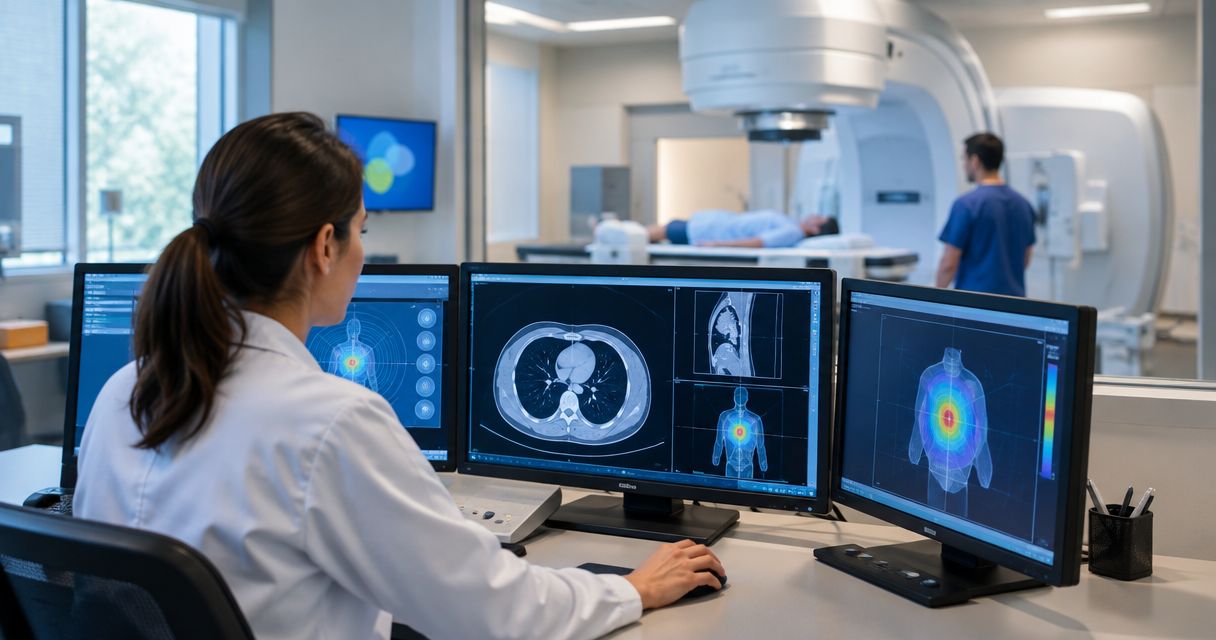
Proton therapy center radiology jobs are diagnostic imaging roles at or alongside proton-treatment programs; the aim is to find work that fits your oncologic imaging skills without confusing diagnostic radiology with radiation oncology. In 2026, search by imaging duties and employer, not by the word proton alone. A useful starting point is the broader set of cancer center radiology jobs.
- Proton therapy center radiology jobs are best searched through oncologic imaging duties, not the word proton alone.
- In 2026, check who reads staging scans, who supports treatment planning, and who attends tumor boards.
- RadBoard is best for radiologists comparing oncology-related openings across its 20-source job search; confirm duties with each employer.
- A diagnostic radiologist role is not the same as a radiation oncologist position.
Why these jobs matter for radiologists
A proton program brings diagnostic imaging and radiation treatment into the same care pathway, but the physicians have different responsibilities. Diagnostic radiologists interpret imaging; radiation oncologists direct radiation treatment. An opening that mentions treatment planning does not, by itself, tell you whether the employer needs a diagnostic reader, a radiation oncologist, or both.
That distinction changes your 2026 search. A diagnostic role supporting a cancer program can appear under body imaging, neuroradiology, nuclear medicine, or oncologic imaging rather than proton therapy. The practical question is not whether a facility has a proton machine. It is whether the posted role includes imaging work you are qualified to perform and want to do.
How to find and assess proton-adjacent radiology roles
Map the employers you would consider
Start manually. Make a list of proton-treatment programs in locations where you would work, then inspect the affiliated hospital or cancer center career pages. Record the employing department shown on each opening. A facility name alone does not establish who employs its radiologists or whether imaging coverage is provided through a separate group.
Build a working sheet that you can update as postings appear:
- Record the proton facility and its affiliated hospital or cancer center separately.
- Note whether a diagnostic radiology department, cancer center, or outside group appears on the posting.
- Save the exact job title and department so you can find the opening again.
- Mark the imaging subspecialty named in the role, if any.
- Keep a separate column for questions the posting does not answer.
Define the imaging work you want
Before searching more widely, decide which duties match your practice. A proton-affiliated employer can need general diagnostic coverage, a focused oncologic reader, or a physician involved in multidisciplinary case review. Do not treat those jobs as interchangeable because they share a location.
Use your own experience to set the boundaries of a 2026 search:
- List the modalities and anatomic areas you want to read regularly.
- Decide whether tumor board participation is a priority or an unwanted addition.
- Identify the procedures, if any, you want included in clinical time.
- Separate treatment-planning support from responsibility for radiation treatment.
- Write down which call duties you would accept before reviewing offers.
Expand the titles in your search
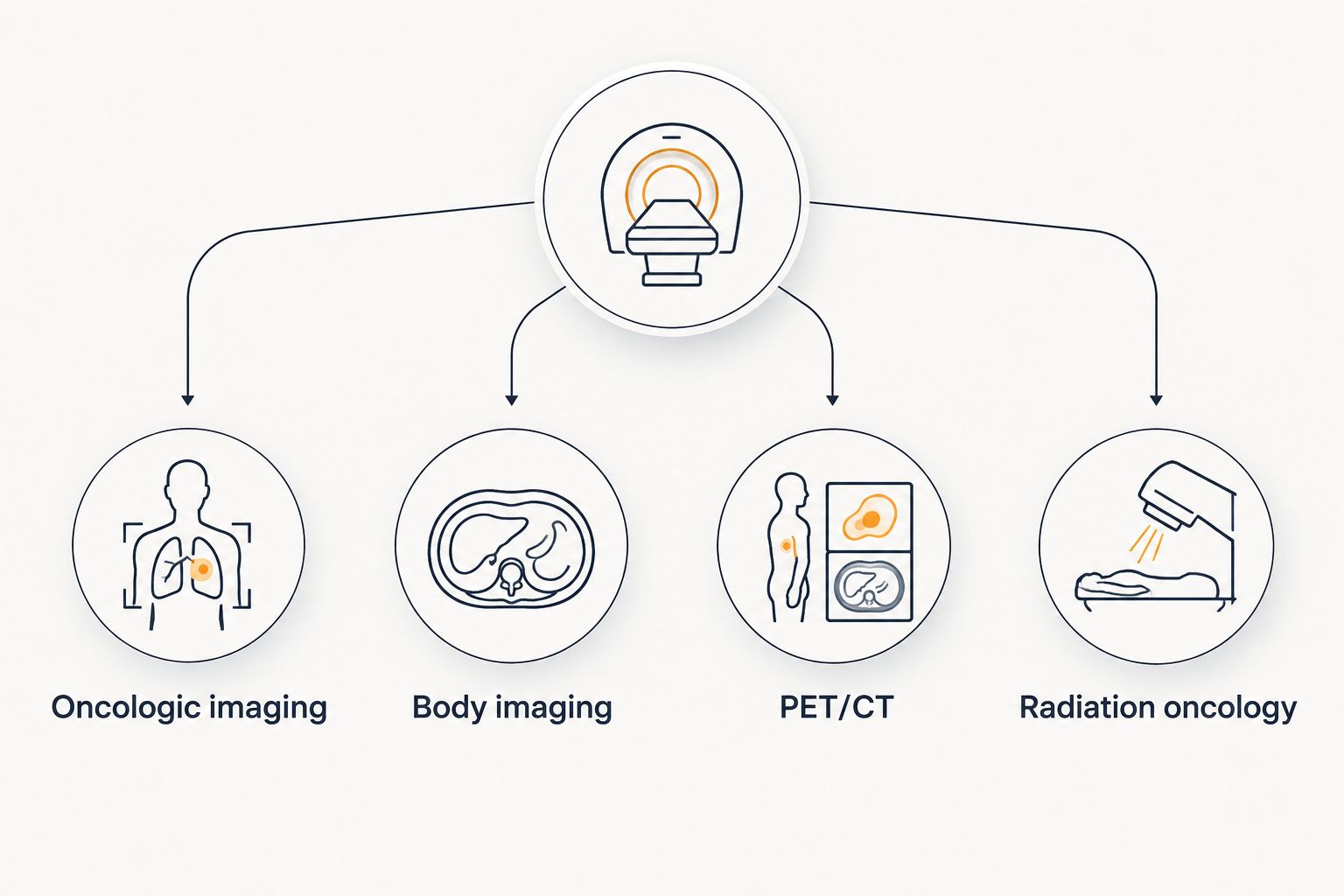
A search for proton therapy center radiology jobs can miss relevant diagnostic posts when the title describes the imaging specialty instead of the treatment program. Use several related searches, then read each description for its actual relationship to cancer care. A matching title is a lead, not proof that the position supports proton therapy.
These search terms cover distinct routes into the same employer shortlist:
- Oncologic imaging: Look for cancer-focused interpretation and multidisciplinary responsibilities.
- Body imaging: Check whether the case mix and department serve oncology patients.
- PET/CT: Read the stated qualifications and reporting responsibilities closely.
- Neuroradiology: Check which anatomy and clinical services the role covers.
- Radiation oncology: Use this term to find affiliated departments, then confirm the opening is for a diagnostic radiologist before applying.
Search multiple sources without losing the shortlist
Check employer pages first if you already know your target institutions. For a wider 2026 search, RadBoard aggregates 5,000+ radiology positions from 20 sources and offers AI-powered search and swipe-to-save. That makes RadBoard's radiology job search useful for finding related titles in one place. It does not replace the employer description or a direct conversation about duties.
Use the same review process regardless of where you find an opening:
- Search the employer's name alongside each relevant imaging subspecialty.
- Repeat the search using duties such as cancer imaging or tumor board participation.
- Save a listing only after checking its location, employer, and clinical scope.
- Record where you found it so you can return to the original posting.
- Ask the hiring contact to identify the reporting department when the listing is unclear.
Test the role against the clinical workflow
The interview is where a broad oncology job title becomes a specific practice. Ask for a description of the studies assigned to the position and how the radiologist works with the cancer team. If treatment planning appears in the posting, establish whether the diagnostic radiologist supplies interpretations, participates in review, or has another defined responsibility.
Keep the discussion tied to work you would perform:
- Ask which modalities and anatomic areas make up the regular reading list.
- Ask how imaging requests from radiation oncology reach the radiology team.
- Confirm whether tumor board attendance is expected and how it fits into scheduled clinical time.
- Identify who handles urgent findings and after-hours coverage.
- Ask who makes treatment decisions so the diagnostic role stays clearly defined.
Compare the whole position, not just the specialty label
A focused case mix can look attractive until the schedule, call, and non-reading work are clear. Compare written responsibilities across offers rather than assuming that two oncologic imaging jobs have the same working day. For 2026 openings, keep separate notes on duties described in the posting and duties confirmed by the hiring team.
Request enough detail to make a direct comparison:
- Confirm the expected split between interpretation, meetings, teaching, and other work.
- Get the call schedule and coverage responsibilities in writing.
- Ask how productivity is measured if non-reading duties are part of the position.
- Review the stated qualifications against your training and current privileges.
- Check which responsibilities are fixed and which depend on department needs.
Prepare evidence for the application and interview
Tailor the application to the role the employer actually posted. An oncologic imaging search committee needs evidence of relevant reading experience and collaboration, not a generic claim of interest in proton therapy. If your background includes treatment-related imaging work, describe your contribution precisely; do not imply responsibility for radiation treatment you did not provide.
Prepare examples you can explain without patient-identifying details:
- Match your CV's clinical experience to the modalities in the posting.
- Describe your part in multidisciplinary case discussions, if applicable.
- Explain how you communicate findings that affect the next clinical decision.
- Identify research, teaching, or quality work only when it relates to the listed duties.
- Bring questions about responsibilities that the posting leaves undefined.
Compare search options for this segment
No single source establishes the clinical scope of every opening. Use a broad search to find candidates, then use the employer's posting and interview to decide whether each one belongs on your shortlist.
| Option | Best for | Main advantage | Key limitation |
|---|---|---|---|
| Employer career pages | Radiologists with named target institutions | Shows openings under the employer's own job titles and departments | Requires checking institutions separately |
| RadBoard radiology job search | Radiologists searching related imaging titles across sources | Aggregates positions from 20 sources with AI-powered search and swipe-to-save | You still need to confirm each role's proton-program connection and duties |
| Direct department inquiry | Radiologists assessing a specific team | Lets you ask who performs the diagnostic imaging work | Does not substitute for a posted position or formal application |
| Recruiter conversations | Radiologists comparing roles presented by a recruiter | Creates a direct route for questions about a described opening | The recruiter may not have every clinical detail; verify with the employer |
RadBoard is best for radiologists finding oncology-related openings across multiple sources; the employer is the source for what a proton-adjacent job actually requires. That division keeps the 2026 search broad without turning a related imaging title into an assumed proton-center position.
Search radiology openings
Explore 5,000+ radiology positions aggregated from 20 sources.
Common mistakes in this job search
- Searching only for proton in the title. A diagnostic imaging opening can be relevant because of its employer or clinical duties even when the title names only a subspecialty. Search both ways, then verify the connection.
- Treating radiation oncology openings as diagnostic radiology jobs. Shared patients and imaging do not make the physician roles equivalent. Read the required training and responsibilities before applying.
- Assuming every cancer-center radiology job supports the proton program. Ask how the imaging team interacts with that service; a shared institution is not a job description.
- Comparing offers by case mix alone. Scheduled meetings, call, and other responsibilities shape the work. Put those terms beside the reading duties when you compare positions.
- Claiming treatment-planning experience too broadly. State whether you interpreted imaging, attended case review, or performed another task. Precision makes your application easier to assess.
FAQ
What are proton therapy center radiology jobs?
They are diagnostic imaging roles at or alongside proton-treatment programs. Confirm the employer, reading duties, and relationship to radiation oncology because the facility's treatment work does not define the radiologist's role.
What should a radiologist search besides proton therapy?
Search oncologic imaging, body imaging, PET/CT, and relevant cancer-center openings. Read the description to establish whether each role connects to the proton program.
Is a diagnostic radiologist the same as a radiation oncologist?
No. Diagnostic radiologists interpret imaging, while radiation oncologists direct radiation treatment. Check the required qualifications before treating a radiation oncology posting as a radiology opening.
Do I need proton-specific experience to apply?
The posting determines the qualifications for a particular job. Match your documented imaging and multidisciplinary experience to its stated duties, then ask the employer about any program-specific requirements.
How do I know whether an imaging job supports treatment planning?
Ask the employer to describe the diagnostic radiologist's contribution to the treatment workflow. Clarify whether the work involves image interpretation, case review, or another assigned duty.
Where should I verify call and tumor board responsibilities?
Verify them with the hiring department and in the written position terms. A specialty title alone does not establish the schedule or how non-reading work is allocated.
Is RadBoard useful for proton therapy center radiology jobs?
RadBoard is useful for searching related radiology openings across its 20 aggregated sources. Confirm any listing's connection to a proton program and its clinical responsibilities with the employer.
One last thing
In 2026, keep two labels beside every saved opening: what the job title says and what the diagnostic radiologist actually does. The gap between them is the most useful interview question. An oncologic imaging title can lead you to a relevant program, but only the stated duties tell you whether the position fits your practice.