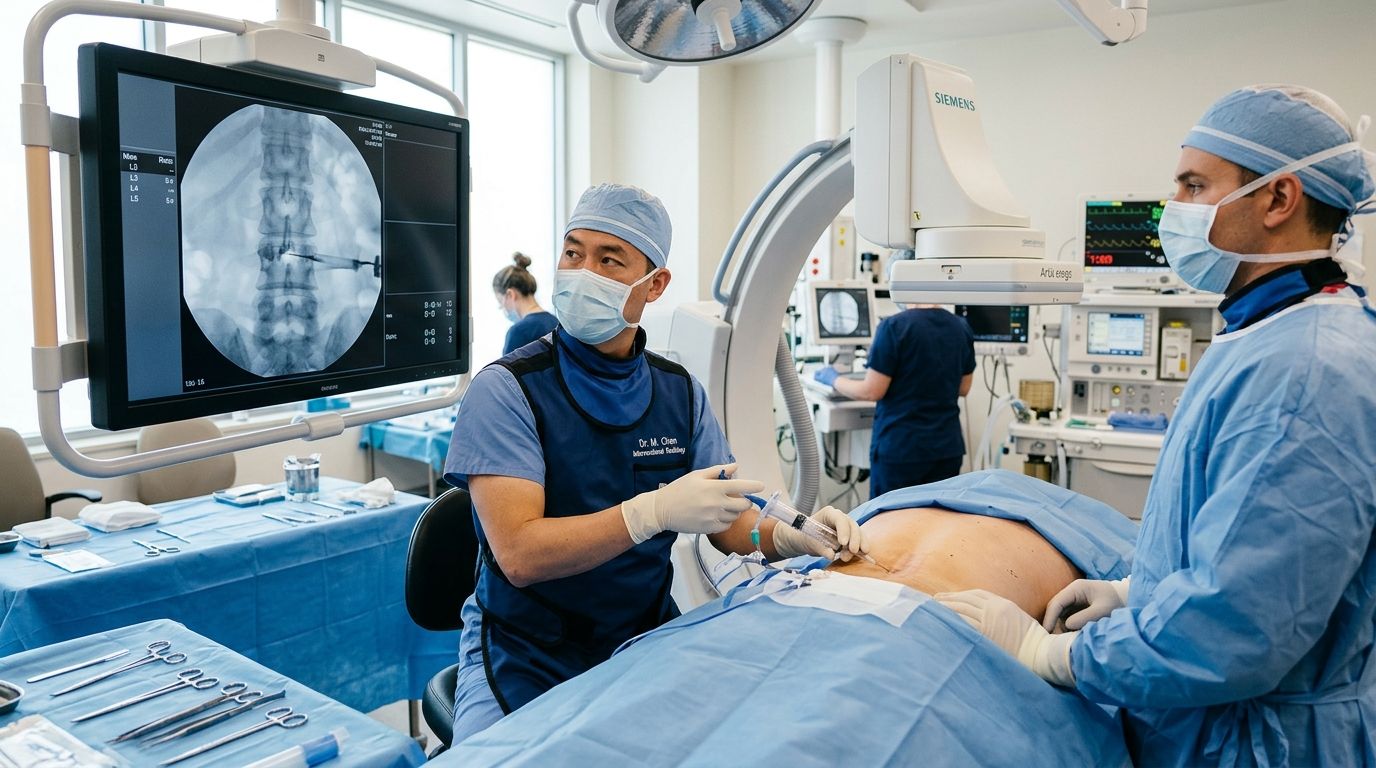
Vertebroplasty and kyphoplasty radiologist jobs are interventional radiology positions built around percutaneous vertebral augmentation for compression fractures, with the goal of restoring vertebral height and controlling pain without open spine surgery. This segment runs on referral volume, not reading-queue volume — a job with a full diagnostic schedule but no ortho spine or neurosurgery pipeline will leave a vertebral augmentation specialist underused within months.
- Vertebroplasty radiologist jobs live or die on referral volume from ortho spine, neurosurgery, and pain management, not diagnostic case counts.
- Hospital-employed and outpatient spine/pain center roles offer the steadiest procedural volume; academic IR trades volume for teaching and research time.
- Cement and device cost bundling changes real take-home pay more than the base RVU rate on paper.
- Credentialing for percutaneous vertebral augmentation privileges can take longer than general IR privileging — confirm the timeline before you sign.
- RadBoard aggregates spine and interventional radiology listings from 20 sources, filterable by subspecialty, so you're not manually checking every hospital career page.
Why vertebroplasty and kyphoplasty jobs matter for spine-focused IRs
Osteoporotic vertebral compression fractures are one of the most common indications driving referrals into interventional radiology from orthopedic spine and pain management practices, and that referral relationship — not the imaging department's daily volume — determines whether a vertebroplasty and kyphoplasty role stays busy. A radiologist who signed on for "spine procedures" and finds the call schedule stacked with unrelated diagnostic reads instead of augmentation cases isn't doing the job they interviewed for.
The search behavior around interventional radiology jobs for IR-trained physicians skews toward procedural detail — case mix, equipment, and call structure — rather than generic salary questions, because IR-trained physicians already know their market value. What they need clarity on is whether a given posting actually delivers procedural volume in 2026, not whether the title says "interventional."
Confirm procedural volume before anything else
A vertebroplasty and kyphoplasty job posting rarely states weekly case counts. Get that number before you interview past round one.
- Ask for average weekly or monthly vertebral augmentation case volume over the last 12 months
- Get the split between vertebroplasty, kyphoplasty, and any sacroplasty or other augmentation variants
- Identify the primary referral sources: orthopedic spine, neurosurgery, pain management, or ED
- Ask whether cases are done under fluoroscopy, CT guidance, or a hybrid suite
- Confirm whether the group also covers vertebral tumor ablation or vertebral biopsy alongside augmentation
Verify credentialing and privileging requirements
Percutaneous vertebral augmentation privileging is not automatic just because you hold general IR privileges at a prior institution. Hospital credentialing committees often require separate documentation.
- Confirm the hospital's specific privileging criteria for percutaneous vertebral augmentation
- Ask whether proctored cases are required before independent privileges are granted
- Check ABR certification and CAQ status requirements tied to the role
- Get a written timeline for credentialing completion, not a verbal estimate
- Clarify who covers malpractice tail costs if you leave before the contract term ends
Evaluate the procedural suite and support staff
A dedicated IR suite with a scrub tech and dedicated nursing support moves through augmentation cases faster than a shared fluoro room booked around diagnostic studies.
- Ask whether the suite is dedicated IR or shared with diagnostic fluoroscopy
- Confirm the cement delivery system in use and whether training is provided
- Check radiation safety protocols and shielding standards for the room
- Verify scrub tech and nursing staffing levels for procedure days
- Ask about post-procedure recovery bay capacity and turnover time
Check the referral pipeline and call structure
The strength of a group's relationship with ortho spine and neurosurgery predicts your actual caseload better than anything in the job description.
- Ask how referrals arrive: direct scheduling, tumor board, or ED consult
- Confirm whether competing IR groups in the market split the referral base
- Check seasonality — compression fracture volume often shifts with fall-related fracture patterns
- Clarify weekend and overnight call expectations for acute fracture cases
- Ask whether the spine imaging radiologist role includes diagnostic spine MRI and CT reads alongside procedures, which changes total workload
Compare the compensation structure for procedural work
Procedural RVU pay looks straightforward on paper until you factor in how cement and device costs are billed and bundled.
- Ask whether compensation is RVU-based, case-based, or a hybrid model
- Confirm whether cement and kyphoplasty balloon costs are bundled into the case rate or billed separately
- Get the split between diagnostic read compensation and procedural compensation if the role mixes both
- Check productivity bonus thresholds and how often they are recalculated
- Confirm who holds negotiating authority over vendor contracts for augmentation devices
Search efficiently instead of checking each hospital site by hand
The manual route works but eats hours: checking individual hospital career pages, society classifieds, and IR fellowship alumni networks one at a time. Most of those listings don't specify procedural volume or referral pipeline strength anyway, so you still end up calling to ask.
A faster path is filtering by subspecialty across aggregated listings rather than rebuilding that search on every site. RadBoard pulls from 20 sources into one AI-searchable feed, so you can filter for interventional radiology and swipe past roles that never mention vertebral augmentation, instead of opening 15 tabs to find three relevant postings.
Search IR spine jobs faster
Filter interventional radiology listings across 20 sources in one AI-powered search.
Negotiate the offer with procedural specifics in writing
A verbal promise about case volume or block time means nothing once you are six months into a contract with a thin schedule.
- Negotiate protected procedure block time in writing, not as a verbal assurance
- Confirm signing bonus terms and any clawback period tied to early departure
- Get malpractice tail coverage specified for procedural liability, which differs from diagnostic-only coverage
- Ask about moonlighting rights for per diem vertebroplasty coverage at other sites
- Confirm the non-compete geography doesn't block you from the region's other spine referral sources
Comparing job types for vertebroplasty and kyphoplasty IR work in 2026
| Option | Best for | Key limitation |
|---|---|---|
| Hospital-employed IR spine role | Steady referral volume from an in-house ortho spine department | Less control over vendor and equipment choices |
| Private practice IR group | Physicians wanting partnership track and case-rate upside | Volume depends heavily on the group's existing referral relationships |
| Academic IR with spine focus | Physicians who want teaching and research alongside procedures | Lower weekly procedural volume than a high-throughput community role |
| Outpatient spine or pain center IR | Predictable schedule, no hospital call | Fewer complex cases; augmentation-only caseload can plateau skill growth |
| Locum tenens IR spine coverage | Testing a market or filling gaps between permanent roles | Inconsistent volume site to site; credentialing repeats at each stop |
RadBoard's verdict: a hospital-employed or outpatient spine center role delivers the steadiest vertebroplasty and kyphoplasty case volume in 2026, while academic and locum paths trade volume for teaching time or schedule flexibility.
If you want a broader diagnostic-plus-procedural mix, the interventional oncology tumor ablation track runs on a similar referral-dependent model and is worth comparing against a pure spine augmentation role.
Common mistakes spine-focused IRs make when evaluating these jobs
- Signing before verifying case volume. A posting that says "spine procedures" without a number attached often means low, inconsistent volume — ask for the last 12 months of data before you accept.
- Ignoring cement and device cost bundling. A high headline RVU rate means less once bundled device costs eat into the case rate; get the billing structure in writing.
- Underestimating the credentialing timeline. Percutaneous vertebral augmentation privileging can add weeks to onboarding compared with general diagnostic privileges — plan your start date around it, not around the offer letter date.
- Skipping the referral pipeline question. A group with a weak relationship to ortho spine and neurosurgery in its market will hand you a thin schedule regardless of what the job description promised.
- Leaving malpractice tail terms unspecified. Procedural liability coverage differs from diagnostic-only coverage — confirm who pays the tail if you leave the contract early.
FAQ
What is a vertebroplasty and kyphoplasty radiologist job?
It is an interventional radiology role centered on percutaneous vertebral augmentation for compression fractures, typically involving cement injection under fluoroscopic or CT guidance. In 2026 these roles are usually paired with broader IR duties like tumor ablation or diagnostic spine imaging rather than standing alone.
How does pay work for vertebroplasty and kyphoplasty cases?
Pay structure varies by employer and is typically RVU-based, case-based, or a hybrid, with cement and device costs sometimes bundled into the case rate. Get the exact billing structure in writing before comparing offers.
Is vertebroplasty or kyphoplasty better for job market demand?
Job postings rarely specify one technique since most spine-focused IR roles require competency in both. The referral source, ortho spine versus pain management, matters more for your volume than which technique the practice favors.
Do I need a separate fellowship for vertebral augmentation privileges?
Standard IR fellowship training generally covers percutaneous vertebral augmentation, but hospital credentialing committees may still require proctored cases before granting independent privileges. Confirm the specific hospital's criteria before signing.
What is the difference between hospital-employed and outpatient spine center IR jobs?
Hospital-employed roles usually draw from an in-house ortho spine department with steadier referral volume, while outpatient spine or pain centers offer a more predictable schedule with no hospital call but a narrower, augmentation-only case mix.
How do I find vertebroplasty radiologist jobs faster?
Filtering by interventional radiology subspecialty across an aggregated job feed is faster than checking individual hospital career pages one at a time. RadBoard aggregates listings from 20 sources with AI-powered search built for that kind of subspecialty filtering.
Should I negotiate malpractice tail coverage for a procedural IR role?
Yes, because procedural liability coverage differs from diagnostic-only malpractice terms and tail costs can be substantial if you leave a contract early. Get tail coverage terms specified in writing before signing.
Does locum tenens work for vertebroplasty and kyphoplasty coverage?
Locum coverage works for testing a market or filling short-term gaps, but case volume varies significantly site to site and credentialing has to be redone at each new location. It suits physicians prioritizing flexibility over consistent procedural volume.
One last thing
The single biggest predictor of whether a vertebroplasty and kyphoplasty job stays busy in 2026 is not the equipment list or the compensation model — it is whether the group has an active, documented referral relationship with orthopedic spine and pain management rather than a claim that one exists. Ask to see that pipeline, or ask to speak with the referring physicians directly, before you sign.