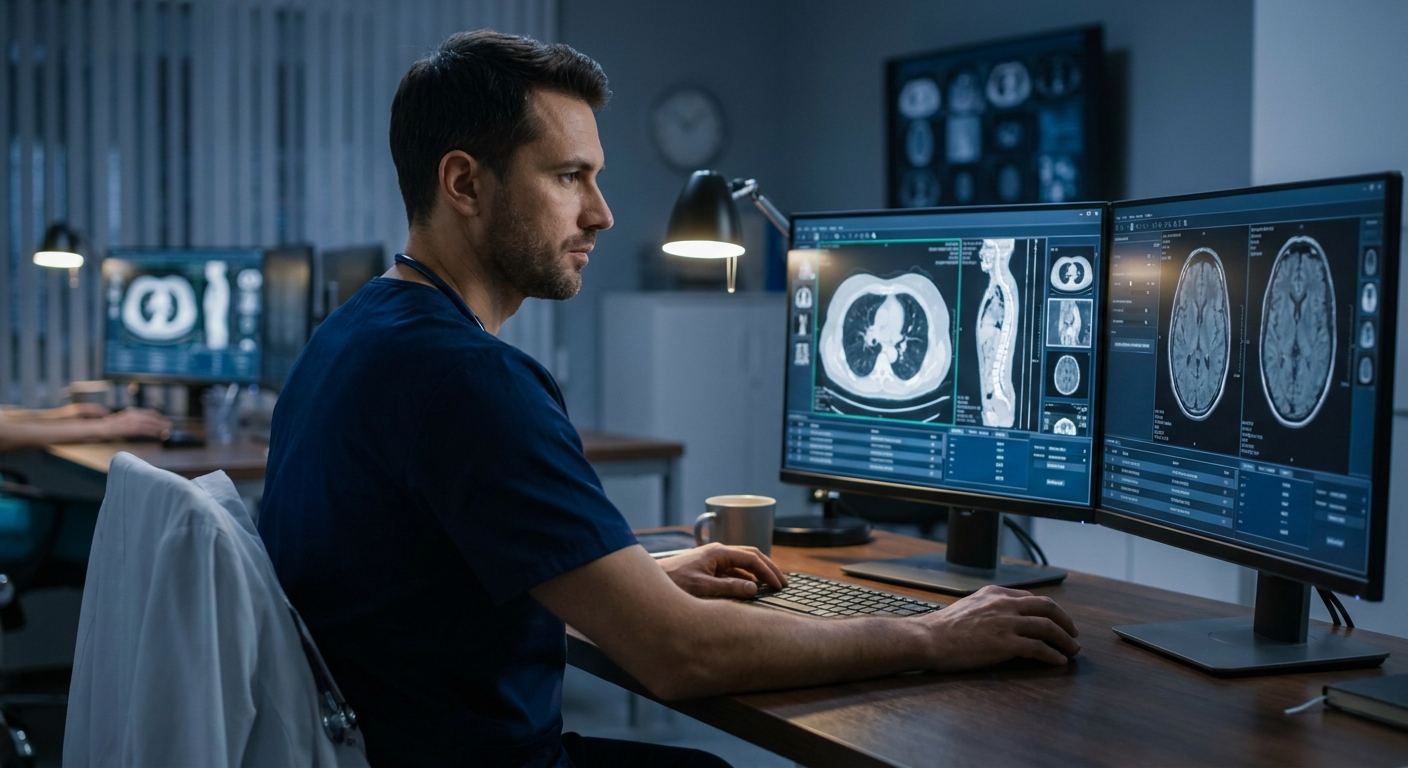
Diagnostic radiology jobs open faster than most residency programs graduate candidates in 2026, but the offers that look best on the recruiter's slide deck are not always the ones that hold up once you model out your first-year RVU floor. This guide breaks down what to check before signing, which job types deliver for a physician finishing residency in 2026, and what to walk away from.
- Fellowship-trained neuroradiology jobs clear compensation review fastest among diagnostic radiology jobs in 2026 - Buy.
- Private practice partnership tracks pay off only if the buy-in timeline is under 3 years - Consider.
- Remote and hybrid diagnostic radiology jobs suit a first contract if base salary is guaranteed, not RVU-only - Consider.
- High-volume reading mills marketed as 'competitive salary' packages are the most common trap for first-year hires - Skip.
- Locum-only diagnostic radiology jobs without a benefits runway are a weak first move out of residency - Skip.
Why this matters
The 2026 radiology job market runs hot across almost every diagnostic subspecialty, but volume does not mean quality. A resident finishing training this year is choosing a first practice environment that shapes call burden, partnership timing, and salary trajectory for the next five to ten years. The jobs that surface first in a generic search are frequently high-turnover positions, not the ones with the best long-term contract terms. Working from an AI-powered radiology job search that pulls diagnostic radiology jobs from 20 sources cuts the noise faster than scrolling five separate hospital career pages.
Who this is for
This guide is for physicians completing a diagnostic radiology residency or fellowship in 2026 who are evaluating their first attending position. That includes general diagnostic radiologists weighing private practice versus academic offers, and fellowship-trained subspecialists in neuro, breast, or body imaging deciding whether to chase a niche role or take a broader community hospital contract. If you already have five-plus years of attending experience, the calculus on partnership buy-in and relocation changes, and this guide is not built for that decision.
What to look for in diagnostic radiology jobs for new attendings
Call schedule and read volume
Ask for the actual studies-per-shift number before you ask about salary. A first-year contract with 80+ cross-sectional studies per overnight shift burns out new attendings faster than any RVU shortfall, and volume caps matter more in year one than a few thousand dollars of base pay.
Partnership or ownership timeline
Private groups love the word "partnership track" without a date attached. Get the buy-in period in writing - anything past 3 years for a diagnostic radiology job in 2026 is a red flag, not a norm, given how competitive practices are for new hires right now.
Compensation structure
RVU-only comp with no base guarantee shifts all the ramp-up risk onto you in your first 12 months. A blended model - base salary plus RVU incentive after a threshold - protects income while you build reading speed.
Subspecialty fit and fellowship leverage
If you finished a fellowship, your training is worth a defined premium, not a vague "we value subspecialty expertise" line. Fellowship-trained radiologists in neuro and breast imaging should expect that training reflected in either base pay or a lighter general-read load.
Remote or hybrid flexibility
Some diagnostic radiology jobs in 2026 now bake in one to two remote reading days per week even for on-site hires. That flexibility is worth real money in quality of life, but only if it comes with the same benefits and PTO structure as the on-site role.
Non-compete radius and duration
A 25-mile, 2-year non-compete in a rural market can functionally force relocation if the job doesn't work out. Read this clause before you read the salary line - it determines your exit cost.
Top picks for physicians finishing residency
The specialist's edge - fellowship-trained subspecialty roles. Neuroradiology and breast imaging positions are commanding premiums in 2026 as demand for subspecialty reads outpaces the pipeline of fellowship graduates. Groups filling neuroradiology jobs for fellowship-trained radiologists are often willing to cap your general-read percentage below 20% in exchange for subspecialty focus. Buy if your fellowship training matches the group's case mix.
The safe pick - academic or teaching hospital first job. Lower RVU pressure and structured mentorship make this the lowest-risk entry point out of residency, even though starting salary typically trails private practice by a meaningful margin in year one. Buy if you value case complexity and teaching exposure over immediate income.
The flexible starter - remote or hybrid diagnostic radiology roles. A growing share of 2026 postings blend on-site call with remote radiology jobs for physicians who want flexible schedules, letting new attendings bank quality-of-life gains without going fully teleradiology. Consider if the group guarantees base salary regardless of remote-day volume.
The long game - private practice partnership track. Ownership stake and long-term earnings upside are real, but only when the buy-in timeline and valuation formula are locked into the contract before day one. Consider only after your attorney reviews the partnership agreement, not the recruiter's summary.
The wildcard - locum-only diagnostic radiology work. Day rates look attractive on paper, but no benefits, no retirement match, and no case continuity make this a weak foundation for a first contract out of residency. Skip unless you're using it as a short bridge while you finish licensing in a new state.
What to avoid
- High-volume reading mills marketed as "competitive salary." A number that looks strong per study often hides a 100+ study overnight shift standard - ask for the actual daily volume cap before comparing pay.
- RVU-only contracts with no base floor. New attendings read slower in month one than month twelve; an RVU-only structure punishes the exact ramp-up period every resident goes through.
- Vague "partnership eligible" language without a buy-in date. If the offer letter doesn't name a year, treat the partnership promise as marketing, not a term.
Verdict comparison
| Job type | Call/volume risk | Comp structure | Best for | Verdict |
|---|---|---|---|---|
| Fellowship subspecialty (neuro/breast) | Low-moderate | Base + RVU premium | Fellowship grads | Buy |
| Academic/teaching hospital | Low | Base-heavy, lower ceiling | Risk-averse first job | Buy |
| Remote/hybrid diagnostic role | Low | Base + remote incentive | Flexibility seekers | Consider |
| Private practice partnership track | Moderate | RVU-heavy, equity upside | Long-term earners | Consider |
| Locum-only diagnostic radiology | High | Day rate, no benefits | Short bridge only | Skip |
“If the offer letter names a salary but not a studies-per-shift cap, you're negotiating the wrong number.”
FAQ
What is the average starting salary for diagnostic radiology jobs in 2026?
Starting salary for diagnostic radiology jobs in 2026 varies widely by setting - academic roles typically trail private practice, but private practice comes with heavier RVU exposure in year one. Fellowship-trained subspecialists in neuro and breast imaging generally command a premium over general diagnostic roles.
Are remote diagnostic radiology jobs realistic for a first attending position?
Yes, a growing share of 2026 postings blend remote reading days into an on-site attending role rather than offering fully remote positions to brand-new graduates. Fully remote teleradiology jobs are more common for radiologists with a few years of independent reading experience.
How long is a typical partnership track at a private practice group?
A reasonable partnership track for diagnostic radiology jobs in 2026 runs under 3 years from hire to buy-in eligibility. Anything longer without a specific date in the contract should be treated as a soft promise, not a term.
Is neuroradiology fellowship training worth it for job prospects?
Yes, neuroradiology fellowship training is translating into real compensation premiums and lighter general-read loads in 2026 given how few fellowship graduates fill open subspecialty seats each year. Groups actively compete for fellowship-trained neuroradiologists over general diagnostic hires.
What studies-per-shift volume is reasonable for a new attending?
A sustainable overnight or weekend shift volume for a new diagnostic radiology attending stays well under 80 cross-sectional studies, though the right number depends on modality mix and support staff. Ask for the group's actual average, not their advertised range.
Should a new attending accept an RVU-only compensation structure?
No, an RVU-only structure with no base salary guarantee shifts disproportionate risk onto a first-year attending who is still building reading speed. A blended base-plus-RVU model protects income during the ramp-up period every new radiologist goes through.
How do I find diagnostic radiology jobs from multiple sources without checking dozens of sites?
An aggregated radiology job search platform pulling listings from 20 sources covers far more diagnostic radiology jobs than any single hospital career page or recruiter list. Filtering by subspecialty and location narrows 5,000-plus postings down to the ones that match your fellowship and geographic preference.
One last thing
The fastest-moving diagnostic radiology jobs in 2026 aren't necessarily the highest-paying ones - they're the ones with a defined studies-per-shift cap written into the offer letter, because that single clause predicts burnout risk better than any salary figure. Ask for it before you ask about the signing bonus.