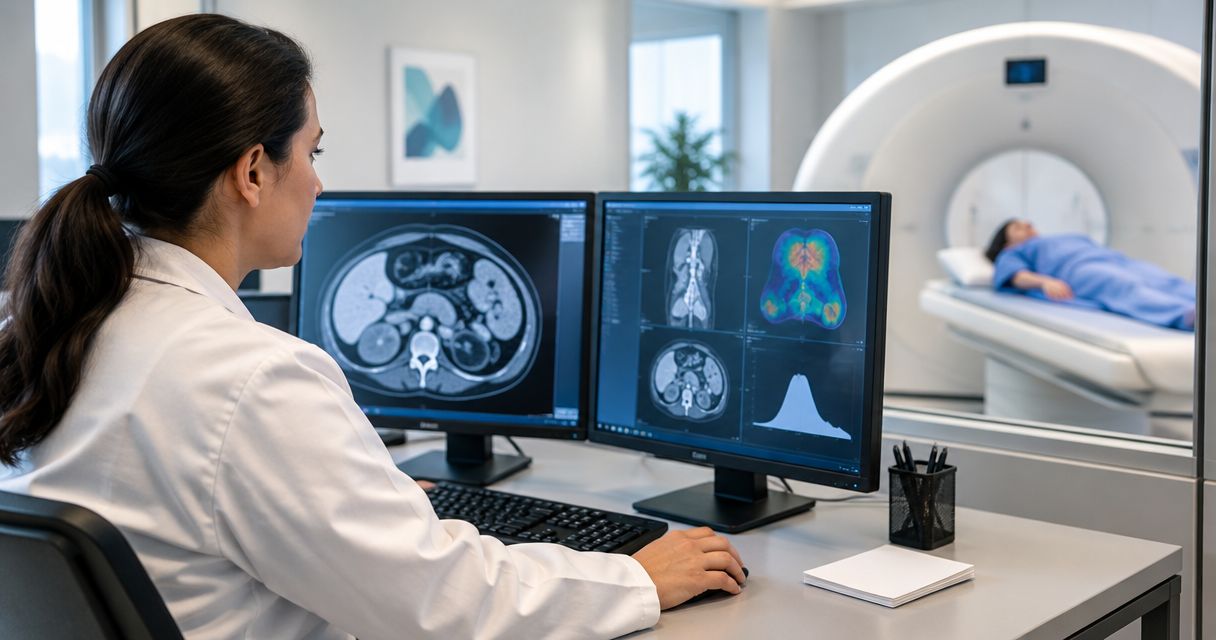
Bariatric imaging radiologist jobs put you inside weight-loss centers reading pre-op abdominal CT, post-op upper GI fluoroscopy for leaks, and gallbladder ultrasound that bariatric surgeons order before and after sleeve gastrectomy or bypass procedures.
- Bariatric imaging radiologist jobs center on pre-op CT, post-op fluoroscopy, and gallbladder ultrasound at outpatient weight-loss centers.
- RadBoard aggregates 5,000+ radiology positions from 20 sources in 2026, including outpatient bariatric imaging openings.
- Pay structures at weight-loss centers usually run on RVU or per-study models, not flat salary.
- AI-powered search narrows thousands of listings to bariatric-specific roles faster than scrolling job boards one at a time.
Why bariatric imaging matters for weight-loss center staffing
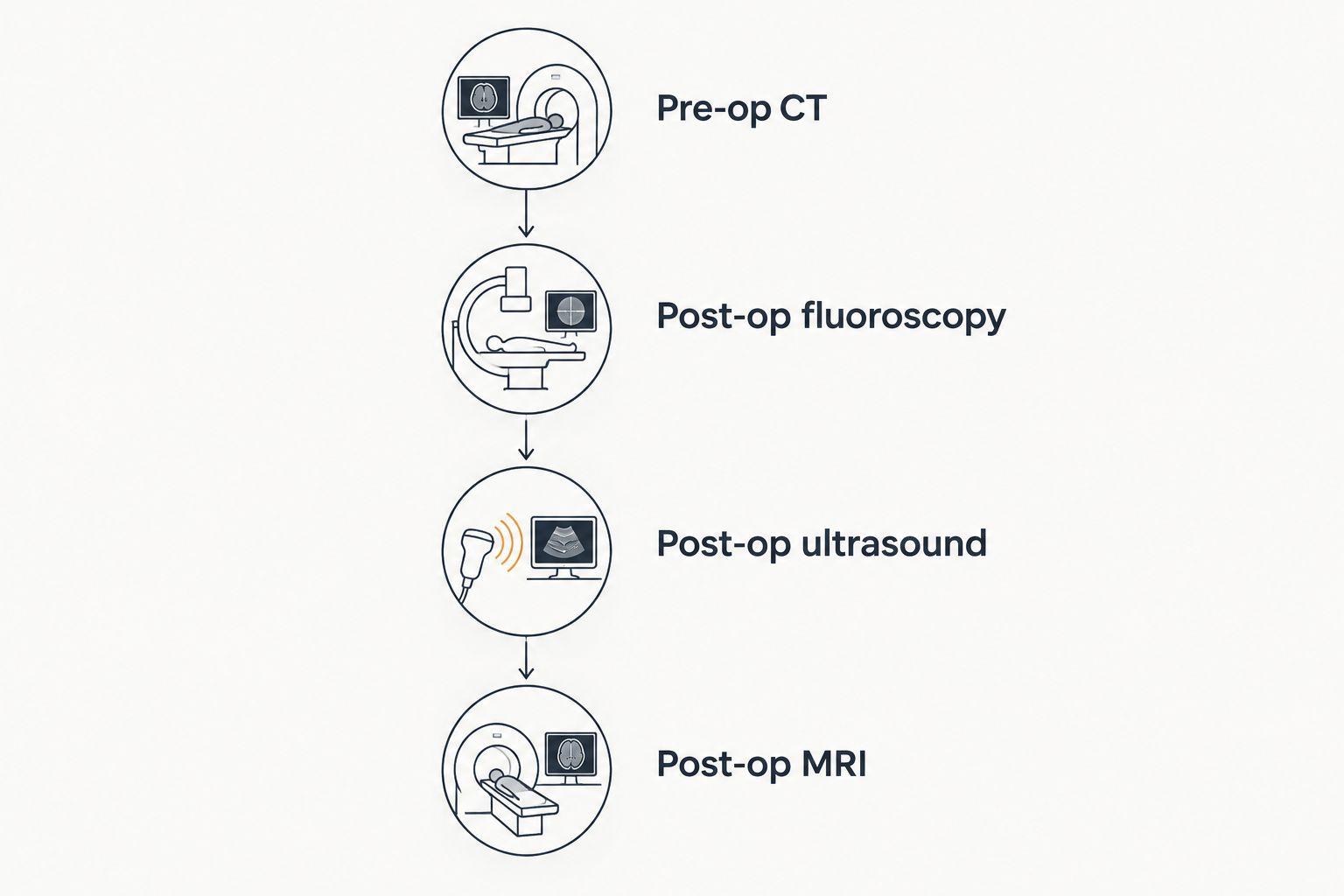
Bariatric surgery programs run on a tight imaging loop: a pre-op CT or upper GI series to map anatomy, an intra-op or immediate post-op fluoroscopy study to rule out a leak at the staple line, and follow-up ultrasound to check the gallbladder, since rapid weight loss raises gallstone risk. A radiologist covering this workflow reads a narrower band of studies than a general body imager, which is exactly why some centers staff it as a distinct role instead of folding it into a general outpatient contract.
That narrowness cuts both ways. Bariatric imaging radiologist jobs offer predictable, protocol-driven reading with little overnight call, but the job depends entirely on how many surgical cases a center or surgeon group books in a given month. A radiologist evaluating one of these roles in 2026 needs to know the referral pipeline before signing, not after the first slow quarter.
How to find and land bariatric imaging radiologist jobs
Map the bariatric imaging workflow before you search
Before filtering job titles, figure out which part of the bariatric pathway a listing actually covers. "Bariatric imaging" gets used loosely — some postings mean full pre-op-to-post-op coverage, others mean a single fluoroscopy shift for leak studies.
- Pre-op abdominal CT for surgical planning and anatomic variants
- Intra-op or early post-op fluoroscopy (upper GI series) for anastomotic leak checks
- Gallbladder ultrasound for post-op stone screening
- Occasional post-op MRI for complication workup when CT is contraindicated
- Body habitus considerations that affect table weight limits and bore size
Search outpatient and hospital job boards directly
The manual route still works if you have time to check sources one by one. Weight-loss centers post through several channels, and the same opening often appears under different titles.
- State medical society job boards, which list outpatient imaging center openings by region
- Hospital system career pages for bariatric surgery program-affiliated radiology groups
- ACR and RSNA career centers for subspecialty-tagged postings
- Surgeon group newsletters and bariatric society job boards (ASMBS-affiliated networks)
- LinkedIn searches combining "bariatric," "body imaging," and "outpatient"
Filter with AI-powered search instead of scrolling every board
Checking 15-20 sites a week is the bottleneck, not the lack of openings. RadBoard pulls listings from 20 sources into one search, and AI-powered filtering surfaces roles tagged for abdominal imaging, fluoroscopy, or outpatient bariatric coverage instead of making you read every general body imaging posting to find the ones that fit.
- Filter by modality (CT, fluoroscopy, ultrasound) instead of job title alone
- Save listings with a swipe instead of tracking them in a spreadsheet
- Set alerts for new outpatient imaging center postings in your target region
- Cross-check a posting's modality mix against the workflow map from step one
Confirm the modality mix before you apply
A posting titled "bariatric imaging radiologist" can mean four studies a day or forty. Ask for case volume by modality before submitting anything past a first-round application.
- Average weekly volume for pre-op CT and fluoroscopy studies
- Whether ultrasound is radiologist-performed or sonographer-acquired with radiologist read
- Single-surgeon versus multi-surgeon referral base
- Seasonal volume swings tied to insurance authorization cycles
See how a related outpatient body imaging role stacks up against a general body imaging radiologist posting before deciding which one fits your reading preferences.
Check the compensation model at weight-loss centers
Most outpatient bariatric imaging roles pay on RVU or per-study models rather than flat W-2 salary, because case volume tracks surgical scheduling, not a fixed shift structure.
- Base guarantee versus pure RVU with no floor
- Per-study rate for fluoroscopy reads specifically, which often differ from CT rates
- Whether ultrasound reads count toward the same RVU pool or a separate one
- Malpractice tail coverage terms if the contract is 1099
Ask about call and schedule structure in the interview
Bariatric imaging centers market themselves as low-call, but confirm what "low-call" means in practice — some still require same-day fluoroscopy availability for post-op leak checks on short notice.
- Same-day turnaround expectations for post-op leak studies
- Weekend coverage for emergent post-op complications
- Backup coverage arrangement if you're the only radiologist reading bariatric cases
- Whether the role rotates with general outpatient reads or stays fully carved out
Negotiate credentialing timeline for multi-site bariatric networks
Some bariatric surgery groups operate across two or three imaging sites under one contract. Credentialing at each site can add weeks before your first paid shift.
- Ask which sites require separate credentialing versus a shared privileging process
- Confirm state licensing needs if sites cross state lines
- Get a written start date tied to credentialing completion, not a guess
- Clarify who covers your reads during the credentialing gap
Comparing bariatric imaging job types
| Option | Best for | Key limitation |
|---|---|---|
| Hospital-employed bariatric imaging role | Radiologists who want full pre-op-to-post-op coverage on one campus | Call can extend past standard outpatient hours during complication workups |
| Freestanding outpatient bariatric imaging center | Radiologists prioritizing no-call, protocol-driven reads | Volume depends on a narrow referral pipeline from one or two surgeon groups |
| Multi-site bariatric network coverage | Radiologists wanting schedule variety across facilities | Credentialing and licensing across multiple sites adds administrative overhead |
| Teleradiology overread for bariatric groups | Radiologists wanting remote, standardized-protocol reads | Limited to studies that don't require real-time scanning or patient contact |
Search bariatric imaging openings
Filter 5,000+ radiology listings by modality and site type on RadBoard.
Common mistakes radiologists make chasing these roles
- Treating bariatric imaging as a fellowship-gated subspecialty. It isn't a separate board pathway — it's a protocol set inside body and abdominal imaging, so don't rule yourself out for lacking a bariatric-specific fellowship.
- Ignoring fluoroscopy comfort level. Upper GI leak studies require live fluoroscopy work, which not every general body imager does regularly. Confirm your own comfort before committing to a role built around it.
- Not confirming who scans the gallbladder ultrasound. Some centers want the radiologist doing real-time scanning; others route it through sonographer-acquired images with a radiologist final read. The workload difference is significant.
- Overlooking referral concentration risk. A center tied to one surgeon's caseload can see volume swing hard month to month — ask for trailing volume, not a single busy-month snapshot.
- Skipping the malpractice tail question on 1099 contracts. Outpatient bariatric imaging contracts that end without renewal notice can leave a tail cost gap if it isn't addressed up front.
FAQ
What is a bariatric imaging radiologist job?
A bariatric imaging radiologist job covers pre-op CT for surgical planning, post-op fluoroscopy for anastomotic leak checks, and follow-up gallbladder ultrasound at a weight-loss surgery center. Some roles cover the full pathway, others cover only one or two of these studies.
Do I need a fellowship for bariatric imaging roles?
No formal bariatric imaging fellowship exists. These roles draw on body and abdominal imaging training, with comfort in fluoroscopy as the main skill differentiator centers screen for.
What modalities do bariatric imaging radiologists read most?
Pre-op abdominal CT and post-op upper GI fluoroscopy make up most of the workload, with gallbladder ultrasound and occasional post-op MRI filling out the rest.
Is bariatric imaging radiologist work outpatient or hospital-based?
Both exist. Freestanding outpatient centers tend to be lower-call and protocol-driven, while hospital-employed roles cover the same studies plus emergent post-op complication workups.
How much do bariatric imaging radiologist jobs pay in 2026?
Pay structures vary by site and usually run on RVU or per-study rates rather than a fixed salary, so compare the base guarantee and per-study fluoroscopy rate for each specific posting rather than assuming a standard figure.
Can locum tenens radiologists cover bariatric imaging shifts?
Yes, outpatient bariatric imaging centers use locum coverage during volume spikes or staffing gaps, though the same fluoroscopy comfort and credentialing timeline questions apply to short-term assignments.
What's the difference between bariatric imaging and general body imaging jobs?
Bariatric imaging is a narrower slice of body imaging focused on a specific surgical pathway's pre- and post-op studies, while general body imaging roles read a broader mix of abdominal and pelvic cases across specialties.
How do I find bariatric imaging radiologist jobs fast in 2026?
Search platforms that aggregate multiple job sources and filter by modality rather than job title, since bariatric-specific openings are often listed under general outpatient or body imaging headings.
One last thing
Ask about the fluoroscopy protocol in the interview, not after you sign. Some bariatric centers still run the upper GI leak study live with the radiologist at the fluoroscopy table; others have shifted to technologist-acquired images with a delayed radiologist read. That single detail changes your day-to-day workload more than the base pay number will.