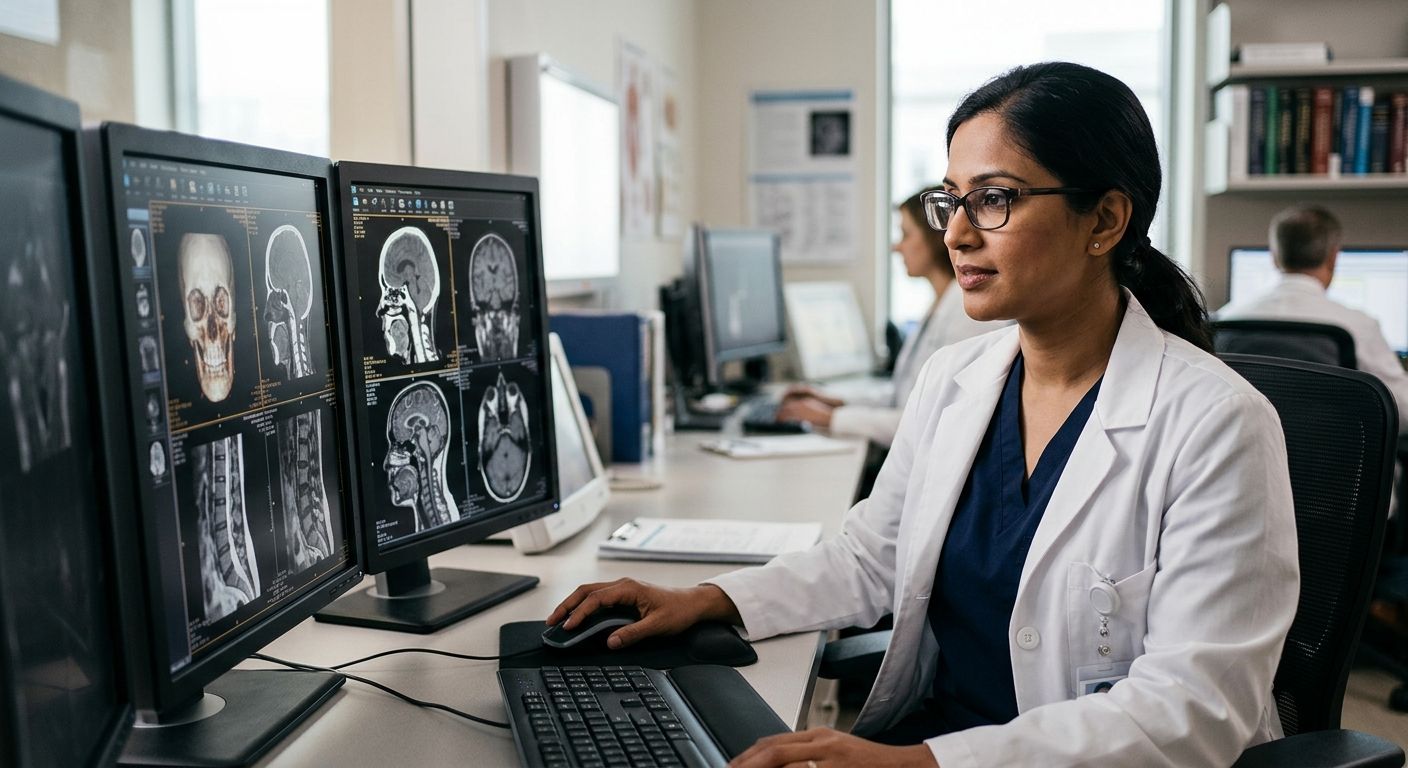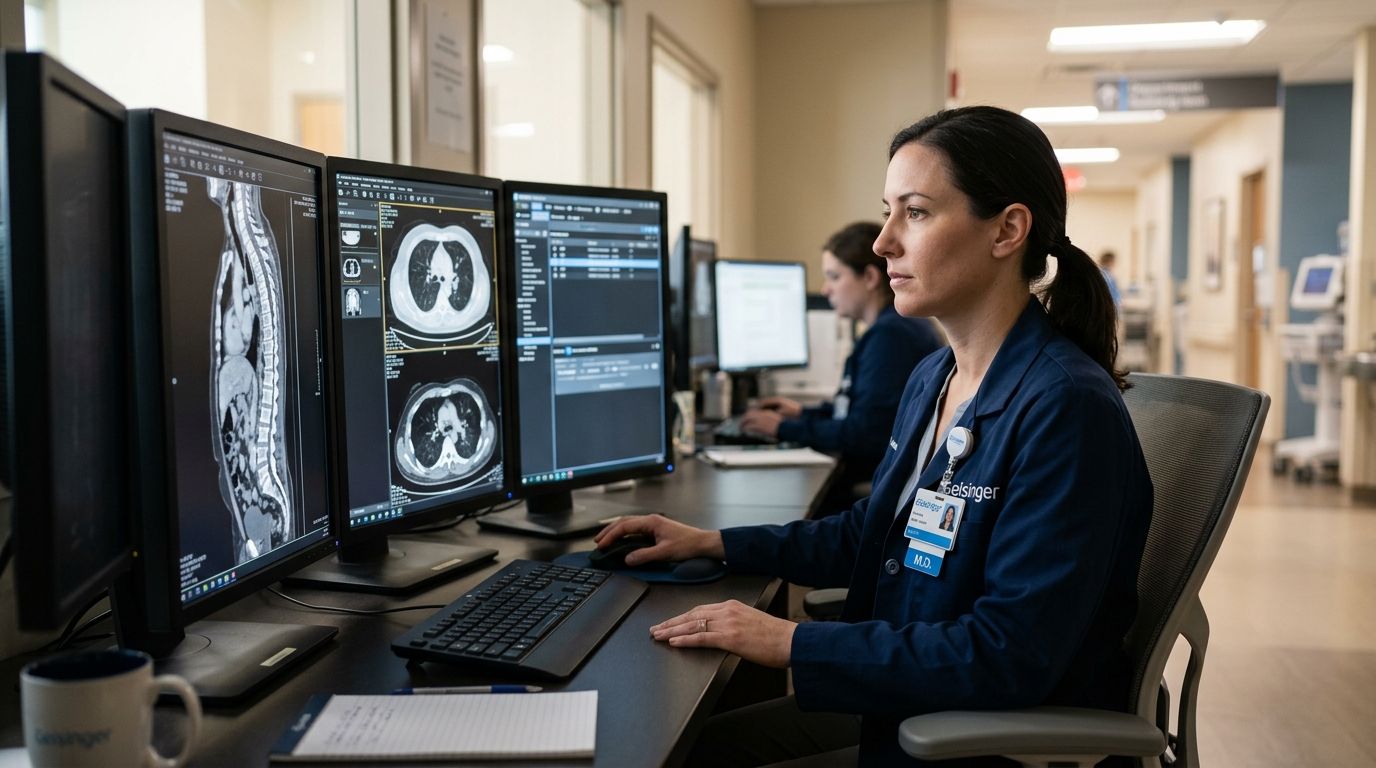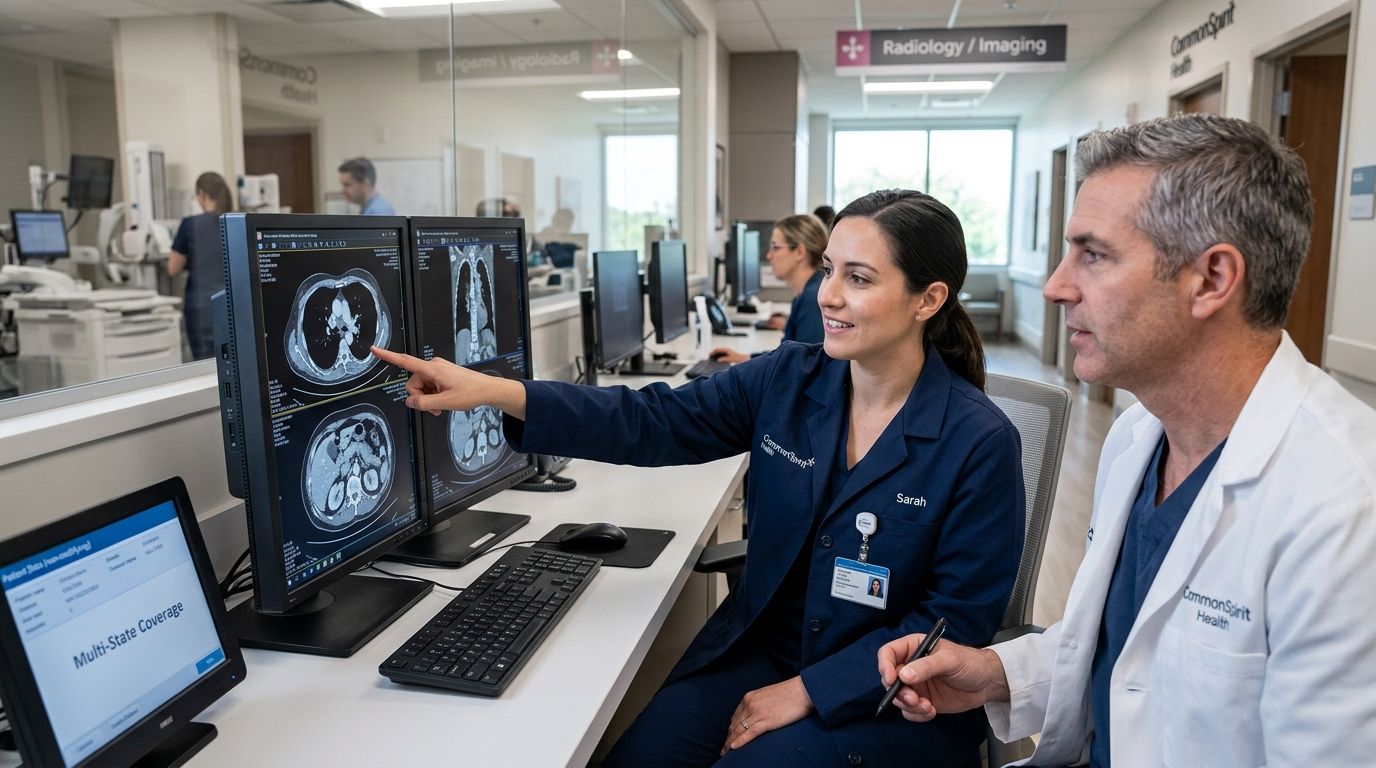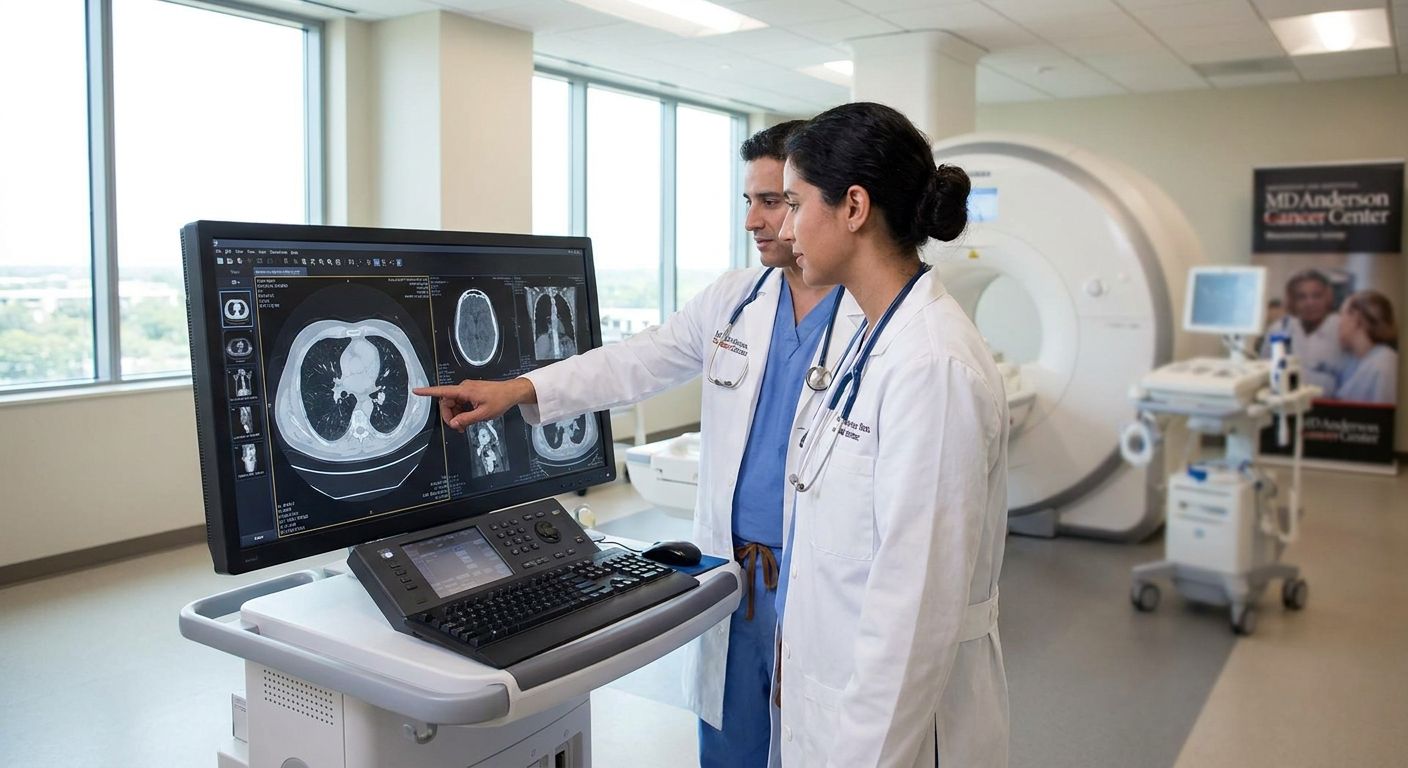
MD Anderson radiology jobs sit at the top of the oncologic imaging career ladder: subspecialty-heavy caseloads, tumor board exposure, and academic rank at a nationally recognized comprehensive cancer center. Radiologists chasing this path need training and search tactics that differ from a general diagnostic radiology job hunt, because cancer-center employers filter hard on fellowship match and research output before they filter on anything else.
- MD Anderson radiology jobs require fellowship-level subspecialty training in body, breast, neuro, or nuclear oncologic imaging.
- Comprehensive cancer centers screen CVs for tumor board and multidisciplinary consult experience before compensation talks start.
- RadBoard aggregates 5,000+ radiology jobs from 20 sources, letting you filter by subspecialty and academic setting in one search.
- Academic cancer center offers in 2026 typically bundle protected research time with RVU-adjacent clinical targets.
- Radiologists who skip fellowship alignment get screened out before an interview is ever offered.
Why oncologic imaging careers matter for radiologists eyeing MD Anderson
MD Anderson is an NCI-designated comprehensive cancer center in Houston, part of the University of Texas system, and it functions as the reference point radiologists use when they say they want a career in oncologic imaging. Radiologists searching for MD Anderson radiology jobs are usually not searching broadly — they've already decided they want tumor-board-integrated reads, subspecialty-only caseloads, and an academic appointment, and they're using that decision to filter every listing they see.
That narrows the funnel fast. A platform like RadBoard becomes more useful here than a single-institution career page, because searching by subspecialty and academic setting across 20 aggregated sources surfaces comprehensive cancer center openings you'd otherwise miss by checking one hospital's site at a time. The radiologists who land these roles treat the search as a subspecialty match problem first, a job-board problem second.
Match your fellowship to the oncologic imaging caseload
Comprehensive cancer centers hire by organ system and modality, not by "general radiologist." Before you apply anywhere, map your training against the caseload a cancer center actually reads.
- Body/abdominal imaging fellowship for hepatobiliary and GU oncologic cases
- Breast imaging fellowship for high-risk screening and biopsy-driven cancer detection
- Neuroradiology fellowship for CNS tumor staging and treatment response imaging
- Nuclear medicine or dual nuclear/body training for PET-CT oncologic staging
- Interventional oncology training for tumor ablation and biopsy procedures
Search cancer-center listings before you search general job boards
Start with the manual route: hospital HR career pages, ACR and RSNA career centers, and academic radiology department pages. Then widen the net.
- Check individual cancer center career pages for standing subspecialty openings
- Search professional society job boards (ACR, RSNA) filtered by "oncologic imaging"
- Run an aggregated search across cancer center radiology jobs to compare postings from multiple comprehensive cancer centers at once
- Set alerts for your specific subspecialty rather than a generic "radiologist" keyword
- Cross-check listings against academic conference recruiting boards (SABCS, ASCO imaging tracks)
Build a CV that reads like a cancer center's caseload
Generic CVs get filtered out fast. Cancer center recruiters look for tumor board participation, case volume in the target organ system, and any research output tied to oncologic imaging.
- Lead with fellowship name, institution, and completion year
- List tumor board or multidisciplinary conference experience by name and frequency
- Quantify oncologic case volume where you can (staging exams read per week, biopsy counts)
- Include any peer-reviewed publications or abstracts tied to cancer imaging
- Note prior second-opinion consult experience, which mirrors the workflow at large cancer centers
Network through fellowship programs, not just recruiters
Comprehensive cancer center openings move through academic networks before they ever hit a public board.
- Stay in contact with your fellowship program director for referral leads
- Attend subspecialty society meetings where cancer center faculty recruit informally
- Reach out directly to division chiefs at target cancer centers, even without an open req
- Ask current cancer center faculty about upcoming faculty searches before they post
Evaluate the academic compensation structure, not just the number
Academic cancer center offers in 2026 bundle base salary with research time, teaching load, and RVU-adjacent productivity targets — and the mix matters more than the headline figure.
- Ask what percentage of time is protected for research versus clinical reads
- Confirm whether tumor board prep and second-opinion reviews count toward productivity
- Clarify academic rank and the track (tenure vs. clinical) tied to the offer
- Understand how CME, conference travel, and grant support are funded
- Ask how caseload mix shifts as junior faculty move up in rank
Prepare for a tumor-board-style interview
Cancer center interviews test how you think through multidisciplinary cases, not just how fast you read a scan.
- Review recent literature on your organ system's staging and treatment-response imaging
- Practice presenting a case the way you would at a tumor board, not a solo read
- Prepare questions about how the division handles second-opinion outside imaging
- Ask how faculty split time between clinical reads, teaching, and research
Search 5,000+ radiology jobs now
Filter by subspecialty and academic setting across 20 aggregated sources.
Comparison: paths into oncologic imaging careers
| Pathway | Best for | Employment model | Key limitation |
|---|---|---|---|
| Comprehensive cancer center (academic) | Radiologists wanting subspecialty-only reads and tumor board integration | Salaried, academic rank with protected research time | Limited number of openings, heavy fellowship screening |
| Academic radiology jobs at a university hospital with a cancer program | Radiologists who want teaching plus oncologic subspecialty reads | Salaried, teaching and research obligations attached | Cancer caseload is diluted with general hospital volume |
| Private practice oncologic imaging subspecialty group | Radiologists who want subspecialty focus without academic obligations | RVU-based or salary-plus-bonus | Fewer tumor board and research opportunities |
| Teleradiology second-opinion oncology reads | Radiologists who want oncologic case exposure with schedule flexibility | Per-read or contract-based | No direct clinical relationship with the treating oncology team |
Verdict: radiologists set on MD Anderson radiology jobs or comparable comprehensive cancer center roles should target the academic cancer center pathway first and treat private practice oncologic subspecialty groups as the fallback if fellowship timing or geography doesn't line up.
Common mistakes radiologists make chasing oncologic imaging careers
- Applying without a matching fellowship. A general diagnostic radiology background rarely clears the first screen at a comprehensive cancer center.
- Ignoring the research and teaching load. Radiologists who only evaluate clinical salary get surprised by unpaid academic obligations after signing.
- Skipping questions about non-clinical time. Tumor board prep and second-opinion review consume hours that don't always show up in the RVU math.
- Underestimating relocation friction. Houston's cost of living and licensing timeline catch out-of-state candidates off guard if they don't plan ahead.
- Not verifying the actual oncologic case mix. Some "cancer center" postings still carry general hospital overflow reads — ask for a caseload breakdown before accepting.
FAQ
What subspecialty training do MD Anderson radiology jobs require?
Comprehensive cancer centers typically require fellowship training in body imaging, breast imaging, neuroradiology, nuclear medicine, or interventional oncology, matched to the specific division hiring. General diagnostic radiology training alone rarely clears the first screen.
Are oncologic imaging jobs mostly academic?
Yes, most comprehensive cancer center radiology roles carry an academic appointment with protected research and teaching time. Private practice oncologic imaging groups exist but offer fewer tumor board and research opportunities.
How do I find cancer center radiology openings without checking every hospital site?
Search aggregated platforms like RadBoard, which pulls 5,000+ radiology jobs from 20 sources, and filter by subspecialty and academic setting instead of checking individual hospital career pages one by one.
Do tumor board and second-opinion experience matter on my CV?
Yes, cancer center recruiters look specifically for multidisciplinary tumor board participation and second-opinion consult experience because it mirrors the actual workflow. List frequency and organ system, not just attendance.
Is nuclear medicine training valuable for oncologic imaging careers?
Dual training in nuclear medicine and body imaging strengthens a candidacy for PET-CT-heavy oncologic staging roles, which are common at comprehensive cancer centers. Single-modality training limits the caseload you can be assigned.
What's the biggest mistake radiologists make applying to cancer centers?
Applying without a fellowship that matches the hiring division's organ system, which gets a CV filtered out before an interview is offered. Match your training to the caseload first.
How does compensation differ between academic cancer centers and private practice oncologic groups?
Academic cancer center offers bundle salary with protected research and teaching time, while private practice oncologic subspecialty groups run RVU-based or salary-plus-bonus models with fewer non-clinical obligations. The mix, not just the headline number, determines fit.
Can teleradiology work count as oncologic imaging experience?
Second-opinion teleradiology reads in oncology can build relevant case volume, but they don't replicate the direct multidisciplinary tumor board relationship comprehensive cancer centers look for in faculty hires.
One last thing
Radiologists who pair nuclear medicine training with body or neuro imaging fellowship consistently clear more comprehensive cancer center screens than single-modality candidates, because PET-CT staging sits at the center of most oncologic imaging workflows in 2026. If you're early in fellowship selection and MD Anderson-caliber jobs are the goal, that dual-training decision matters more than which single fellowship you rank first.