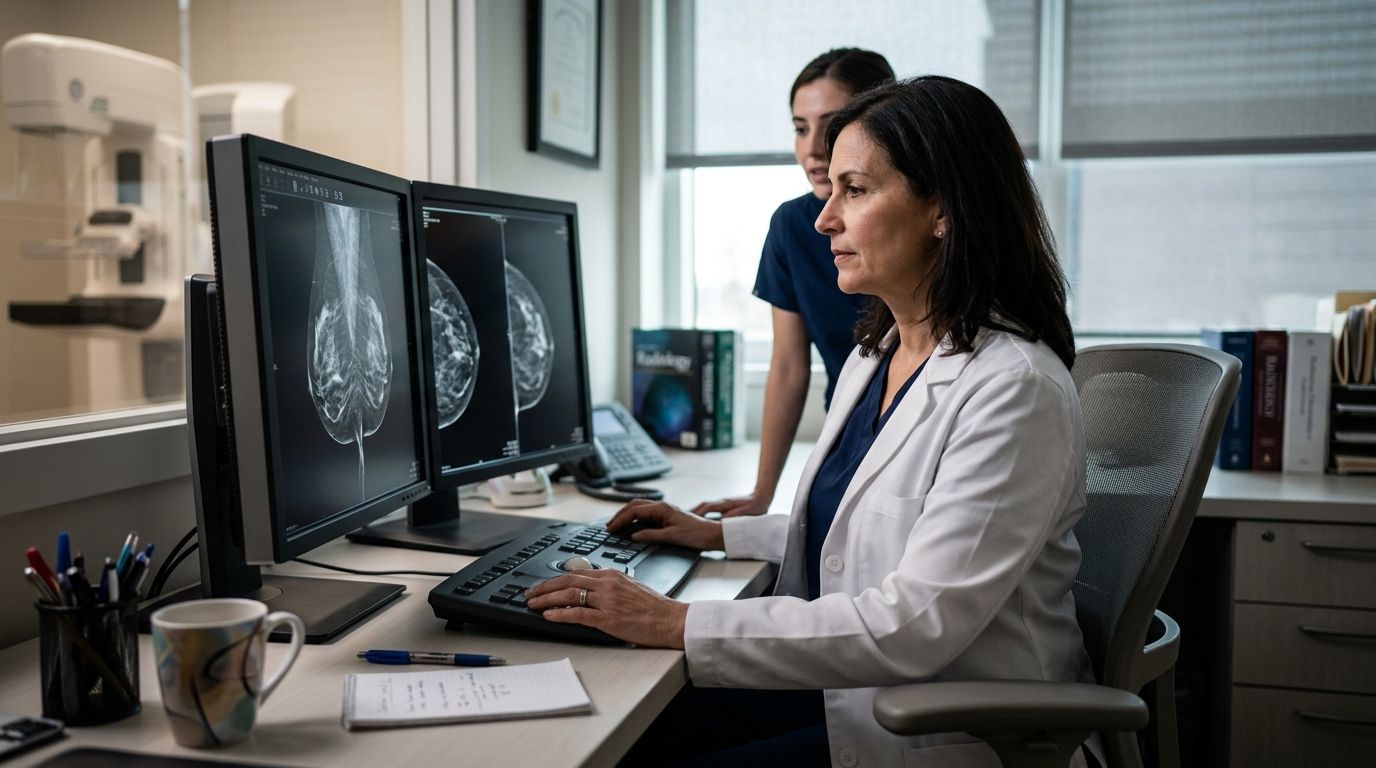
Breast tomosynthesis radiologist jobs are clinical positions built around reading 3D mammography studies, with the aim of matching subspecialty-trained radiologists to facilities that actually run tomosynthesis equipment rather than standard 2D digital units. The segment differs from general mammography work in three ways: MQSA credentialing has to cover the tomosynthesis add-on specifically, read time per study runs longer because of reconstructed slice sets, and screening-versus-diagnostic mix changes call load and compensation more than it does for 2D-only sites.
- Breast tomosynthesis radiologist jobs in 2026 concentrate at facilities running actual 3D mammography units, not every practice that lists "mammography" in the posting.
- RadBoard filters 5,000+ radiology jobs from 20 sources down to tomosynthesis-specific openings using AI-powered search.
- MQSA credentialing for digital breast tomosynthesis is a separate requirement from standard 2D mammography certification.
- Compensation for DBT-trained radiologists tracks read volume and screening/diagnostic mix, not a flat subspecialty premium.
- Verdict: confirm equipment type before applying — a posting that just says "mammography" is 2D until proven otherwise.
Why this matters
A radiologist credentialed for tomosynthesis who applies broadly to "mammography" listings wastes interview cycles on 2D-only sites that can't use the training. The reverse is worse: a facility running Hologic or GE tomosynthesis units gets flooded with applicants who need months of vendor-specific training before they're productive. Matching the equipment to the credential up front saves both sides a bad first quarter.
Why breast tomosynthesis jobs matter for 3D mammography specialists
DBT reads take longer than 2D digital mammography because each study generates a full reconstructed slice stack instead of a single image set. That changes how RVU targets and per-read compensation get structured, and it means mammography radiologist jobs posted without tomosynthesis specificity often underpay for the actual workload once you're reading 3D volumes at scale.
Facilities that have invested in tomosynthesis units also tend to run higher screening volumes and often pair DBT with breast MRI radiologist jobs for high-risk patient tracks — a signal worth checking before you apply, since dual coverage changes both call expectations and the CME requirements you'll need to maintain.
Confirm your tomosynthesis credentials before you apply
MQSA certification for digital breast tomosynthesis is a distinct requirement from standard 2D mammography interpretation. Facilities won't schedule an interview, let alone credential you, without documentation.
- MQSA interpreting physician requirements specific to the DBT add-on
- Facility-specific vendor training records (Hologic, GE, Siemens systems differ in workflow)
- Current state licensing status in the job's location
- Hospital privileging timeline — some systems take 60-90 days
- Logged CME hours specific to breast imaging, not general radiology
Build a CV that leads with tomosynthesis-specific volume
General mammography experience doesn't tell a hiring committee what they need to know. Lead with the numbers that matter for 3D reads.
- Annual DBT case volume, screening and diagnostic split
- Cross-training in breast MRI or image-guided biopsy
- Experience with CAD or AI-assisted detection software tied to specific vendors
- Fellowship months or dedicated breast imaging rotation time
- Any tracked recall or cancer detection rate data, if you have it documented
Search for facilities that specify 3D mammography equipment, not just "mammography"
This is the step most tomosynthesis radiologists skip, and it's the one that filters out the mismatched postings before you waste an application.
- Cross-reference listing language for "tomosynthesis," "3D," or a named vendor
- Verify ACR breast imaging center accreditation status directly
- Ask the recruiter how many DBT units are on site, not just "do you have mammography"
- Check whether the site pairs DBT with remote breast imaging jobs for overflow or second-opinion reads
Use AI-powered search to filter subspecialty listings fast
Manually cross-checking equipment language across dozens of job boards eats hours. RadBoard's AI-powered search pulls from 5,000+ radiology positions across 20 sources and lets you filter directly on subspecialty and modality keywords, then swipe to save the ones that match.
- Filter by "tomosynthesis" or "breast imaging" subspecialty tags
- Swipe-save shortlisted postings instead of tracking them in a spreadsheet
- Set alerts for new DBT-specific postings as they're added
- Compare screening-only sites against diagnostic-heavy sites side by side
Compare compensation structures across screening and diagnostic mixes
A screening-only DBT job and a diagnostic-heavy breast imaging job pay differently for a reason — the second one carries biopsy referrals, callback workups, and more direct patient contact.
- RVU-based versus per-read versus flat salary models
- Call frequency tied to diagnostic workup volume
- Biopsy and procedure volume factored into total compensation
- Sign-on and relocation terms specific to breast imaging roles
- CME reimbursement scoped to breast-imaging-specific courses, not general radiology CME
Negotiate equipment training and re-credentialing support
Even fully MQSA-certified radiologists need ramp-up time on a new vendor's tomosynthesis workflow. Get this in writing before you start.
- Vendor-specific training days built into the onboarding schedule
- Backup coverage during the training ramp-up window
- A guaranteed minimum base during the ramp period, not full RVU exposure from day one
- Support for MQSA re-certification if the facility upgrades equipment mid-contract
Find tomosynthesis-specific openings faster
Filter 5,000+ radiology jobs from 20 sources by subspecialty in seconds.
Comparison: ways to find breast tomosynthesis radiologist jobs
| Option | Best for | Key limitation |
|---|---|---|
| General job boards (Indeed, LinkedIn) | Broad geographic search across specialties | No filter for tomosynthesis-equipped sites specifically |
| Radiology staffing agencies | Locum and travel breast imaging coverage | Fewer direct-hire, permanent breast imaging postings |
| Hospital or health system career pages | Direct-hire academic or system-employed roles | Must search each system's site separately, no cross-comparison |
| RadBoard's AI-powered search | Subspecialty filtering across 20 aggregated sources | Aggregated listings, not a direct employer — you still apply through the source |
Verdict: RadBoard is the fastest way to narrow 5,000+ radiology postings down to tomosynthesis-specific openings, but it aggregates rather than hires directly — treat it as the filtering layer, not the final step.
Common mistakes 3D mammography specialists make
- Applying to "mammography" listings without confirming tomosynthesis equipment — the posting language rarely distinguishes 2D from 3D unless you ask directly.
- Undervaluing DBT read time in RVU negotiations — reconstructed slice sets take longer to read than single 2D images, and compensation models built on 2D volume assumptions shortchange DBT-heavy schedules.
- Assuming general mammography certification covers tomosynthesis automatically — MQSA treats the DBT add-on as a separate credentialing step with its own timeline.
- Ignoring screening-versus-diagnostic mix when comparing offers — a diagnostic-heavy site carries different call and biopsy referral loads than a screening-only center, even at the same base salary.
- Skipping questions about CAD or AI-assisted detection software — workflow differs significantly between Hologic, GE, and Siemens platforms, and that affects daily read volume more than most candidates expect.
“A posting that says mammography without specifying tomosynthesis capability is a 2D job until the recruiter confirms otherwise.”
FAQ
What's the difference between mammography jobs and breast tomosynthesis radiologist jobs?
Breast tomosynthesis radiologist jobs require MQSA credentialing specific to 3D digital breast tomosynthesis, a separate step from standard 2D mammography certification. Facilities running only 2D units can't use tomosynthesis-specific training, so confirming equipment type before applying saves an interview cycle.
Is breast tomosynthesis harder to read than 2D mammography?
Tomosynthesis studies generate a full reconstructed slice stack per view instead of a single 2D image, which extends read time per case. That longer read time is why compensation models built on 2D volume assumptions often undervalue a DBT-heavy caseload.
How much do breast tomosynthesis radiologist jobs pay in 2026?
Pay structures in 2026 vary by RVU-based, per-read, and flat salary models, and depend heavily on whether the site runs screening-only or diagnostic-heavy volume. Diagnostic-heavy sites with biopsy referral loads typically carry different compensation terms than screening-only centers.
Do I need separate MQSA certification for tomosynthesis?
Yes. MQSA treats digital breast tomosynthesis interpretation as a distinct requirement from general mammography certification, with its own documentation and training expectations that facilities verify before credentialing you.
How do I find breast tomosynthesis jobs without wasting time on 2D-only postings?
Filter listings directly for "tomosynthesis," "3D," or a named equipment vendor instead of searching "mammography" alone. RadBoard's AI-powered search lets you apply subspecialty filters across 5,000+ aggregated radiology jobs from 20 sources to skip that manual cross-checking.
Are locum tenens breast tomosynthesis jobs common in 2026?
Locum coverage for breast imaging, including tomosynthesis-equipped sites, exists alongside permanent postings, and the same equipment-verification step applies before accepting a short-term assignment.
What should I ask a recruiter before accepting a breast tomosynthesis job?
Ask how many DBT units are on site, what the screening-versus-diagnostic split looks like, and whether vendor-specific training is built into onboarding. Those three answers predict your actual daily workload more than the base salary figure does.
Do breast tomosynthesis radiologists need biopsy experience?
Not universally, but diagnostic-heavy sites often pair tomosynthesis reads with image-guided biopsy referrals, so cross-training in breast procedures widens the pool of jobs you qualify for.
One last thing
The biggest filtering error in this segment isn't a bad CV — it's applying to postings that never specify equipment type and assuming "mammography" means tomosynthesis. In 2026, confirm the vendor and unit count before you submit anything; it's the single fastest way to cut a search from dozens of mismatched applications down to the handful that actually fit your credentials.